|
|
|||
|
||||
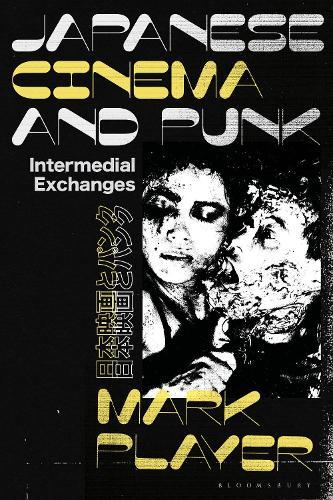
OverviewIn Japanese Cinema and Punk, Mark Player examines how the do-it-yourself ethos of punk empowered a new generation of Japanese filmmakers during a period of crisis and change in Japan’s film industry. Drawing on rare materials and first-hand interviews with key figures from the jishu eiga (self-made film) tradition, including Ishii Gakuryu (formerly Ishii Sogo), Yamamoto Masashi, Tsukamoto Shin’ya, and Fukui Shozin, Player explores how punk’s bricolage style was leveraged to create exciting intermedial film aesthetics. These aesthetics were influenced by rock music, graffiti art, street performance, handmade animation, television, and other mass media. By considering the practical, phenomenological, and political ramifications of combining diverse media elements, Player offers in-depth analyses of films such as Burst City (1982), Robinson’s Garden (1987), Tetsuo: The Iron Man (1989), and more. He further traces the changing sociocultural position of Japan’s punk generation throughout the 1980s—from its euphoric early-80s peak to the growing disillusionment caused by its mainstream co-optation and convergence. Full Product DetailsAuthor: Mark Player (University of Reading, UK)Publisher: Bloomsbury Publishing PLC Imprint: Bloomsbury Academic Dimensions: Width: 16.00cm , Height: 2.00cm , Length: 23.60cm Weight: 0.540kg ISBN: 9781350378568ISBN 10: 1350378569 Pages: 264 Publication Date: 29 May 2025 Audience: College/higher education , Tertiary & Higher Education Format: Hardback Publisher's Status: Active Availability: Manufactured on demand We will order this item for you from a manufactured on demand supplier. Table of ContentsIntroduction 1. Apathy and Atrophy: The Emergence of Japan’s ‘Punk Generation’ 2. Japan’s ‘Self-Made’ Film Ecology: Production, Screening and Convergence 3. Punk Film and the Politics of Musicality: Liberation and Capitulation in Ishii Sogo’s Burst City (1982) 4. Post-Punk and the Politics of Space: Mediascapes in Yamamoto Masashi’s Robinson’s Garden (1987) 5.(Cyber)Punk and the Intermedial Body: Modes of (Inter)Mediation in Tsukamoto Shin’ya’s Tetsuo: The Iron Man (1989) 6. Punk and Intermedial Spectatorship: The ‘LIVE’ Feeling of Fukui Shozin’s Pinocchio 964 (1991) Conclusion Bibliography IndexReviewsAn essential book not just for anyone interested in Japan’s punk scene, but for anyone with an interest in the history of independent Japanese cinema. -- William Carroll, University of Alberta, Canada This book breaks new ground both in its exploration of the exciting, experimental area of Japanese punk filmmaking and in its refined and sensitive intermedial approach. -- Ágnes Petho, Sapientia University of Transylvania, Romania Author InformationMark Player is a film scholar specialising in Japanese cinema. He previously taught film at the University of Reading, UK and has been published in journals such as Japan Forum, Punk & Post Punk, and Film and Media Studies. His research interests include Asian cinema, (cyber)punk, media distribution, film festivals, amateur film, DIY and underground subcultures. Tab Content 6Author Website:Countries AvailableAll regions |
||||