Overview
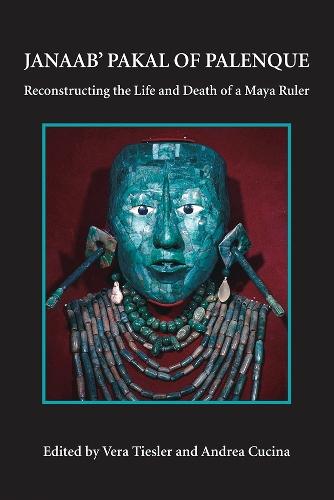
Excavations of Maya burial vaults at Palenque, Mexico, half a century ago revealed what was then the most extraordinary tomb finding of the pre-Columbian world; its discovery has been crucial to an understanding of the dynastic history and ideology of the ancient Maya. Over the years, new analytical tools introduced uncertainties regarding earlier interpretations of the findings, and a reanalysis of the remains of the ruler Janaab' Pakal using contemporary methodologies has led to new interpretations of former accounts of his life and death. The book leads readers through the history of Pakal's discovery, skeletal analysis, and interpretation of Maya biographies, and also devotes considerable attention to the tomb of the """"Red Queen"""" discovered at the site. Findings from the new Transition Analysis aging method, histomorphometric analysis, and taphonomic imagery are presented to shed new light on the perplexing question of Pakal's age at death. Royal Maya life and death histories from the written record are also analyzed from a regional perspective to provide a broad panorama of the twisted power politics of rulers' families and the entangled genealogies of the Maya Classic period. A benchmark in biological anthropology, this volume reconsiders assumptions concerning the practices and lives of Maya rulers, posing the prospect that researchers too often find what they expect to find. In presenting an updated study of a well-known personage, it also offers innovative approaches to the biocultural and interdisciplinary re-creation of Maya dynastic history.
Full Product Details
Author: Vera Tiesler ,
Andrea Cucina
Publisher: University of Arizona Press
Imprint: University of Arizona Press
Dimensions:
Width: 15.20cm
, Height: 2.00cm
, Length: 22.80cm
Weight: 0.320kg
ISBN: 9780816537310
ISBN 10: 0816537313
Pages: 272
Publication Date: 30 November 2017
Audience:
Professional and scholarly
,
Professional & Vocational
Format: Paperback
Publisher's Status: Active
Availability: Temporarily unavailable

The supplier advises that this item is temporarily unavailable. It will be ordered for you and placed on backorder. Once it does come back in stock, we will ship it out to you.
Reviews
Presents an illuminating, synthetic perspective of Maya nobility through biological anthropology that is woven into the epigraphic and archaeological record. --Latin American Antiquity Testifies to the coming-of-age of life-history approaches in bioarchaeology and serves as a showcase for advances in bioarchaeology and Maya epigraphy. --Journal of Anthropological Research [Janaab' Pakal of Palenque] sets a new standard in Maya research... and should not be missed by anyone working on this subject. --Anthropological Notebooks The significance of this volume to Maya studies and to comparable bioarchaeological examinations of life and death in the ancient world should be obvious to any interested reader. --Bulletin of Latin American Research Pakal's tomb has fascinated lay readers and scientists for 50 years and this volume will only add to that fascination in years to come. --The Journal of Latin American and Caribbean Anthropology This book is original in its holistic, multidisciplinary approach to the analysis of a single tomb and its attention to Maya chronicles as well as to skeletal analysis. It takes the reader carefully through the history of Pakal's discovery, skeletal analysis, and interpretation of Maya biographies. --Ekaterina Pechenkina, City University of New York This volume is a milestone for the study of Maya skeletal remains and epigraphy and sets to rest a dispute that has challenged the accuracy of both skeletal and epigraphic studies of the ancient Maya. It should be avidly read by Maya archaeologists, osteologists, and the ever abundant avocational enthusiasts of Maya archaeology. --Lori Wright, Texas A&M University
Presents an illuminating, synthetic perspective of Maya nobility through biological anthropology that is woven into the epigraphic and archaeological record. --Latin American Antiquity Testifies to the coming-of-age of life-history approaches in bioarchaeology and serves as a showcase for advances in bioarchaeology and Maya epigraphy. --Journal of Anthropological Research This book is original in its holistic, multidisciplinary approach to the analysis of a single tomb and its attention to Maya chronicles as well as to skeletal analysis. It takes the reader carefully through the history of Pakal's discovery, skeletal analysis, and interpretation of Maya biographies. --Ekaterina Pechenkina, City University of New York This volume is a milestone for the study of Maya skeletal remains and epigraphy and sets to rest a dispute that has challenged the accuracy of both skeletal and epigraphic studies of the ancient Maya. It should be avidly read by Maya archaeologists, osteologists, and the ever abundant avocational enthusiasts of Maya archaeology. --Lori Wright, Texas A&M University
Presents an illuminating, synthetic perspective of Maya nobility through biological anthropology that is woven into the epigraphic and archaeological record. --Latin American Antiquity Testifies to the coming-of-age of life-history approaches in bioarchaeology and serves as a showcase for advances in bioarchaeology and Maya epigraphy. --Journal of Anthropological Research This book is original in its holistic, multidisciplinary approach to the analysis of a single tomb and its attention to Maya chronicles as well as to skeletal analysis. It takes the reader carefully through the history of Pakal's discovery, skeletal analysis, and interpretation of Maya biographies. --Ekaterina Pechenkina, City University of New York This volume is a milestone for the study of Maya skeletal remains and epigraphy and sets to rest a dispute that has challenged the accuracy of both skeletal and epigraphic studies of the ancient Maya. It should be avidly read by Maya archaeologists, osteologists, and the ever abundant avocational enthusiasts of Maya archaeology. --Lori Wright, Texas A&M University
Author Information
Vera Tiesler and Andrea Cucina are professors in the Facultad de Ciencias Antropológicas, Universidad Autónoma de Yucatán, Mérida, Mexico, where Tiesler is head of the project Bioarqueología en Area Maya and Cucina coordinates the master's program in skeletal anthropology.