Overview
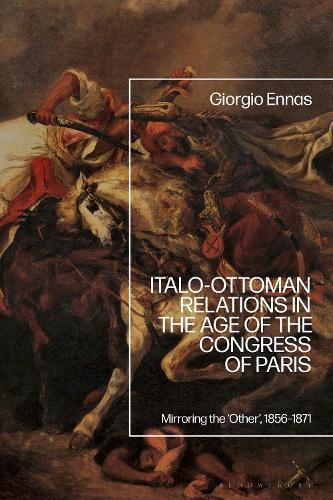
Giorgio Ennas here contends that, during the 19th century, the Ottoman Empire and the Kingdom of Italy developed in a specular way, as if reflecting each other through a mirror: both underwent a rapid process of ‘modernisation’, educated a new diplomatic elite, and, after their inclusion into the Concert of the Great Powers, implemented similar foreign policies to preserve their positions as European Powers. Italo-Ottoman Relations in the Age of the Congress of Paris uncovers the surprising existence of a common sensibility between the Sardinian-Italian and the Ottoman diplomats involved in international negotiations during the 1860s - a key period of transition towards the age of imperialism. In this decade, the members of the diplomatic elites studied international law from the same manuals. Ennas convincingly argues that it is this common education which diffused European diplomatic culture among non-European diplomatic establishments, creating a flourishing of multiple modernities in the process. While the dominant 19th-century narrative of modernisation processes situates these two countries in oppositional terms, the comparative analysis of their diplomatic documents and foreign policies in this study problematizes the common narrative of East versus West and uncovers the cultural similarities between these two alleged ‘others’. Indeed, the book highlights their common aspiration to be incorporated into a global European civilisation characterised by a universal ambition to include a broader range of Powers, moving beyond cultural and religious differences.
Full Product Details
Author: Dr Giorgio Ennas (Franklin University, Switzerland)
Publisher: Bloomsbury Publishing PLC
Imprint: Bloomsbury Academic
Dimensions:
Width: 15.40cm
, Height: 1.80cm
, Length: 23.60cm
Weight: 0.520kg
ISBN: 9781350378254
ISBN 10: 1350378259
Pages: 256
Publication Date: 22 January 2026
Audience:
Professional and scholarly
,
Professional & Vocational
Format: Hardback
Publisher's Status: Active
Availability: Manufactured on demand

We will order this item for you from a manufactured on demand supplier.
Reviews
Through serious archival work and careful comparison, Ennas shows how nineteenth-century Ottoman and Sardinian-Italian diplomatic elites embraced similar international legal texts and sociocultural practices while seeking recognition as ""civilized"" European powers. A compelling and innovative contribution to sociocultural diplomatic history that will bring European and Middle Eastern historians together. * Cyrus Schayegh, Professor, Geneva Graduate Institute, Switzerland *
Through serious archival work and careful comparison, Ennas shows how nineteenth-century Ottoman and Sardinian-Italian diplomatic elites embraced similar international legal texts and sociocultural practices while seeking recognition as ""civilized"" European powers. A compelling and innovative contribution to sociocultural diplomatic history that will bring European and Middle Eastern historians together. * Cyrus Schayegh, Professor, Geneva Graduate Institute, Switzerland * This is an excellent comparative cultural historical analysis of two understudied Eastern Mediterranean states, the Ottoman and the Italian-Sardinian during the nineteenth century. Ennas very ably employs multiple archives to document how Ottoman and Italian diplomatic corps negotiate their similar positions in relation to the encroaching Western European ‘civilization’ with its ‘international’ law. * Fatma Gocek, Professor of Sociology, University of Michigan, USA *
Author Information
Giorgio Ennas is Postdoctoral Fellow at the University of Utrecht, Netherlands, and Affiliated Scholar at Franklin University Switzerland, Switzerland. He is the editor of Reports of Cesare Durando Italian Vice-consul in Sarajevo (1863-1867) (2020).