Overview
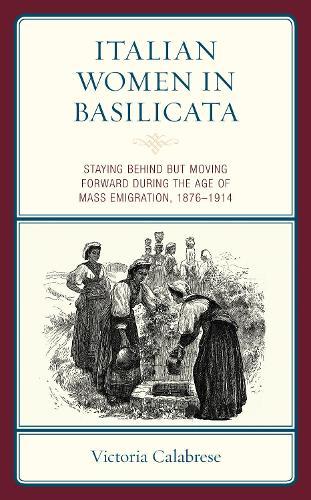
This study examines the role of southern Italian women who remained behind when their husbands emigrated in the late nineteenth and early twentieth centuries. By piecing together limited archival source material, the author argues that married women were not voiceless or powerless when their husbands were abroad, but they took on roles beyond their limited legal position. They petitioned local officials, requested passports, received remittances, and handled the family finances, all in the absence of their husbands, the legal head of the family. The study also emphasizes the connection forged between women and the new Italian state at a time when women did not have political rights. Centering on Basilicata—a “forgotten” region of the Italian south and one that has not been a major focus of scholarly investigation—this study challenges stereotypes that the Italian south was backwards, uncivilized, and lagging behind northern Italy. The author argues that large scale emigration greatly impacted the married women left behind in the villages of Basilicata, changing their social, political, and economic role.
Full Product Details
Author: Victoria Calabrese
Publisher: Bloomsbury Publishing Plc
Imprint: Lexington Books
Dimensions:
Width: 16.10cm
, Height: 2.10cm
, Length: 22.70cm
Weight: 0.481kg
ISBN: 9781793607782
ISBN 10: 1793607788
Pages: 212
Publication Date: 26 January 2022
Audience:
Professional and scholarly
,
Professional & Vocational
Format: Hardback
Publisher's Status: Active
Availability: Manufactured on demand

We will order this item for you from a manufactured on demand supplier.
Reviews
Calabrese's work is a timely reminder of the gendered dimension of transnational migration. By focusing on rural women in Basilicata, a seemingly isolated, rural world, Calabrese shows us the ways in which male emigration transformed the intimate and public lives of the married women who remained behind. Working from a wide range of government documents, Calabrese centers on the words and experiences of rural women as they navigated the intricacies of a transnational global network. This work highlights the ways rural women invoked the law, government agencies, and social norms to forge new roles for themselves within the family and the state. -- Linda Reeder, University of Missouri Italian Women in Basilicata creatively pieces together scant and scattered documentation with good results. It delivers vivid illustrations of how women's confined civil status shaped their responses to male emigration, focusing on their persistent, small efforts to protect themselves as wives, mothers, and daughters. -- Donna Gabaccia, University of Toronto Victoria Calabrese paints a moving and nuanced portrait of women in Italy during the peak years of emigration from the south of the country. By investigating the legal, social, and religious implications of families separated by international migration, Calabrese explains continuity and change in gender relations, family structures, and community development. This book makes a significant contribution to women's studies, migration studies, and Italian studies, with specific examples of women's stories that readers will long remember. -- Mark Choate, Brigham Young University
Calabrese’s work is a timely reminder of the gendered dimension of transnational migration. By focusing on rural women in Basilicata, a seemingly isolated, rural world, Calabrese shows us the ways in which male emigration transformed the intimate and public lives of the married women who remained behind. Working from a wide range of government documents, Calabrese centers on the words and experiences of rural women as they navigated the intricacies of a transnational global network. This work highlights the ways rural women invoked the law, government agencies, and social norms to forge new roles for themselves within the family and the state. -- Linda Reeder, University of Missouri Italian Women in Basilicata creatively pieces together scant and scattered documentation with good results. It delivers vivid illustrations of how women’s confined civil status shaped their responses to male emigration, focusing on their persistent, small efforts to protect themselves as wives, mothers, and daughters. -- Donna Gabaccia, University of Toronto Victoria Calabrese paints a moving and nuanced portrait of women in Italy during the peak years of emigration from the south of the country. By investigating the legal, social, and religious implications of families separated by international migration, Calabrese explains continuity and change in gender relations, family structures, and community development. This book makes a significant contribution to women’s studies, migration studies, and Italian studies, with specific examples of women’s stories that readers will long remember. -- Mark Choate, Brigham Young University
Author Information
Victoria Calabrese teaches at Iona College.