Overview
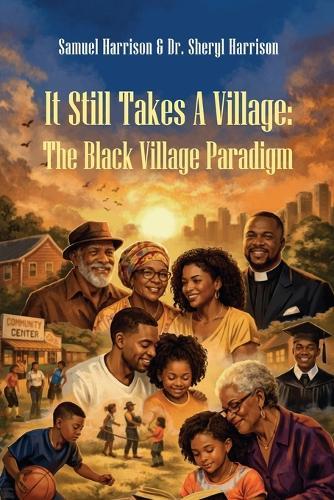
Numerous Black villages have been destroyed physically; their previous contributions require that we recreate them virtually. For generations the Black experience in America has been shaped by forces that are relentless and redemptive. From the earliest days of our presence on this soil, our communities learned, sometimes by necessity, always with intention, that survival depended not only on resistance, but on unity. The ""village"" was not a metaphor: it was a means of collective advancement. It was the structure that held families together when the law did not. It was the system that transmitted wisdom when access to formal education was denied. It was the network that fostered business ownership, cultivated leadership, and offered refuge, dignity, and hope.
Full Product Details
Author: Samuel Harrison ,
Dr Esq Sheryl Harrison
Publisher: Gatekeeper Press
Imprint: Gatekeeper Press
Dimensions:
Width: 15.20cm
, Height: 0.50cm
, Length: 22.90cm
Weight: 0.141kg
ISBN: 9781662972553
ISBN 10: 1662972555
Pages: 96
Publication Date: 06 May 2026
Audience:
General/trade
,
General
Format: Paperback
Publisher's Status: Active
Availability: Available To Order

We have confirmation that this item is in stock with the supplier. It will be ordered in for you and dispatched immediately.
Author Information
Sheryl Harrison is a lawyer, educator, and senior law school administrator with more than fifteen years of experience at the intersection of law and education. Throughout her career, she has played a central role in shaping student-centered policies, compliance frameworks, and support systems that advance access, equity, and student success. Her work reflects an extraordinary commitment to building institutional structures that address systemic barriers facing historically marginalized communities. Sheryl has designed and led comprehensive initiatives focused on student wellness, retention, professional development, and closing social capital gaps. These efforts directly inform her perspective on the Black experience in educational and professional spaces. Her scholarly work further complements this professional focus. During her PhD program, her research examined how federal laws and policy have been used to limit access to educational opportunities for members of marginalized groups and how legal frameworks can also be leveraged to dismantle those barriers. Sheryl holds a PhD from the University of Georgia, a Juris Doctor from the University of North Carolina at Chapel Hill School of Law (Order of the Coif), an MBA from Wake Forest University's Babcock Graduate School of Management, and a Bachelor of Science in Accounting from North Carolina A&T State University. Her professional and community service have included leadership roles with the Georgia Association of Black Women Attorneys, the Law School Admission Council, the Chief Justice's Commission on Professionalism, the National Black MBA Association, and a range of other civic, educational, and professional organizations. Earlier in her career, Sheryl practiced as a complex litigation associate at Troutman Sanders LLP (now Troutman Pepper Locke) and served as a judicial law clerk for the United States District Court for the Middle District of North Carolina. She brings a nuanced perspective to this book on the Black experience in America that is shaped by history and an enduring belief in the transformative power of education and community.