|
|
|||
|
||||
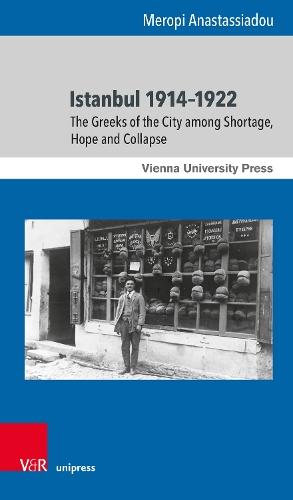
OverviewIstanbul’s population greatly suffered during WWI. Sanitary problems, pauperization, mortality rise deteriorated everyday life. The flows of refugees and military mobilization were major issues. Paradoxically, its Greek orthodox community increased in 1914–1918. After the Mudros Armistice (October 1918), it could hope for the Ottoman Empire’s dismemberment and the return of Constantinople to the Greek fold. The events that followed and led to the birth of the Republic of Turkey would put an end to their expectations. The deterioration of everyday material life, the loyalty of Istanbul Greeks to the Ottoman State in wartime, ordinary people’s position towards Hellenic irredentism are the main themes explored through the archives of Greek Orthodox parishes of the city and those of the Ecumenical Patriarchate of Constantinople. Full Product DetailsAuthor: Prof. Dr. Meropi AnastassiadouPublisher: V&R unipress GmbH Imprint: V&R unipress GmbH Edition: 1. Edition 2026 Dimensions: Width: 12.30cm , Height: 0.50cm , Length: 21.00cm Weight: 0.120kg ISBN: 9783847119395ISBN 10: 3847119397 Pages: 101 Publication Date: 09 February 2026 Audience: General/trade , General Format: Paperback Publisher's Status: Active Availability: In Print This item will be ordered in for you from one of our suppliers. Upon receipt, we will promptly dispatch it out to you. For in store availability, please contact us. Table of ContentsReviewsAuthor InformationMeropi Anastassiadou is Professor of Modern History at INALCO (Paris) and the University of Geneva. Her research focuses on urban societies in 19th and 20th century Eastern Mediterranean. Tab Content 6Author Website:Countries AvailableAll regions |
||||