Overview
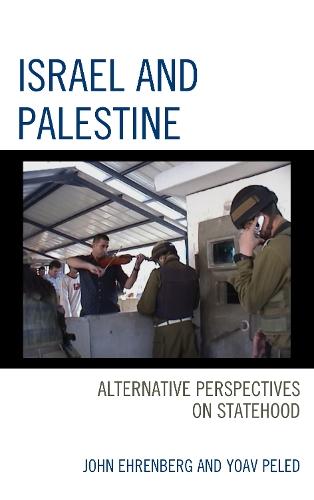
For decades, Israeli Jews, Palestinians, and Israeli Arabs have been engaged in a debate about past history, present options, and future possibilities. Basic questions of citizenship, religion, political tactics, democracy, the rule of law, and a host of other matters are abandoned, revived and modified in an intellectual exchange between representatives of all three communities that is as old as the political conflicts that have marked the region. The high stakes, intense emotions—and meager results—of the “peace process” lend particular importance and salience to these discussions. The sophistication of these debates will come as a surprise to many observers who might have concluded that there is no escape from the present impasse and little possibility for a just settlement of the grievous divisions in the region. Given the pivotal role of the United States in the Middle East, it would be particularly helpful if Americans’ understanding of the issues went beyond the superficiality that often passes for political discussion and media coverage. Whatever the outcome of the discussions currently under way, the central commitment of the Oslo Accords to the two-state solution has long been the foundation of American diplomacy and is the starting-point of Washington’s most recent attempt to revive the moribund peace process. Important segments of public opinion in the three communities, however, have started to question the possibility—and, more importantly perhaps, the desirability—of a two-state solution. Their doubts have set in motion a lively and important debate, and this book is designed to introduce American readers to the terms of that discussion. It features essays by well-known Israeli academics, both Jewish and Palestinian, as well as contributions from non-Israeli citizen Palestinian, and American scholars. It is the first to bring together a wide range of views and perspectives by influential scholars from various disciplines as well as from activists to bear on a very topical subject with international ramifications.
Full Product Details
Author: John Ehrenberg , Yoav Peled
Publisher: Bloomsbury Publishing Plc
Imprint: Rowman & Littlefield
Dimensions:
Width: 16.50cm
, Height: 3.40cm
, Length: 23.30cm
Weight: 0.758kg
ISBN: 9781442245075
ISBN 10: 1442245077
Pages: 396
Publication Date: 29 July 2016
Audience:
Professional and scholarly
,
Professional & Vocational
Format: Hardback
Publisher's Status: Active
Availability: Manufactured on demand 
We will order this item for you from a manufactured on demand supplier.
Table of Contents
Introduction: The Picture John Ehrenberg Section 1: Overviews Chapter 1: Facing the Music: Israel, Palestine, and the Politics of Partisan Delusions Stephen Eric Bronner Chapter 2: Making Sense of the Nakba: Ari Shavit, Baruch and Zionist Claims to Territory Ian S. Lustick Chapter 3: Israel and the Closing of the American Jewish Mind Richard Silverstein Chapter 4: The Root Causes Of Enduring Conflict: Can Israel And Palestine Co-Exist? Jeffry Frieden Chapter 5: Reclaiming Human Rights: Alternative Paths to an Israeli/Palestinian Peace Micheline Ishay and David Kretzmer Section 2: Two States Chapter 6: Not Exactly Apartheid: Between Settler Colonialism and Military Occupation Honaida Ghanim Chapter 7: The One-State Delusion Assaf Sharon Chapter 8: To What Extent Reconciliation? An Analysis of the Geneva Accord between Israelis and Palestinians Yoav Kapshuk Chapter 9: One Homeland, Two States: Planning Alternative Spatial Relations between Palestine and Israel Rassem Khamaisi Section 3: The One-State Alternative Chapter 10: The Way Forward in the Middle East Horit Herman Peled and Yoav Peled Chapter 11: The One-State Solution and the Israeli-Palestinian Conflict: Palestinian Challenges and Prospects Leila Farsakh Chapter 12: A One-State Solution? From a ‘Struggle Unto Death’ to ‘Master-Slave’ Dialectics Raif Zreik Chapter 13: Past and Present Perfect of Israel’s One-State Solution Moshe Behar Section 4: Confederation Chapter 14: Towards a Shared Vision of Israel and Israel/Palestine Oren Barak Chapter 15: Neither One nor Two: Reflections about a Shared Future in Israel-Palestine Lev Luis Grinberg Chapter 16: Between One and Two: Apartheid or Confederation for Israel/Palestine? Oren Yiftahel Chapter 17: Beyond Traditional Sovereignty Theory in Conflict Resolution: Lessons from Israel/Palestine Amal Jamal Conclusion: Out of the Darkness John Ehrenberg
Reviews
[T]here is much in this book that deserves praise and may serve to inspire optimism. Indeed, there are a number of nuanced chapters that focus on such issues as the root causes of the Arab-Israeli conflict; the essential nature of human rights; reconciliation; and planning spatial relations between Israelis and Palestinians. These, along with others concerning, inter alia, the idea of sharing sovereignty and reflections on a shared future in Israel-Palestine, contribute to give this book a certain value-added, especially when dealing with a subject-matter that may have become moribund in the view of many due to its intractable nature.... Overall, this volume will contribute to the existing literature on the topic of Israel- Palestine and their future, and will add to readers' knowledge of the subject-matter. * International Affairs * This book assembles some of the best critical experts about the Israeli-Palestinian conflict, to reflect creatively about what may come next, after the demise of the long awaited Two States Solution . It suggests rich and fresh diagnoses and prognoses of the conflict. It is a timely collection, and if I had to read now one book on the subject it would be it. -- Uri Ram, professor, Ben Gurion University of the Negev; President of Israeli Sociological Association
[T]here is much in this book that deserves praise and may serve to inspire optimism. Indeed, there are a number of nuanced chapters that focus on such issues as the root causes of the Arab-Israeli conflict; the essential nature of human rights; reconciliation; and planning spatial relations between Israelis and Palestinians. These, along with others concerning, inter alia, the idea of sharing sovereignty and reflections on a shared future in Israel-Palestine, contribute to give this book a certain value-added, especially when dealing with a subject-matter that may have become moribund in the view of many due to its intractable nature.... Overall, this volume will contribute to the existing literature on the topic of Israel- Palestine and their future, and will add to readers' knowledge of the subject-matter. * International Affairs * This book assembles some of the best critical experts about the Israeli-Palestinian conflict, to reflect creatively about what may come next, after the demise of the long awaited Two States Solution . It suggests rich and fresh diagnoses and prognoses of the conflict. It is a timely collection, and if I had to read now one book on the subject it would be it. -- Uri Ram, professor, Ben Gurion University of the Negev; President of Israeli Sociological Association The reach is ambitious, spanning not only suggestions for radically altering the prevailing systems of control over Israel-Palestine, but also a wide variety of historical, analytical, philosophical and political expositions and critiques aimed at providing insights into the stubbornness of the conflict and barriers to its resolution. * Ethnic and Racial Studies *
This book assembles some of the best critical experts about the Israeli-Palestinian conflict, to reflect creatively about what may come next, after the demise of the long awaited Two States Solution . It suggests rich and fresh diagnoses and prognoses of the conflict. It is a timely collection, and if I had to read now one book on the subject it would be it. -- Uri Ram, professor, Ben Gurion University of the Negev; President of Israeli Sociological Association
Author Information
John Ehrenberg is Chair of the Political Science Department and senior professor of Political Science at Long Island University, Brooklyn. He has received the Alfred McCoy Award for Lifetime Achievement from the American Political Science Association’s Caucus for a New Political Science. Yoav Peled is professor of Political Science at Tel Aviv University. He received his PhD in political science from UCLA in 1982. His work has dealt with citizenship and ethnic politics in Israel and with the Israeli-Palestinian conflict. He co-authored the book Being Israeli: the Dynamics of Multiple Citizenship (Cambridge University Press, 2002), which won the Albert Hourani Prize of the Middle East Studies Association of North America for best book in Middle East studies in 2002. He is co-editor in chief of The Public Sphere: Tel Aviv Journal of Political Science (in Hebrew). Contributors: Oren Barak, lecturer in the Department of Political Science and International Relations at The Hebrew University of Jerusalem Moshe Behar is Senior Lecturer in Middle Eastern Studies at the University of Manchester Stephen Eric Bronner, director of global relations and professor of political science,, Rutgers University Leila Farsakh, Palestinian political economist and associate professor of political science at University of Massachusetts, Boston Jeffry Frieden, Stanfield professor of international peace, Department of Government, Harvard University Honaida Ghanim, general director of “MADAR” the Palestinian Forum for Israeli Studies (Ramallah) and a fellow, Department of Sociology and Anthropology, Hebrew University of Jerusalem Lev Luis Grinberg, political economist and sociologist in the Department of Sociology and Anthropology, Ben Gurion University, Israel Micheline Ishay, University of Denver Distinguished Scholar, and professor of International Studies and Human Rights, Josef Korbel of School of International Studies, University of Denver, Colorado Amal Jamal, chair of the Department of Political Science at Tel Aviv University and head of the Walter Leibach Institute Yoav Kapshuk, Department of Political Science, Tel Aviv University Rassem Khamaisi, professor in the Department of Geography and Environmental Studies, University of Haifa, Israel David Kretzmer, professor emeritus, Hebrew University of Jerusalem, and professor of law at Sapir College School of Law Ian S. Lustick, Bess W. Heyman chair in political science and professor of political science, The University of Pennsylvania Assaf Sharon, academic director and research fellow at Molad, the Center for the Renewal of Israeli Democracy, Jerusalem and assistant professor in the Philosophy Department at Tel Aviv University Richard Silverstein is a journalist, blogger and regular contributor to Mint Press News. Raif Zreik, a Palestinian Israeli, currently teaching in the Law School, Carmel College and Minerva Humanities Institute, Tel Aviv University
Tab Content 6
Author Website:
Countries Available
All regions
|