|
|
|||
|
||||
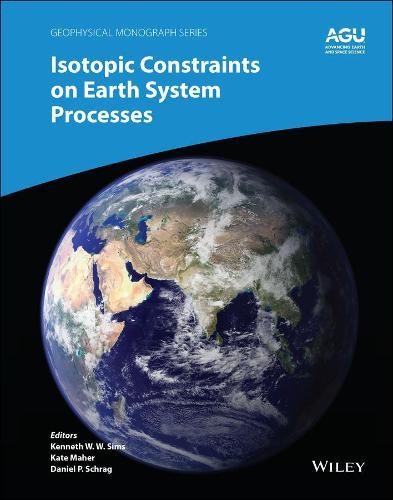
OverviewUsing isotopes as a tool for understanding Earth processes From establishing the absolute age of the Earth to providing a stronger understanding of the nexus between geology and life, the careful measurement and quantitative interpretation of minor variations in the isotopic composition of Earth’s materials has provided profound insight into the origins and workings of our planet. Isotopic Constraints on Earth System Processes presents examples of the application of numerous different isotope systems to address a wide range of topical problems in Earth system science. Volume highlights include: examination of the natural fractionation of non-traditional stable isotopes utilizing isotopes to understand the origin of magmas and evolution of volcanic systems application of isotopes to interrogate and understand Earth’s Carbon and Oxygen cycles examination of the geochemical and hydrologic processes that lead to isotopic fractionation application of isotopic reactive transport models to decipher hydrologic and biogeochemical processes The American Geophysical Union promotes discovery in Earth and space science for the benefit of humanity. Its publications disseminate scientific knowledge and provide resources for researchers, students, and professionals. Full Product DetailsAuthor: Kenneth W. W. Sims (University of Wyoming, USA) , Katharine (Kate) Maher (Stanford University, USA) , Daniel P. Schrag (Harvard University, USA)Publisher: John Wiley & Sons Inc Imprint: American Geophysical Union Dimensions: Width: 21.80cm , Height: 2.00cm , Length: 27.70cm Weight: 1.157kg ISBN: 9781119594970ISBN 10: 1119594979 Pages: 352 Publication Date: 10 May 2022 Audience: Professional and scholarly , Professional & Vocational Format: Hardback Publisher's Status: Active Availability: Out of stock The supplier is temporarily out of stock of this item. It will be ordered for you on backorder and shipped when it becomes available. Table of ContentsReviewsAuthor InformationKenneth W. W. Sims, University of Wyoming, USA. Kate Maher, Stanford University, USA. Daniel P. Schrag, Harvard University, USA. Tab Content 6Author Website:Countries AvailableAll regions |
||||