Overview
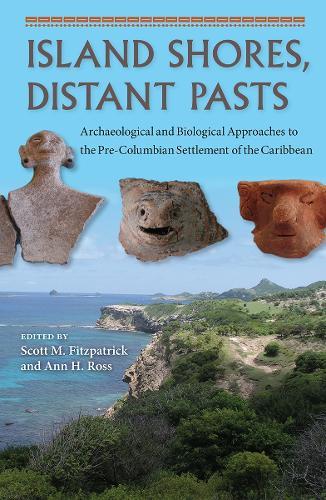
""Can be considered as a real starting point for a biological approach of the pre-Columbian settlement of the Caribbean.""-- Benoit Berard, Universite des Antilles For more than a century, archaeologists and anthropologists have searched for evidence of when and how peoples first settled the Caribbean islands. Research on this area is pivotal for understanding the migration of peoples in the New World and how small and large populations develop biologically and culturally through time. This unique collection synthesizes our archaeological and biological knowledge about the pre-Columbian settlement of the Caribbean and highlights the various techniques we can use to analyze human migration and settlement patterns throughout history. Newer and well-established techniques, like computer simulations of seafaring, radiocarbon dating, three-dimensional and traditional craniometrics, stable isotopes, and ancient and modern DNA analysis, show great promise for helping us better understand pre-Columbian Caribbean population expansions, while demonstrating the utility of integrating and comparing biological markers with the archaeological record. Surprisingly little attention has been paid to migrations, population movements, and island colonization in the Caribbean islands. This volume fills that void.
Full Product Details
Author: Scott M. Fitzpatrick ,
Ann H. Ross
Publisher: University Press of Florida
Imprint: University Press of Florida
Dimensions:
Width: 15.70cm
, Height: 2.20cm
, Length: 23.10cm
Weight: 0.494kg
ISBN: 9780813035222
ISBN 10: 0813035228
Pages: 288
Publication Date: 30 November 2010
Audience:
Professional and scholarly
,
Professional & Vocational
Format: Hardback
Publisher's Status: Out of Print
Availability: In Print

Limited stock is available. It will be ordered for you and shipped pending supplier's limited stock.
Reviews
Demonstrate[s] various methods that introduce new insights into the investigation of Caribbean prehistory, revealing the complexity of pre-Columbian cultures, peoples, and their movements. . . . [and] contributes to a totalizing view of the colonization process in the Caribbean. --Caribbean Quarterly
Demonstrate[s] various methods that introduce new insights into the investigation of Caribbean prehistory, revealing the complexity of pre-Columbian cultures, peoples, and their movements. . . . [and] contributes to a totalizing view of the colonization process in the Caribbean. --Caribbean Quarterly Look[s] beyond the field of archaeology to include new techniques from genetics, computer simulation, and physical anthropology. . . . Unquestionably moves our understanding of the settling of the Caribbean forward and provides several new provocative avenues for further exploration. --New West Indian Guide An excellent compilation of new methods and theories in Caribbean archaeology. . . . Not only materialize[s] the methodological advance in Caribbean archaeology, but also signif[ies] the strong theoretical progression that this discipline is experiencing. --Journal of Caribbean Archaeology
An excellent compilation of new methods and theories in Caribbean archaeology. . . . Not only materialize[s] the methodological advance in Caribbean archaeology, but also signif[ies] the strong theoretical progression that this discipline is experiencing. --Journal of Caribbean Archaeology Demonstrate[s] various methods that introduce new insights into the investigation of Caribbean prehistory, revealing the complexity of pre-Columbian cultures, peoples, and their movements. . . . [and] contributes to a totalizing view of the colonization process in the Caribbean. --Caribbean Quarterly Look[s] beyond the field of archaeology to include new techniques from genetics, computer simulation, and physical anthropology. . . . Unquestionably moves our understanding of the settling of the Caribbean forward and provides several new provocative avenues for further exploration. --New West Indian Guide
Look[s] beyond the field of archaeology to include new techniques from genetics, computer simulation, and physical anthropology. . . . Unquestionably moves our understanding of the settling of the Caribbean forward and provides several new provocative avenues for further exploration. --New West Indian Guide Demonstrate[s] various methods that introduce new insights into the investigation of Caribbean prehistory, revealing the complexity of pre-Columbian cultures, peoples, and their movements. . . . [and] contributes to a totalizing view of the colonization process in the Caribbean. --Caribbean Quarterly An excellent compilation of new methods and theories in Caribbean archaeology. . . . Not only materialize[s] the methodological advance in Caribbean archaeology, but also signif[ies] the strong theoretical progression that this discipline is experiencing. --Journal of Caribbean Archaeology
Demonstrate[s] various methods that introduce new insights into the investigation of Caribbean prehistory, revealing the complexity of pre-Columbian cultures, peoples, and their movements. . . . [and] contributes to a totalizing view of the colonization process in the Caribbean. --<b><i>Caribbean Quarterly</i></b>
Author Information
Scott M. Fitzpatrick is associate professor of anthropology at North Carolina State. Ann H. Ross is associate professor of anthropology at North Carolina State University.