Overview
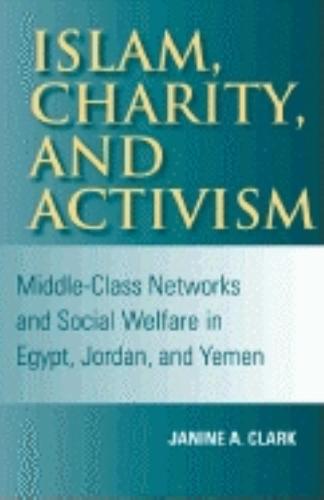
Throughout the Middle East, Islamic charities and social welfare organizations play a major role in addressing the socioeconomic needs of Muslim societies, independently of the state. Through case studies of Islamic medical clinics in Egypt, the Islamic Center Charity Society in Jordan, and the Islah Women's Charitable Society in Yemen, Janine A. Clark examines the structure and dynamics of moderate Islamic institutions and their social and political impact. Questioning the widespread assumption that such organizations as charities, schools, and medical clinics serve mainly the poorer classes, Clark argues that because of the operational needs of the institutions themselves and the programmatic agendas of the moderate Islamist movement of which they are a part, in fact these organizations are run by and for the middle class. Rather than the vertical recruitment or mobilization of the poor that they are often presumed to promote, Islamic social institutions play an important role in strengthening social networks that bind middle class doctors, directors, donors, volunteers, patients, and clients together.Ties of trust, solidarity, and teamwork develop along these horizontal lines, indirectly leading to the development of new social networks and, potentially, the diffusion of new ideas.
Full Product Details
Author: Janine A. Clark
Publisher: Indiana University Press
Imprint: Indiana University Press
Dimensions:
Width: 15.60cm
, Height: 2.00cm
, Length: 23.50cm
Weight: 0.408kg
ISBN: 9780253216267
ISBN 10: 0253216265
Pages: 256
Publication Date: 01 January 2004
Audience:
Professional and scholarly
,
Professional & Vocational
Format: Paperback
Publisher's Status: Active
Availability: In Print

This item will be ordered in for you from one of our suppliers. Upon receipt, we will promptly dispatch it out to you. For in store availability, please contact us.
Reviews
<p>Much of the literature on Islamic Social Institutions (ISIs) has argued that these institutions are recruiting grounds for the poor. Clark (Univ. of Guelph, Ca.), through case studies of ISIs in Egypt, Yemen, and Jordan takes this notion to task. She argues that the vertical networks (i.e. across classes) created through ISIs are weak, that the important social networks are the horizontal ones within the middle class, and that this is in keeping with social movement theories. In addition, she demonstrates how a strategy of solidifying middle class networks, one that is demanded by the operational needs of ISIs, may actually work to discredit Islamic movements that support these ISIs in the long run. Finally, she argues that ISIs do not necessarily seek radical transformation of society and that there is nothing obviously Islamic in their provision of services. Her argument is clear and easy to follow, and the case studies are rich with supportive data. However, in some respects, the case study of the Islah Charitable Society in Yemen, differs from the others and raises questions about her contentions, particularly about the Islamic nature of ISI activities. Summing Up: Recommended. Advanced--level undergraduates and graduates, specifically those interested in civil society in the region and Islamism.--F. J. Adely, Columbia University Choice (01/01/2004)
Much of the literature on Islamic Social Institutions (ISIs) has argued that these institutions are recruiting grounds for the poor. Clark (Univ. of Guelph, Ca.), through case studies of ISIs in Egypt, Yemen, and Jordan takes this notion to task. . . . Her argument is clear and easy to follow, and the case studies are rich with supportive data. . . . Recommended. July 2004 * Choice *
<p>Much of the literature on Islamic Social Institutions (ISIs) has argued that these institutions are recruiting grounds for the poor. Clark (Univ. of Guelph, Ca.), through case studies of ISIs in Egypt, Yemen, and Jordan takes this notion to task. She argues that the vertical networks (i.e. across classes) created through ISIs are weak, that the important social networks are the horizontal ones within the middle class, and that this is in keeping with social movement theories. In addition, she demonstrates how a strategy of solidifying middle class networks, one that is demanded by the operational needs of ISIs, may actually work to discredit Islamic movements that support these ISIs in the long run. Finally, she argues that ISIs do not necessarily seek radical transformation of society and that there is nothing obviously Islamic in their provision of services. Her argument is clear and easy to follow, and the case studies are rich with supportive data. However, in some respects, the case study of the Islah Charitable Society in Yemen, differs from the others and raises questions about her contentions, particularly about the Islamic nature of ISI activities. Summing Up: Recommended. Advanced--level undergraduates and graduates, specifically those interested in civil society in the region and Islamism.F. J./P>--F. J. Adely, Columbia University Choice (01/01/2004)
<p> Much of the literature on Islamic Social Institutions (ISIs) has arguedthat these institutions are recruiting grounds for the poor. Clark (Univ. of Guelph, Ca.), through case studies of ISIs in Egypt, Yemen, and Jordan takes this notion totask.... Her argument is clear and easy to follow, and the case studies are richwith supportive data.... Recommended. -- Choice, July 2004
Author Information
Janine A. Clark is Associate Professor of Political Science at the University of Guelph and co-editor (with Remonda Bensabat-Kleinberg) of Economic Liberalization, Democratization, and Civil Society in the Developing World.