Overview
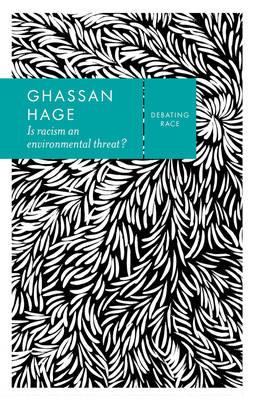
The ecological crisis is the most overwhelming to have ever faced humanity and its consequences permeate every domain of life. This trenchant book examines its relation to Islamophobia as the dominant form of racism today, showing how both share roots in domination, colonialism, and the logics of capitalism. Ghassan Hage proposes that both racism and humanity’s destructive relationship with the environment emanate from the same mode of inhabiting the world: an occupying force imposes its own interest as law, subordinating others for the extraction of value, eradicating or exterminating what gets in the way. In connecting these two issues, Hage gives voice to the claim taking shape in many activist spaces that anti-racist and ecological struggles are intrinsically related. In both, the aim is to move beyond what makes us see otherness, whether human or nonhuman, as something that exists solely to be managed.
Full Product Details
Author: Ghassan Hage
Publisher: John Wiley and Sons Ltd
Imprint: Polity Press
Dimensions:
Width: 12.50cm
, Height: 1.70cm
, Length: 19.10cm
Weight: 0.247kg
ISBN: 9780745692265
ISBN 10: 0745692265
Pages: 140
Publication Date: 21 April 2017
Audience:
College/higher education
,
Professional and scholarly
,
Postgraduate, Research & Scholarly
,
Professional & Vocational
Format: Hardback
Publisher's Status: Active
Availability: Out of stock

The supplier is temporarily out of stock of this item. It will be ordered for you on backorder and shipped when it becomes available.
Reviews
In his usual grippingly lucid prose, Ghassan Hage gives us here an insightful critique of the intrinsic connection between racism and speciesism in their most ungovernable contemporary expressions, namely, Islamophobia and the planetary ecological catastrophe. He thereby exposes the politico-metaphysical foundations of Western colonialism alongside with the colonialist in the broadest and deepest sense foundations of Western metaphysics, particularly in its capitalist expression with its relentless need of so-called primitive accumulation. By showing, with the help of anthropological classics such as Mauss and Levy-Bruhl, that our own anthropotechnics of generalized domestication (one of the most innovative concepts of this book) is by no means the only human way of ecologizing of making ourselves at home in the world Hage offers us a nuanced, subtle analysis of the metonymic and metaphorical wolves that haunt the obsessive mono-realist project of capitalism, whose glaring failure is now forcing us to pay increased attention to the counter-hegemonic modes of existence (re)emerging through the widening cracks in the ecocidal and racist-colonial nomos of Modernity. Eduardo Viveiros de Castro, The National Museum of Brazil
In his usual grippingly lucid prose, Ghassan Hage gives us here an insightful critique of the intrinsic connection between racism and speciesism in their most 'ungovernable' contemporary expressions, namely, Islamophobia and the planetary ecological catastrophe. He thereby exposes the politico-metaphysical foundations of Western colonialism alongside with the colonialist - in the broadest and deepest sense - foundations of Western metaphysics, particularly in its capitalist expression with its relentless need of so-called primitive accumulation. By showing, with the help of anthropological classics such as Mauss and Levy-Bruhl, that our own anthropotechnics of 'generalized domestication' (one of the most innovative concepts of this book) is by no means the only human way of ecologizing - of making ourselves at home in the world - Hage offers us a nuanced, subtle analysis of the metonymic and metaphorical wolves that haunt the obsessive 'mono-realist' project of capitalism, whose glaring failure is now forcing us to pay increased attention to the counter-hegemonic modes of existence (re)emerging through the widening cracks in the ecocidal and racist-colonial nomos of Modernity. -Eduardo Viveiros de Castro, The National Museum of Brazil [This fine book speaks] to the deep healing in people's relations with each other and with the earth that's needed if we are to meaningfully address the damage being done to both our social and natural environments. [Hage] sheds persuasive light on why action on climate change is stalled at the level of talk, by linking it to racism. To him this signals the (largely white male) elites projecting their fear of loss of power onto the racialized 'other' to avoid coming to terms with their need for power through domination, which underlies the environmental crisis in the first place. [...] Anyone interested in helping to break this impasse by better understanding it will find this book invaluable. -Watershed Sentinel
In his usual grippingly lucid prose, Ghassan Hage gives us here an insightful critique of the intrinsic connection between racism and speciesism in their most ungovernable contemporary expressions, namely, Islamophobia and the planetary ecological catastrophe. He thereby exposes the politico-metaphysical foundations of Western colonialism alongside with the colonialist in the broadest and deepest sense foundations of Western metaphysics, particularly in its capitalist expression with its relentless need of so-called primitive accumulation. By showing, with the help of anthropological classics such as Mauss and Levy-Bruhl, that our own anthropotechnics of generalized domestication (one of the most innovative concepts of this book) is by no means the only human way of ecologizing of making ourselves at home in the world Hage offers us a nuanced, subtle analysis of the metonymic and metaphorical wolves that haunt the obsessive mono-realist project of capitalism, whose glaring failure is now forcing us to pay increased attention to the counter-hegemonic modes of existence (re)emerging through the widening cracks in the ecocidal and racist-colonial nomos of Modernity. Eduardo Viveiros de Castro, The National Museum of Brazil
"""In his usual grippingly lucid prose, Ghassan Hage gives us here an insightful critique of the intrinsic connection between racism and speciesism in their most 'ungovernable' contemporary expressions, namely, Islamophobia and the planetary ecological catastrophe. He thereby exposes the politico–metaphysical foundations of Western colonialism alongside with the colonialist – in the broadest and deepest sense – foundations of Western metaphysics, particularly in its capitalist expression with its relentless need of so-called primitive accumulation. By showing, with the help of anthropological classics such as Mauss and Lévy-Bruhl, that our own anthropotechnics of 'generalized domestication' (one of the most innovative concepts of this book) is by no means the only human way of ecologizing – of making ourselves at home in the world – Hage offers us a nuanced, subtle analysis of the metonymic and metaphorical wolves that haunt the obsessive 'mono-realist' project of capitalism, whose glaring failure is now forcing us to pay increased attention to the counter-hegemonic modes of existence (re)emerging through the widening cracks in the ecocidal and racist–colonial nomos of Modernity."" —Eduardo Viveiros de Castro, The National Museum of Brazil ""[This fine book speaks] to the deep healing in people's relations with each other and with the earth that's needed if we are to meaningfully address the damage being done to both our social and natural environments. [Hage] sheds persuasive light on why action on climate change is stalled at the level of talk, by linking it to racism. To him this signals the (largely white male) elites projecting their fear of loss of power onto the racialized 'other' to avoid coming to terms with their need for power through domination, which underlies the environmental crisis in the first place. […] Anyone interested in helping to break this impasse by better understanding it will find this book invaluable."" —Watershed Sentinel ""Hage has written a rich and profoundly thought-provoking and original monograph on the intertwining of anti-racism and environmentalism."" Politics, Religion & Ideology"
In his usual grippingly lucid prose, Ghassan Hage gives us here an insightful critique of the intrinsic connection between racism and speciesism in their most 'ungovernable' contemporary expressions, namely, Islamophobia and the planetary ecological catastrophe. He thereby exposes the politico-metaphysical foundations of Western colonialism alongside with the colonialist in the broadest and deepest sense foundations of Western metaphysics, particularly in its capitalist expression with its relentless need of so-called primitive accumulation. By showing, with the help of anthropological classics such as Mauss and Levy-Bruhl, that our own anthropotechnics of 'generalized domestication' (one of the most innovative concepts of this book) is by no means the only human way of ecologizing of making ourselves at home in the world Hage offers us a nuanced, subtle analysis of the metonymic and metaphorical wolves that haunt the obsessive 'mono-realist' project of capitalism, whose glaring failure is now forcing us to pay increased attention to the counter-hegemonic modes of existence (re)emerging through the widening cracks in the ecocidal and racist-colonial nomos of Modernity. Eduardo Viveiros de Castro, The National Museum of Brazil
Author Information
Ghassan Hage is Future Generation Professor of Anthropology and Social Theory at the University of Melbourne