Overview
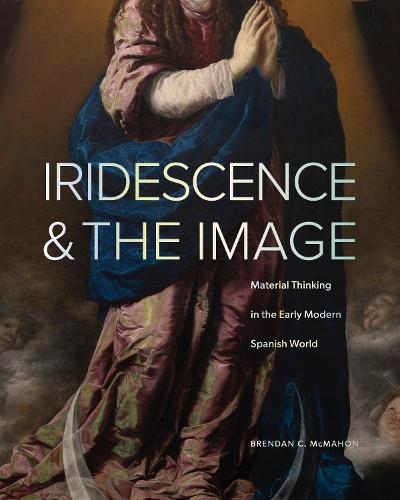
At the turn of the seventeenth century, people in Spain and Mexico were fascinated by iridescence. Artists stretched the capacities of conventional media in attempts to capture its shifting hues, while others integrated iridescent materials directly into their work. At the same time, naturalists strove to convey the changing colors of these substances in printed texts, theologians and political commentators invoked them in tracts and treatises, and playwrights and poets wove them through the scripts of comedies and into the stanzas of sonnets. In Iridescence and the Image, Brendan C. McMahon explores this preoccupation with such materials—including shot fabric, hummingbird feathers, mother of pearl, and opals—in the early modern Spanish world. Taking the virtuosic renderings of tornasol (shot silk) by the Spanish painter Antonio de Pereda (1611–1678) as a point of departure, he shows that the ubiquity of these materials in a broad array of period cultural productions stemmed from the ways in which their unique properties undermined trust in visual perception—and in visual images themselves. Ultimately, McMahon argues, iridescence provided a way for people to grapple with profound questions about seeming and being, deception and revelation, and the nature of truth itself.
Full Product Details
Author: Brendan C. McMahon (University of Michigan)
Publisher: Pennsylvania State University Press
Imprint: Pennsylvania State University Press
Dimensions:
Width: 20.30cm
, Height: 2.20cm
, Length: 25.40cm
Weight: 1.179kg
ISBN: 9780271099699
ISBN 10: 0271099690
Pages: 224
Publication Date: 14 October 2025
Audience:
Professional and scholarly
,
Professional & Vocational
Format: Hardback
Publisher's Status: Active
Availability: Out of stock

The supplier is temporarily out of stock of this item. It will be ordered for you on backorder and shipped when it becomes available.
Reviews
“In this imaginative study, McMahon shows how the dazzling but fleeting visual effects of iridescent materials prompted reflection on truth and deceit in the early modern Spanish world. Readers will find themselves looking at feathers, seashells, and swaths of shot silk in new and revelatory ways.” —Michael J. Schreffler, author of Cuzco: Incas, Spaniards, and the Making of a Colonial City “Brendan McMahon’s elegant and entirely original book reveals the ubiquity of iridescent objects—such as shimmering silks and feathers, which appear to shift color—in early modern collections. However, McMahon shows that these materials were also everywhere in period writings, used as potent metaphors about the deceitfulness of art and the unreliability of the senses. Around the motif of iridescence, the author builds a rich and innovative interpretive framework for understanding some of the period’s most pressing concerns about what and how humans see.” —Adam Jasienski, author of Praying to Portraits: Audience, Identity, and the Inquisition in the Early Modern Hispanic World
Author Information
Brendan C. McMahon is Assistant Professor of History of Art at the University of Michigan.