Overview
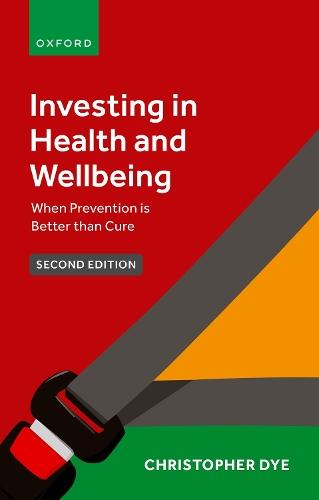
The proverbial benefits of prevention over cure are self-evident and yet we are reluctant to invest in protecting and improving our health. Resolution of this age-old dilemma begins with a timeless truth: the benefits of good health come at a cost; prevention is not better than cure at any price. Protecting health should be appealing when a high-risk, high-value hazard can be averted rapidly, with certainty, and at relatively low cost. Similar reasoning applies when the goal is to make health gains, not merely to avoid health losses. Health choices are rational, based on values that are personal. Investing in Health and Wellbeing: When Prevention Is Better than Cure, Second Edition provides a framework to promote and protect health as an asset, illustrating the principles with practical examples. Application of these ideas helps to explain why prevention is a low priority for health services, why the world was not ready for the COVID-19 pandemic, why deadly infections like tuberculosis are neglected, why cigarette smoking is still commonplace, why billions still do not have access to safe sanitation, and why the response to climate change has been so slow. Much more money and effort are invested in health promotion and disease prevention today than is commonly thought, but the enormous avoidable burden of illness is reason to look for ways of investing still more. Previously published as The Great Health Dilemma (ISBN: 9780198853824) in 2021, this second, updated edition makes prevention part of a broader vision for better health. This is an open access title available under the terms of a CC BY-NC-ND 4.0 International licence. It is free to read on the Oxford Academic platform and offered as a free PDF download from OUP and selected open access locations.
Full Product Details
Author: Prof Christopher Dye (Professor of Epidemiology, Professor of Epidemiology, University of Oxford, UK)
Publisher: Oxford University Press
Imprint: Oxford University Press
Edition: 2nd Revised edition
Dimensions:
Width: 13.70cm
, Height: 1.50cm
, Length: 21.50cm
Weight: 0.378kg
ISBN: 9780198887133
ISBN 10: 0198887132
Pages: 304
Publication Date: 15 October 2024
Audience:
Professional and scholarly
,
Professional & Vocational
Format: Paperback
Publisher's Status: Active
Availability: To order

Stock availability from the supplier is unknown. We will order it for you and ship this item to you once it is received by us.
Reviews
Review from previous edition I strongly recommend The Great Health Dilemma not only to teachers and students of public health but to anyone who is interested in their own health, their children's health and the health of the planet. * Brian Williams, South African Centre for Epidemiological Modelling and Analysis * It may seem self-evident that prevention is better than cure, but we seldom act as if we believed it. In this brilliant work, Christopher Dye describes the many ways prevention is undervalued in comparison to its demonstrable benefits. Everyone who cares about the public's health—and their own—has much to gain from absorbing Dye's lessons. * Harvey V. Fineberg, President, Gordon and Betty Moore Foundation * In a chapter on unlikely disasters, Chris Dye explores pandemic preparedness as a highly topical example of prevention. Invoking principles used throughout the book, he argues that Covid-19 should be seen not as an isolated, once-in-a-lifetime event, but rather as one among hundreds of outbreaks of infectious diseases that are recorded each year. Borrowing ideas from the insurance industry, he suggests pooling all risks and sharing the costs to fund the development of generic ""platform"" technologies – precursors for diagnostics, therapeutics and vaccines that can be into called into action to combat a wide variety of pathogens as they emerge. This is a book for all who are concerned about the disruption of our planet, and about the increased opportunities that it creates for emergence of infectious pathogens at the animal/human interface. * David L. Heymann, Professor, Infectious Disease Epidemiology, London School of Hygiene and Tropical Medicine * By incisively dissecting the dialectical relationship between prevention and treatment of illness, Chris Dye has laid bare one of the great contradictions in health. His razor-sharp analysis unravels the complexity of our values and choices that has seen prevention remaining a poor neglected cousin of treatment. A truly enlightening book - a must-read! * Salim S. Abdool Karim, CAPRISA Professor of Global Health, Department of Epidemiology, Mailman School of Public Health, Columbia University * Using the example of TB, Chris Dye explains that by addressing the underlying risk factors and determinants for the disease, one would in fact be preventing a host of other health conditions and improving wellbeing. While biological and immunological reasons make finding a vaccine for TB challenging, we should also be addressing environmental, economic, and social risk factors for ill health. * Soumya Swaminathan, Chief Scientist, World Health Organization *
"Review from previous edition I strongly recommend The Great Health Dilemma not only to teachers and students of public health but to anyone who is interested in their own health, their children's health and the health of the planet. * Brian Williams, South African Centre for Epidemiological Modelling and Analysis * It may seem self-evident that prevention is better than cure, but we seldom act as if we believed it. In this brilliant work, Christopher Dye describes the many ways prevention is undervalued in comparison to its demonstrable benefits. Everyone who cares about the public's health—and their own—has much to gain from absorbing Dye's lessons. * Harvey V. Fineberg, President, Gordon and Betty Moore Foundation * In a chapter on unlikely disasters, Chris Dye explores pandemic preparedness as a highly topical example of prevention. Invoking principles used throughout the book, he argues that Covid-19 should be seen not as an isolated, once-in-a-lifetime event, but rather as one among hundreds of outbreaks of infectious diseases that are recorded each year. Borrowing ideas from the insurance industry, he suggests pooling all risks and sharing the costs to fund the development of generic ""platform"" technologies – precursors for diagnostics, therapeutics and vaccines that can be into called into action to combat a wide variety of pathogens as they emerge. This is a book for all who are concerned about the disruption of our planet, and about the increased opportunities that it creates for emergence of infectious pathogens at the animal/human interface. * David L. Heymann, Professor, Infectious Disease Epidemiology, London School of Hygiene and Tropical Medicine * By incisively dissecting the dialectical relationship between prevention and treatment of illness, Chris Dye has laid bare one of the great contradictions in health. His razor-sharp analysis unravels the complexity of our values and choices that has seen prevention remaining a poor neglected cousin of treatment. A truly enlightening book - a must-read! * Salim S. Abdool Karim, CAPRISA Professor of Global Health, Department of Epidemiology, Mailman School of Public Health, Columbia University * Using the example of TB, Chris Dye explains that by addressing the underlying risk factors and determinants for the disease, one would in fact be preventing a host of other health conditions and improving wellbeing. While biological and immunological reasons make finding a vaccine for TB challenging, we should also be addressing environmental, economic, and social risk factors for ill health. * Soumya Swaminathan, Chief Scientist, World Health Organization *"
Author Information
Christopher Dye is currently Professor of Epidemiology at Oxford University where he is working to make a stronger case for investing in health. He is a Fellow of The UK Royal Society, the Academy of Medical Sciences and the Royal Society of Biology. Chris began professional life as a biologist and ecologist (BA York 1978) but postgraduate research on mosquitoes (DPhil Oxford 1982) led to a career in epidemiology and public health. Based at Imperial College and the London School of Hygiene and Tropical Medicine from 1982-96, he carried out research on bloodsucking insects in Africa, Asia and South America. In 1996, he joined the World Health Organization where he developed ways of analyzing the vast quantities of data, collected by government health departments worldwide. As WHO Director of Strategy 2014-18, he served as science advisor to the Director General. From 2006-09, he was also Gresham Professor of Physic (and other biological sciences).