Overview
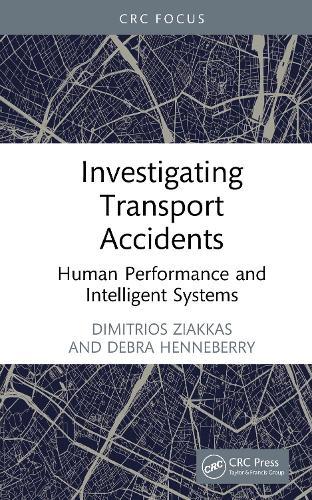
The transportation industry faces unprecedented challenges as systems grow increasingly complex. This book introduces an integrated framework for transport accident investigations by combining traditional human performance analysis with advanced artificial intelligence capabilities. Moving beyond simplistic cause-and-effect models, the authors cover human factors, automation, hardware components, contextual variables, and organizational elements that collectively determine safety outcomes in complex socio-technical environments. Building upon established methodologies including HFACS, STAMP, and AcciMap, this title analyzes AI-enabled approaches including digital twins, weak signal detection, pattern recognition, and data fusion platforms. Each chapter delivers to-the-point practical insights into dynamic modeling of systemic interactions and enhanced detection of failure precursors. The innovative MAHCO model, combined with AI analytics, supports transparent decision-making and institutional learning while creating intelligent safety ecosystems that transform how we understand and prevent accidents in transportation systems. Readers will develop an effective introduction to these systems and their capabilities thus honing their foundational knowledge. Investigating Transport Accidents: Human Performance and Intelligent Systems is for engineers, policy-makers, researchers and students studying for or already working in transportation safety. It will also appeal to pilots, controllers, maintainers, and trainers in the aerospace industry.
Full Product Details
Author: Dimitrios Ziakkas , Debra Henneberry
Publisher: Taylor & Francis Ltd
Imprint: CRC Press
Weight: 0.490kg
ISBN: 9781041153160
ISBN 10: 1041153163
Pages: 160
Publication Date: 06 November 2025
Audience:
Professional and scholarly
,
Professional & Vocational
Format: Hardback
Publisher's Status: Active
Availability: Manufactured on demand 
We will order this item for you from a manufactured on demand supplier.
Table of Contents
1. Rethinking Human Performance in High-Reliability Transportation Systems. 2. Theoretical Foundations of Human Performance. 3. Investigative Methodologies and Tools. 4. AI Technology in Investigation: AI, Digital Twins, and Data Fusion. 5. Human Performance Traps: Technological, Organizational, Regulatory, and Cultural Challanges. 6. The Human Operator: Health, Cognitive Resilience, Workload, and Performance. 7. Team Dynamics and Communication in Incidents-Accidents Management. 8. Maintenance and Inspection in a Digitally Augmented Era. 9. Data Sources in Modern Investigations. 10. Toward a New Paradigm: Human-Centric, AI-Supported Safety Ecosystems.
Reviews
Reveals an integrated framework that combines traditional human performance analysis with AI capabilities, transforming how transport accidents are investigated beyond linear causation models Explores the MAHCO model that supports transparent decision-making and institutional learning while creating intelligent safety ecosystems for accident prevention Showcases practical applications of AI-enabled tools including digital twins, weak signal detection, pattern recognition, and data fusion platforms that enhance detection of failure precursors Offers comprehensive insights into the links between human factors, automation, hardware, contextual variables, and organizational elements that determine safety outcomes in transportation systems Accesses methodologies that serve multiple audiences, from accident investigators and safety managers to engineers, policy-makers, researchers, students, and frontline transportation professionals
Author Information
Dimitrios Ziakkas is an Assistant Professor in the School of Aviation and Transportation Technology at Purdue University, Indiana, USA. He is an Airbus captain, instructor and examiner with current A-320, A-330/350, A-340 type ratings. A cross-cultural communicator, global citizen, and innovator, Dimitrios has over 30 years of experience in military and civil aviation operations worldwide, integrating manpower planning – selection and recruitment aviation practices in multi-disciplinary research programs. His professional background is diverse, from history and the humanities to engineering and science, concerned not only with the history of aviation technological devices and processes but also with technology in history (the relationship of aviation technology to politics, economics, science, the arts, and the organization of production) and with the role it plays in the differentiation of individuals in society. Debra Henneberry is an Assistant Professor at Purdue University College of Aviation and Transportation Technology, Indiana, USA. She's an experienced commercial pilot, flight instructor, and aeronautics professor. Before her current role, she served as an Assistant Professor in the Aviation Department at Vaughn College of Aeronautics and Technology in New York City. She also served as a government administrator for several years. Dr. Henneberry has been a first responder and emergency medical technician for over ten years. Her research interests focus on human factors, and she has spoken about pilot training in several international aviation psychology programs.
Tab Content 6
Author Website:
Countries Available
All regions
|