Overview
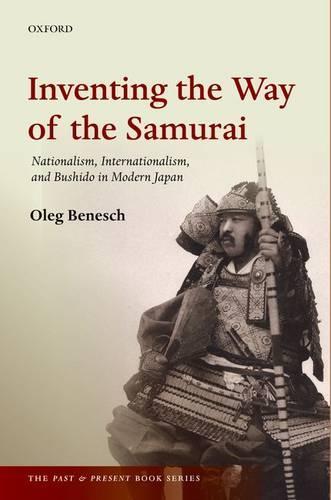
Inventing the Way of the Samurai examines the development of the 'way of the samurai' - bushid=o - which is popularly viewed as a defining element of the Japanese national character and even the 'soul of Japan'. Rather than a continuation of ancient traditions, however, bushid=o developed from a search for identity during Japan's modernization in the late nineteenth century. The former samurai class were widely viewed as a relic of a bygone age in the 1880s, and the first significant discussions of bushid=o at the end of the decade were strongly influenced by contemporary European ideals of gentlemen and chivalry. At the same time, Japanese thinkers increasingly looked to their own traditions in search of sources of national identity, and this process accelerated as national confidence grew with military victories over China and Russia. Inventing the Way of the Samurai considers the people, events, and writings that drove the rapid growth of bushid=o, which came to emphasize martial virtues and absolute loyalty to the emperor. In the early twentieth century, bushid=o became a core subject in civilian and military education, and was a key ideological pillar supporting the imperial state until its collapse in 1945. The close identification of bushid=o with Japanese militarism meant that it was rejected immediately after the war, but different interpretations of bushid=o were soon revived by both Japanese and foreign commentators seeking to explain Japan's past, present, and future. This volume further explores the factors behind the resurgence of bushid=o, which has proven resilient through 130 years of dramatic social, political, and cultural change.
Full Product Details
Author: Oleg Benesch (Anniversary Research Lecturer in History, Anniversary Research Lecturer in History, University of York)
Publisher: Oxford University Press
Imprint: Oxford University Press
Dimensions:
Width: 17.40cm
, Height: 2.70cm
, Length: 24.20cm
Weight: 0.606kg
ISBN: 9780198706625
ISBN 10: 0198706626
Pages: 294
Publication Date: 11 September 2014
Audience:
College/higher education
,
Professional and scholarly
,
Undergraduate
,
Postgraduate, Research & Scholarly
Format: Hardback
Publisher's Status: Active
Availability: To order

Stock availability from the supplier is unknown. We will order it for you and ship this item to you once it is received by us.
Reviews
Benesch's history of bushido as an invented tradition with an ideological character delivers on the title's promise. Students of intellectual history will appreciate the example of an idea created, branded as tradition, and then variously applied by multiple ideological positions. Modernists will benefit from Benesch's explanation of the Imperialist appropriation of bushido as a tool for militarization of the population through World War II. And Japan specialists are finally armed with a full argument against bushido's historicity. Nathan H. Ledbetter, Journal of Military History
Benesch's history of bushid=o as an invented tradition with an ideological character delivers on the title's promise. Students of intellectual history will appreciate the example of an idea created, branded as tradition, and then variously applied by multiple ideological positions. Modernists will benefit from Benesch's explanation of the Imperialist appropriation of bushid=o as a tool for militarization of the population through World War II. And Japan specialists are finally armed with a full argument against bushid=o's historicity. Nathan H. Ledbetter, Journal of Military History Benesch provides a comprehensive overhaul of the history of the development of bushid=o. He demonstrates great expertise in presenting the various texts and their roles in the discourse ... this book is a highly gripping read and provides a well-informed contribution to the historical development and powerful influence of invented traditions. Julian Plenefisch, H-Soz-u-Kult [translation] Benesch has provided us with a valuable history of modern Japan through the lens of a particularly resilient ideology. It will be of great interest to students of Japanese history, not to mention to anyone concerned with the intellectual history of invented modern traditions. Constantine N. Vaporis, American Historical Review Oleg Benesch's Inventing the way of the Samurai is a seminal, scrupulously researched work that teems with ideas. Its content is profoundly relevant to current political developments in Japan, as questions about the Constitution and the nation's identity come to the fore ... an essential guide to this crucial aspect of Japan's intellectual history. Damian Flanagan, The Japan Times
Author Information
Oleg Benesch is Anniversary Research Lecturer in History, specializing in the history of early modern and modern Japan. Before arriving at the University of York, Dr Benesch was Past & Present Fellow at the Institute of Historical Research at the University of London. He has spent almost six years living and researching in Japan, including two years each at Hitotsubashi University and Reitaku University in Tokyo. Dr Benesch's publications and teaching interests cover a variety of fields, including Japanese intellectual, religious, and social history, Chinese intellectual history, as well as the transnational history of modern East Asia. He has presented his research findings at academic conferences and invited lectures throughout East Asia, Europe, North America, and Australia.