|
|
|||
|
||||
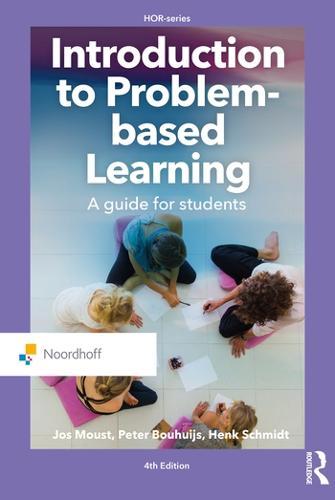
OverviewFull Product DetailsAuthor: Jos Moust (Maastricht University, the Netherlands) , Peter Bouhuijs , Henk SchmidtPublisher: Wolters-Noordhoff B.V. Imprint: Wolters-Noordhoff B.V. Edition: 4th edition Weight: 0.250kg ISBN: 9789001877866ISBN 10: 9001877869 Pages: 134 Publication Date: 27 May 2021 Audience: College/higher education , Tertiary & Higher Education , Undergraduate Format: Paperback Publisher's Status: Active Availability: In Print This item will be ordered in for you from one of our suppliers. Upon receipt, we will promptly dispatch it out to you. For in store availability, please contact us. Table of Contents1 Features of Problem-based Learning 1.1 Introduction 1.2 What is learning about? 1.3 Learning from and with each other 1.4 What do we know about the effectiveness of problem-based learning? 1.5 Problem-based learning in an electronic environment 1.6 Skills in problem-based learning 2 Learning through problems 2.1 Introduction 2.2 Various types of problems for problem-based learning 2.3 Explanation problems 2.4 The seven-step method of working with explanation problems 2.5 Strategy problems 2.6 Dilemma problems 2.7 Other types of problems 2.8 Variations in problem-based learning 2.9 Educational approaches related to problem-based learning 3 Collaborative learning in the tutorial group 3.1 Introduction 3.2 What is a tutorial group? 3.3 The importance of learning in small groups 3.4 Collaborative learning in a tutorial group 3.5 Some elementary characteristics of communication 3.6 Informal roles played out in the tutorial group 3.7 Formal roles played out in the tutorial group 4 Individual study skills 4.1 Introduction 4.2 Selecting learning resources 4.3 Studying texts 4.4 Making notes and diagrams 4.5 Studying texts in a foreign language 4.6 Recording your studies 4.7 Time management 4.8 Exams, finals and course assessment 4.9 Learning issues 4.10 Learning to learn 5 Skills required by tutorial group members 5.1 Introduction 5.2 The first meeting in a module 5.3 Providing and requesting information 5.4 Active listening 5.5 Making summaries 5.6 Taking notes 5.7 Evaluating tutorial group meetings 5.8 Giving and receiving feedback Appendix: Tools to improve your skills as a tutorial group member 1 Observation list: ‘Being a tutorial group member’ 2 A questionnaire for evaluating processes in tutorial groups 3 Checklist: ‘Skills of a tutorial group member’ 6 Chairing a tutorial group meeting 6.1 Introduction 6.2 Taking turns 6.3 Some general points 6.4 The role of the discussion leader during the synthesis phase 6.5 The role of the discussion leader during the analysis phase 6.6 Stimulating a collaborative working atmosphere 6.7 Some final points Appendix: Tools to improve your skills as a discussion leader 1 Observation form ‘Discussion leader functioning in the synthesis phase’ 2 Observation form ‘Discussion leader functioning in the analysis phase’ 3 Checklist: Discussion leader skills 4 PROfessional Functioning in Teams (PROFiT) Notes Recommended literature References IndexReviewsAuthor InformationJos Moust Peter Bouhuijs Henk Schmidt Tab Content 6Author Website:Countries AvailableAll regions |
||||