Overview
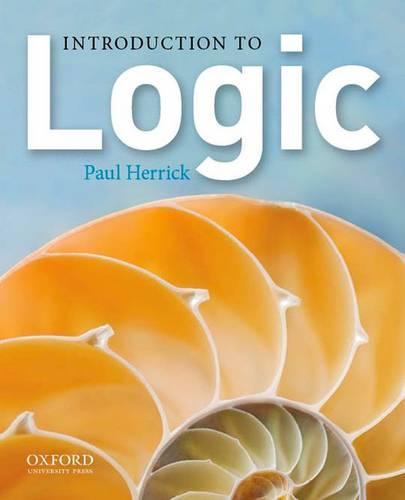
With clear explanations and many contemporary examples drawn from popular culture and everyday life, author Paul Herrick untangles the complexities of logical theory in Introduction to Logic. Offering a unique combination of two approaches--the historical and the technical--he presents logic as both a fascinating, evolving story and a body of essential technical information with applications to every area of human thought. Perfectly suited for use in any introductory logic course, Introduction to Logic is also tailored to the online logic course Philosophy 106, available as part of the Open Course Library at www.opencourselibrary.org. Jointly sponsored by the Washington State Board for Community and Technical Colleges and the Bill & Melinda Gates Foundation, the Open Course Library offers instructors complete, expertly developed online courses in eighty essential college subjects--including the logic class developed by Paul Herrick and his colleague Mark Storey--all available to faculty at no charge. SUPPLEMENTS: * An Instructor's Resource CD (978-0-19-989052-1) contains brief chapter summaries, answers to all of the questions in the text, additional questions and exercises to use on quizzes and exams, and a PowerPoint presentation that covers the entire book. * A Companion Website at www.oup.com/us/herrick provides extra resources for teachers and students, including a Teacher's Manual, Student Manual, and practice quizzes with answers on all key topics. * An additional online resource at www.manyworldsoflogic.com offers additional practice quizzes, material for extra-credit assignments, and further information on the nature and history of logic.
Full Product Details
Author: Paul Herrick (Professor of Philosophy, Professor of Philosophy, Shoreline Community College)
Publisher: Oxford University Press Inc
Imprint: Oxford University Press Inc
Dimensions:
Width: 19.10cm
, Height: 3.10cm
, Length: 23.10cm
Weight: 1.279kg
ISBN: 9780199890491
ISBN 10: 0199890498
Pages: 848
Publication Date: 17 May 2012
Audience:
College/higher education
,
Undergraduate
Format: Paperback
Publisher's Status: Active
Availability: Manufactured on demand

We will order this item for you from a manufactured on demand supplier.
Reviews
I have been very satisfied with this textbook and its companion materials. I am using this text with second language learners, and while I'm sure it was not developed with this goal in mind, it is very accessible and clearly explained, and works well for my students. Jonathan Parker, Miyazaki International College
<br> The greatest virtue of Herrick's text is its accessibility. Still more unique, and of arguably equal value, is the placing of significant concepts in a historical context. The lower price of this text is also a HUGE selling point in its favor. --Andrew V. Jeffery, Green River Community College<p><br> Herrick is a very clear and articulate writer, with really humorous and entertaining examples. I find much of his writing to be clearer and more succinct than that of his competitors. --Brian Glenny, Gordon College<p><br> The sidebars into the history of philosophy and application of logic to real life issues give students a variety of content that helps them relate to the material. Herrick's writing style is conversational and engaging. This is important for a logic book as logic easily becomes impersonal and disengaging. Herrick does well when appealing to commonsense views in order to explain difficult concepts. --Peter Westmoreland, University of Florida<p><br>
The greatest virtue of Herrick's text is its accessibility. Still more unique, and of arguably equal value, is the placing of significant concepts in a historical context. The lower price of this text is also a HUGE selling point in its favor. --Andrew V. Jeffery, Green River Community College and Pierce College Herrick is a very clear and articulate writer, with really humorous and entertaining examples. I find much of his writing to be clearer and more succinct than that of his competitors. --Brian Glenny, Gordon College The sidebars into the history of philosophy and application of logic to real life issues give students a variety of content that helps them relate to the material. Herrick's writing style is conversational and engaging. This is important for a logic book as logic easily becomes impersonal and disengaging. Herrick does well when appealing to commonsense views in order to explain difficult concepts. --Peter Westmoreland, University of Florida
Author Information
Paul Herrick received his Ph.D in philosophy from the University of Washington. Since 1983 he has taught philosophy at Shoreline Community College in Washington, near Seattle. He is the author of The Many Worlds of Logic, Second Edition (OUP, 2002) and Reason and Worldview: An Introduction to Western Philosophy (1999).