Overview
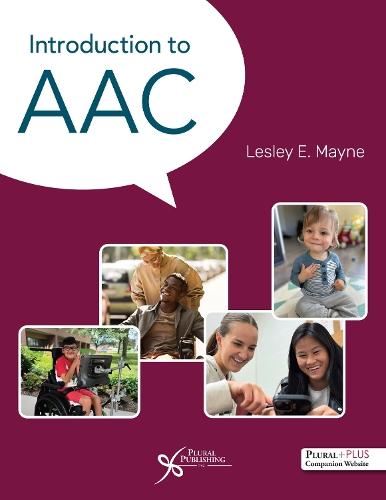
Written specifically for undergraduate-level and speech-language pathology assistant students, Introduction to AAC presents an introduction to the knowledge and skills in augmentative and alternative communication (AAC) that support people across the lifespan in the cultures in which they live and people with whom they interact. It presents the foundational knowledge of AAC in a way that is engaging for students, incorporating pedagogical elements designed to encourage active learning such as quick application tasks in a Mindful Minute, time for Reflection, and Integration Tasks that promote critical thinking that are embedded in each chapter. The text invites the reader to build AAC skills and knowledge including assessment and intervention, AAC technology, literacy, and communication partner support that culminates in a final chapter on AAC intervention session design. Key Features Bolded terms: Allows students to visually landmark on important concepts, create associations with the surrounding text, and identify them again more easily when preparing for assignments, projects, exams, and application in real life. Case studies: Numerous cases and vignettes create an opportunity to blend conceptual knowledge with a real-world person. They play a vital role in creativity, allowing students to consider application of concepts to someone that they may work with or support in their future. Mindful Minutes: Engagement tasks ask the learner to act upon the concepts by practicing or thinking about what was read. These opportunities generate action and provide a different way for learners to cognitively engage with the concepts in addition to reading. Reflections: Encourage students to think about their experiences, activate background knowledge, or consider concepts as they may be new or offer a different perspective. Integration Tasks: Chapter questions are posed before the Conclusion so students engage with learning outcomes. Each chapter offers concept check questions, application opportunities, and For Thought… statements. Therefore, students are invited to become active participants with the text and bring their own experiences to each chapter. PluralPlus Online AncillariesFor instructors: PowerPoint Slides, Test Bank, Class Activities, Syllabus, Case Studies, Videos For students: Quizzes, eFlashcards, Activities/Exercises, Links to Related Resources
Full Product Details
Author: Lesley E. Mayne
Publisher: Plural Publishing Inc
Imprint: Plural Publishing Inc
Dimensions:
Width: 17.80cm
, Height: 2.50cm
, Length: 25.40cm
ISBN: 9781635507799
ISBN 10: 1635507790
Pages: 458
Publication Date: 26 August 2025
Audience:
College/higher education
,
Adult education
,
Adult education
,
Undergraduate
,
Further / Higher Education
Format: Paperback
Publisher's Status: Active
Availability: In Print

This item will be ordered in for you from one of our suppliers. Upon receipt, we will promptly dispatch it out to you. For in store availability, please contact us.
Author Information
Lesley Mayne is an associate professor at the University of Wisconsin–Eau Claire (UWEC) in the Speech-Language and Hearing Sciences (SLHS) department, where she teaches graduate and undergraduate students in AAC and speech sound disorders. Her research specialties are in her teaching areas of autism spectrum disorders and pedagogy. Her practical clinical experience stems across the lifespan and allows her to bring authentic applications to her students. Teaching at the undergraduate and graduate level means her students are active learners and members of her research teams to guide the next generation of SLPAs, SLPs, professors, and researchers, which is consistent with the SLHS faculty at UWEC. In addition to Introduction to AAC (Plural Publishing, 2025), she co-authored AAC for Children With Complex Communication Profiles with Dr. Sharon Rogers (Routledge, 2020) and the first and second editions of Let’s Talk Social Skills (Routledge, 2019).