|
|
|||
|
||||
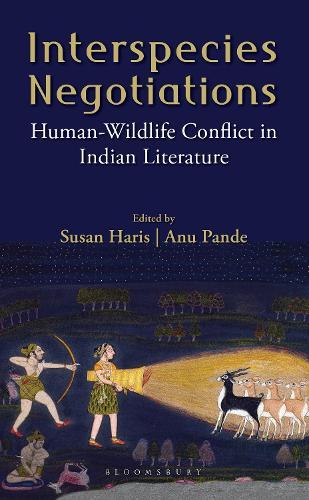
OverviewInterspecies Negotiations: Literature and Human-Wildlife Conflict in Indian Literature brings together literary analyses that explore how contemporary Indian literature rejects and reimagines human-wildlife entanglements. The escalation of human-wildlife conflict in India cannot be explained solely by species behaviour or environmental disruption. It is also deeply social and political, rooted in contestations over land use, governance, and resource distribution. Yet social science accounts often overlook wildlife’s agency and responsiveness to anthropogenic change, where animals are portrayed as passive victims of development agendas. What might an alternative approach look like if we are to move beyond framing these encounters as conflict, recognize the agency of both human and nonhuman animals, and account for the ecological, political and ethical complexities of coexistence? The essays in this volume cover a nuanced reading at the intersection of literature, ecology, and postcolonial critique by engaging with two key questions: What does it mean to live with wildlife in postcolonial India? And how do literary narratives illuminate the affective and ethical dimensions of interspecies encounters? The collection thus positions literary analysis as a critical site for reimagining coexistence in postcolonial India. Full Product DetailsAuthor: Susan Haris (BITS Pilani, India) , Anu Pande (English and Foreign Languages University, Hyderabad, India)Publisher: Bloomsbury Publishing India Pvt Ltd Imprint: Bloomsbury Academic India ISBN: 9789361311840ISBN 10: 9361311840 Pages: 320 Publication Date: 30 January 2026 Audience: Professional and scholarly , Professional & Vocational Format: Hardback Publisher's Status: Forthcoming Availability: Not yet available This item is yet to be released. You can pre-order this item and we will dispatch it to you upon its release. Table of ContentsIntroduction: Literature as Narrative Ethnographies of Human-Wildlife Conflict in India Susan Haris Narrative Subjects, Animal Subjectivities 1. The Hunter’s Triumph: Mysterious Forests and Chicken Frontiers in two Zoo-Fictions from Northeast India Dhrijyoti Kalita 2. The Other-Than-Human Subject in the Writings of Vaikkom Muhammad Basheer Gourilekshmi Hari 3. To the Elephant Graveyard: Intersecting Boundaries and Interspecies Conflict in Prabhat Goswami’s Stride of the White Tusker (2012) Bidyum Medhi Social Constructions, Material Consequences 4. Shifting Owlscapes in Bengal: A Flight through Myth, Mysticism, and Marginalisation Camellia Paul 5. Domesticated Pachyderms, Complicated Wildlife: A Study of Elephant Stories in Aithihyamala (1909) and Popular Media Narratives from Kerala Anchitha Krishna 6. Navigating Animal Hierarchies: A Study of Amitav Ghosh’s The Hungry Tide and The Wild Life (Protection) Act, 1972 Puru Sharma Culture, Cosmology, Context 7. Belongingness and Conflict: Human-Nonhuman Agency in the Folk Narratives of Gujjars and Bakerwals, the Transhumance Pastoral Tribe of Jammu and Kashmir, India Tanu Gupta 8. Beyond the Hunt, the Hunters and the Hunted: A Critical Examination of Multispecies Encounters in Malabarile Sikkaru Maria Viju 9. Revisiting the Grey Ghost of Ladakh: Reading Complex Tonalities of Human-Wildlife Conflict in Yangdol by Pankaj Singh (Illustrated by Athulya Pillai) Akshita Bhardwaj Multispecies Pasts/Speculative Futures 10. Human-Wildlife Conflict and Figurations of Nonhuman Precarity and Death in Satyajit Ray’s Short Stories Dhee Sankar 11. 'Alien and Strangely Familiar': Approaching Human-Wildlife Encounters in the Indian Subcontinent through Speculative Fiction Himika Chakraborty 12. Non-Human Agency in Easterine Kire’s Fiction: The Syncretism of Indigenous Animism and Christian Narratives Bune Bethseba Lemai Daiho Afterword Anu Pande About the Editors and Contributors IndexReviewsAuthor InformationSusan Haris is an Assistant Professor in the Department of Humanities and Social Sciences at BITS Pilani, India. Her research examines the moral histories of interspecies relationships and the multi-social dimensions of human–animal encounters in India. Anu Pande is an Assistant Professor in the Department of Germanic Studies at the English and Foreign Languages University (EFLU), Hyderabad. She explores processes of othering across political ideologies, gender identities, and species boundaries. Together, they co-founded the Indian Animal Studies Collective. Tab Content 6Author Website:Countries AvailableAll regions |
||||