Overview
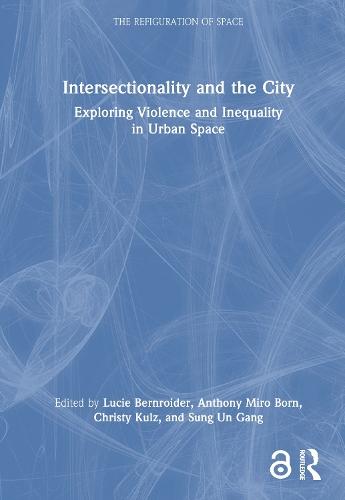
This book combines intersectional perspectives and urban research to demonstrate the importance of intersectionality as a concept that can complement “refigurational” understandings of social change as the outcome of spatial conflicts. Showing how intersectionality enables us to grasp the intersecting categories of inequality in these spatial tensions, it remains attentive to the role of social difference and power in these processes, as well as to modes of normativity and resistance. With case studies gathered from a range of national contexts, it provides rich empirical insights into the relationship between urban spatialities, power dynamics, and embodied social inequalities, addressing the manner in which different conflicts are made manifest intersectionally in and through situated urban spaces. The chapters consider issues such as the gendering and racialization of urban spaces; urban marginality and environmental pressures; intersectional power dynamics in research; heteronormative and cisgender- centric structures in the city; aging in the city; young people, control, and insecurity; police violence; migrant emplacement and activism; racialized gentrification and commoning, and pandemic safety and protest, to explore the uneven outcomes of spatial planning and urban development. As such, it draws attention to the interplay of various forces in the production of exclusion and injustice and will therefore appeal to scholars of sociology, geography, and urban studies with interests in inequality, social change, and resistance to exclusion. The Open Access version of this book, available at http://www.taylorfrancis.com, has been made available under a Creative Commons [Attribution (CC-BY)] 4.0 license.
Full Product Details
Author: Lucie Bernroider (Technical University of Berlin, Germany) ,
Anthony Miro Born (London School of Economics and Political Science, UK) ,
Christy Kulz (Technische Universität Berlin, DE) ,
Sung Un Gang (Technische Universität Berlin, Germany)
Publisher: Taylor & Francis Ltd
Imprint: Routledge
Weight: 0.760kg
ISBN: 9781032658995
ISBN 10: 1032658991
Pages: 266
Publication Date: 06 June 2025
Audience:
College/higher education
,
Professional and scholarly
,
Tertiary & Higher Education
,
Professional & Vocational
Format: Hardback
Publisher's Status: Active
Availability: In Print

This item will be ordered in for you from one of our suppliers. Upon receipt, we will promptly dispatch it out to you. For in store availability, please contact us.
Author Information
Lucie Bernroider, Dr., is an anthropologist at the Collaborative Research Center “Re-Figuration of Spaces” at Technische Universität Berlin. Her research interests include space, gender and class, neoliberal urban development, and the anthropology of violence, with a regional focus on South Asia. She holds a doctorate from the University of Heidelberg and has been a visiting scholar at the Delhi School of Planning and Architecture. Anthony Miro Born, PhD, is a sociologist and geographer with a particular interest in social inequality. Born’s research focuses on the intersections of urban inequality and social class from multiple perspectives. He is currently an ESRC Postdoctoral Research Fellow at the London School of Economics and Political Science. Christy Kulz, PhD, is a guest professor of sociology at Technische Universität Berlin. Her research interests focus on cultural sociology, with particular attention to how intersectional inequalities are made through everyday practices in urban space. Her publications include the research monograph Factories for Learning (2017) and the edited collection Inside the English Education Lab (2022). Sung Un Gang, Dr., is a scholar of media and cultural studies at the Institute of Architecture, Technische Universität Berlin. As a research associate at the Collaborative Research Center “Re-Figuration of Spaces,” he investigates the everyday spaces and digital communication practices of queer inhabitants in Seoul, South Korea. His main research areas include queer and intersectional feminism, urban culture and space, and postcolonial historiography.