Overview
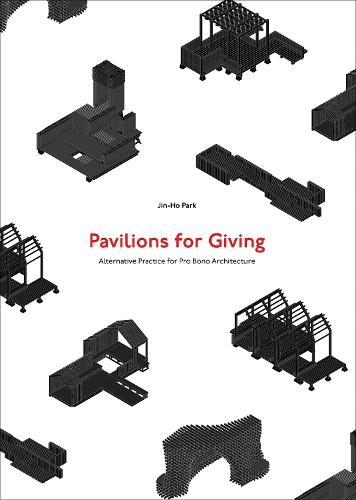
What happens when an architecture firm decides to create six meaningful structures, each tailored to a specific location and with the aim of benefitting the local community, all at no cost to the recipient? In Pavilions for Giving, Dr Jin-Ho Park explores how the role of the modern architect continues to evolve and emphasizes the growing importance of giving back to the community. This book presents six meaningful pro bono projects designed and constructed for local communities in Korea. Showcasing how architecture can positively impact society, the pavilions have proven valuable to the local people of each location and served a bigger purpose for social welfare. The projects have also provided a unique chance to explore new designs and methods of construction. The details of these creative and constructive processes are provided in the in-depth narratives throughout the book and highlight the hard work and coordination behind each pavilion. The six sustainable pavilions have not only considered the health and safety of the recipients, as well as undoubtedly improved the everyday lives of people, including children and older generations, but they have also involved student architects who have gained invaluable hands-on experience. AUTHOR: Dr Jin-Ho Park teaches history and architectural design, theory, and methods as a professor in the Department of Architecture at Inha University in Korea. Prior to joining Inha University, he taught in the School of Architecture at the University of Hawaii at Manoa in the United States as an associate professor with tenure. He earned his PhD in Architecture at University of California, Los Angeles (UCLA). Currently, he serves as a contributing editor of Open House International. His book publications include Architectural and Urban Subsymmetries (Birkhäuser, 2022), Designing the Ecocity-in-the-Sky (Images Publishing, 2014), and Graft in Architecture: Recreating Spaces (Images Publishing, 2013). SELLING POINTS: . Explores the evolving architecture industry . Provides a fascinating insight into pro bono architecture in a community setting . Six featured projects were selected to highlight the positive contributions to society in a variety of settings, each one constructed to serve a purpose and solve a community problem . Each project includes before and after photos, as well as diagrams of the pavilions constructed with an explanation of the creative and construction processes 49 colour, 92 b/w illustrations
Full Product Details
Author: Jin-Ho Park
Publisher: Images Publishing Group Pty Ltd
Imprint: Images Publishing Group Pty Ltd
Dimensions:
Width: 17.00cm
, Height: 1.90cm
, Length: 24.00cm
Weight: 0.610kg
ISBN: 9781875498376
ISBN 10: 1875498370
Pages: 192
Publication Date: 01 August 2025
Audience:
General/trade
,
General
Format: Paperback
Publisher's Status: Active
Availability: In Print

This item will be ordered in for you from one of our suppliers. Upon receipt, we will promptly dispatch it out to you. For in store availability, please contact us.
Author Information
Dr Jin-Ho Park teaches history and architectural design, theory, and methods as a professor in the Department of Architecture at Inha University in Korea. Prior to joining Inha University, he taught in the School of Architecture at the University of Hawaii at Manoa in the United States as an associate professor with tenure. He earned his PhD in Architecture at University of California, Los Angeles (UCLA). Currently, he serves as a contributing editor of Open House International. His book publications include Architectural and Urban Subsymmetries (Birkhauser, 2022), Designing the Ecocity-in-the-Sky (Images Publishing, 2014), and Graft in Architecture: Recreating Spaces (Images Publishing, 2013).