Overview
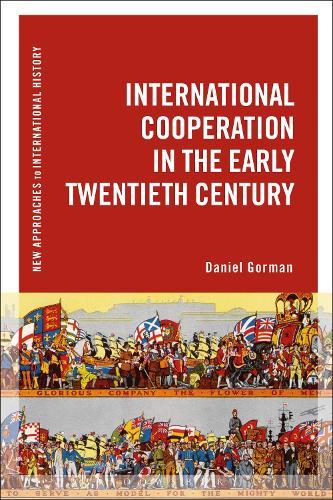
The early 20th-century world experienced a growth in international cooperation. Yet the dominant historical view of the period has long been one of national, military, and social divisions rather than connections. International Cooperation in the Early Twentieth Century revises this historical consensus by providing a more focused and detailed analysis of the many ways in which people interacted with each other across borders in the early decades of the 20th century. It devotes particular attention to private and non-governmental actors. Daniel Gorman focuses on international cooperation, international social movements, various forms of cultural internationalism, imperial and anti-imperial internationalism, and the growth of cosmopolitan ideas. The book incorporates a non-Western focus alongside the transatlantic core of early 20th-century internationalism. It interweaves analyses of international anti-colonial networks, ideas emanating from non-Western sites of influence such as Japan, China and Turkey, the emergence of networks of international indigenous peoples in resistance to a state-centric international system, and diaspora and transnational ethno-cultural-religious identity networks.
Full Product Details
Author: Daniel Gorman (University of Waterloo, Canada) ,
Professor of History and International Affairs Thomas Zeiler (University of Colorado at Boulder)
Publisher: Bloomsbury Publishing PLC
Imprint: Bloomsbury Academic
Dimensions:
Width: 16.20cm
, Height: 2.40cm
, Length: 23.60cm
Weight: 0.680kg
ISBN: 9781472567956
ISBN 10: 1472567951
Pages: 352
Publication Date: 21 September 2017
Audience:
Professional and scholarly
,
College/higher education
,
Professional & Vocational
,
Tertiary & Higher Education
Format: Hardback
Publisher's Status: Active
Availability: Manufactured on demand

We will order this item for you from a manufactured on demand supplier.
Reviews
This is an ambitious, imaginative, and far-reaching synthesis of the international sphere. It presents an almost encyclopedic tour of the globe while persuasively contending that the world was far more deeply connected than ordinarily thought. The analytical connections formed herein should stimulate many new lines of inquiry. Branden Little, Associate Professor of History, Weber State University, USA
This is an ambitious, imaginative, and far-reaching synthesis of the international sphere. It presents an almost encyclopedic tour of the globe while persuasively contending that the world was far more deeply connected than ordinarily thought. The analytical connections formed herein should stimulate many new lines of inquiry. * Branden Little, Associate Professor of History, Weber State University, USA * This is a timely, necessary and original volume in which Daniel Gorman captures the multi-faceted and interrelated aspects of early twentieth-century cooperation. In a straightforward and accessible style, this book breaks with the traditional chronological caesuras, as well as units and levels of analysis and will be extremely useful for undergrads and specialists alike. * Davide Rodogno, Professor of International History, The Graduate Institute Geneva, Switzerland * Historian Gorman (Univ. of Waterloo, Canada) avoids traditional diplomatic historical approaches to the background of imperial rivalries and the events leading to WWI in favor of analyzing the efforts to promote international cooperation in the years before, during, and after the Great War ... This study is a good starting point for an understanding of greater global cooperation. Summing Up: Recommended. Upper-division undergraduates and above. * CHOICE * Daniel Gorman is to be congratulated on writing an impressively wide-ranging and thought-provoking synthetic account of international cooperation in the early twentieth century ... Overall, Gorman's book dexterously explores many international organizations and networks ranging from the International Federation of National Standards Association to international trade unionism, while never descending into a laundry list of acronyms. * H-Diplo *
Author Information
Daniel Gorman is Professor in the Department of History at the University of Waterloo, Canada, and teaches at the Balsillie School of International Affairs, Canada. He is author of The Emergence of International Society in the 1920s (2012) and Imperial Citizenship: Empire and the Question of Belonging (2007).