|
|
|||
|
||||
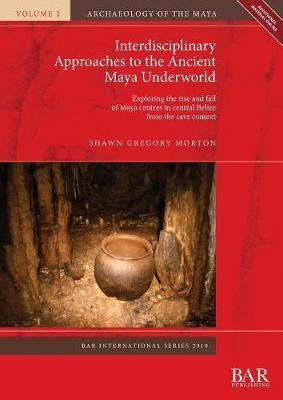
OverviewAs integrated and varied ritual contexts, how do changing patterns of pre-Columbian cave use inform the complex of historical, social, political, economic and related ideological processes in action during the inception, florescence, and collapse of Tipan Chen Uitz and other ancient Maya centres in Central Belize? This book aims to highlight and, within a specific regional context, to address, the tendency of the speleoarchaeology of the Maya area to isolate itself from broader topics of discourse. To this end, it explicitly contextualizes primary research in several caves along a chain of related concepts and datasets, extending from the broad body of literature on ritual and religion, through discussion of the conceptual cave context drawn from epigraphic and iconographic sources, and its invocation as recorded in contemporary (or, at least, relatively recent) ethnographic contexts and earlier post-Columbian indigenous historic sources, to the well-travelled paths of the archaeological study of caves. Full Product DetailsAuthor: Shawn Gregory MortonPublisher: BAR Publishing Imprint: BAR Publishing Weight: 0.818kg ISBN: 9781407316666ISBN 10: 1407316664 Pages: 159 Publication Date: 30 October 2018 Audience: Professional and scholarly , Professional & Vocational Format: Mixed media product Publisher's Status: Active Availability: Available To Order We have confirmation that this item is in stock with the supplier. It will be ordered in for you and dispatched immediately. Table of ContentsList of Figures List of Tables Abstract Epigraph A Note on Orthography 1. An Introduction to the Archaeology of Central Belize and our Focus of Study 1.1. A Word of Caution 1.2. Primary Question 1.3. Introduction to the Regions and Cultures Discussed in this Work 1.4. Summary of Previous Work in the Region 1.5. The Central Belize Archaeological Survey Project Section One 2. The Study of Ritual 2.1. Homo ritus 2.2. What Does Ritual Do? 2.3. How Does Ritual Do It? 3. The Cave as a Concept: The Epigraphic and Iconographic Corpus 3.1. Ancient Maya Cosmology 3.2. Our Sources of Information 3.3. The Cave as a Concept 3.4. Discussion and Summary 4. The Cave as a Concept: The Ethnographic and Indigenous Historic Study of Maya Cave Use 4.1. Identity in the Ethnographic and Indigenous Historic Records 4.2. The Indigenous Historic Record 4.3. The Ethnographic Record 4.4. Discussion 5. The Archaeology of Maya Cave Use 5.1. Caves and Water Collection: A Northern Concern? 5.2. Caves as Locations for Burials, Ossuaries, and Cremations 5.3. Caves as Locations for Other Religious Rites 5.4. Art Galleries 5.5. Places of Refuge 5.6. Other Uses 5.7. Discussion 5.8. Field Methods Employed in the Course of this Investigation 5.9. Cave Archaeology in Context: Expanding Thompson's List Section Two 6. Hinterland Cave Sites, Part I: Caves Branch Rockshelter Cave, AC Cave, Actun Neko 6.1. Caves Branch Rockshelter Cave 6.2. AC Cave 6.3. Actun Neko 6.4. Closing Remarks 7. Hinterland Cave Sites, Part II: Actun Lubul Ha 7.1. Actun Lubul Ha 7.2. Hinterland Cave Use: Summary 8. Cave Sites in the Core: Mark's Cave, Junction Cave, TCU s.21, TCU s.11 (Str. 8), TCU s.05, and TCU s.08 8.1. Mark's Cave 8.2. Junction Cave 8.3. TCU s.21 8.4. TCU s.11 8.5. Structure 8 8.6 TCU s.05 8.7. TCU s.08 8.8. Core Cave Use: Summary 8.9. Local Patterns of Cave Use: Discussion 9. Beyond the Cave Mouth: Polity Growth and Development between the Roaring Creek and Caves Branch River Valleys 9.1. A View of the Ancient Maya in Central Belize from the Cave Mouth 9.2. Summary and Conclusions 9.3. Future Directions Bibliography The following appendices are available as an accompanying download: Appendix I: Ceramic Summary and Catalogue Appendix II: Lithics Catalogue Appendix III: Faunal Catalogue Appendix IV: Radiocarbon AssessmentReviews'I like the synergy between epigraphy, iconography, archaeology, and ethnography in this work. . The maps, figures, and tables are beautifully done and the bibliography is beyond exhaustive (in a good way).' Prof. James Fitzsimmons, Middlebury College, Vermont 'This is a highly original work. . It is exciting to see cave archaeology move past simple stratigraphy and into extremely thoughtful and useful research. . Dr Morton's contribution will be well cited and recognised as a significant contribution to the field.' Prof. Thomas Guderjan, University of Texas at Tyler Author InformationShawn G. Morton is a Lecturer in Anthropology at Northern Arizona University. Much of his work has focused on aspects of public performance and ritual within the ancient cityscape and broader landscape of the Maya region, including extensive work in the deep cave contexts of Belize. Tab Content 6Author Website:Countries AvailableAll regions |
||||