Overview
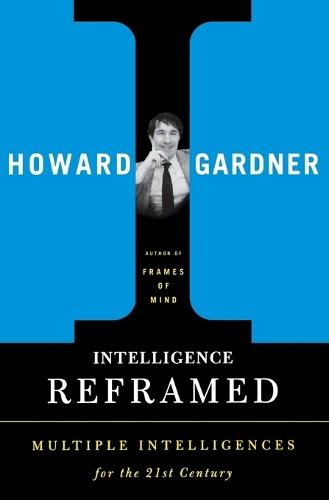
Harvard psychologist Howard Gardner has been acclaimed as the most influential educational theorist since John Dewey. His ideas about intelligence and creativity - explicated in such bestselling books as Frames of Mind and Multiple Intelligences (over 200,000 copies in print combined) - have revolutionized our thinking.In his ground-breaking 1983 book Frames of Mind , Howard Gardner first introduced the theory of multiple intelligences, which posits that intelligence is more than a single property of the human mind. That theory has become widely accepted as one of the seminal ideas of the twentieth century and continues to attract attention all over the world.Now in Intelligence Reframed , Gardner provides a much-needed report on the theory, its evolution and revisions. He offers practical guidance on the educational uses of the theory and responds to the critiques leveled against him. He also introduces two new intelligences (existential intelligence and naturalist intelligence) and argues that the concept of intelligence should be broadened, but not so absurdly that it includes every human virtue and value. Ultimately, argues Gardner, possessing a basic set of seven or eight intelligences is not only a unique trademark of the human species, but also perhaps even a working definition of the species. Gardner also offers provocative ideas about creativity, leadership, and moral excellence, and speculates about the relationship between multiple intelligences and the world of work in the future.
Full Product Details
Author: Howard Gardner
Publisher: Basic Books
Imprint: Basic Books
Edition: New edition
Dimensions:
Width: 13.20cm
, Height: 2.20cm
, Length: 20.20cm
Weight: 0.360kg
ISBN: 9780465026111
ISBN 10: 0465026117
Pages: 304
Publication Date: 18 September 2000
Audience:
Primary & secondary/elementary & high school
,
Professional and scholarly
,
Educational: Primary & Secondary
,
Postgraduate, Research & Scholarly
Format: Paperback
Publisher's Status: Active
Availability: Manufactured on demand

We will order this item for you from a manufactured on demand supplier.
Reviews
A further examination of the impact of the influential concept Gardner introduced in Multiple Intelligences (1993), and an introduction to three new (non-IQ) intelligences. Harvard University educator, psychologist, and MacArthur fellow Gardner reinforces his theory that we learn and perform through a number of intelligences. The standard, narrow definition, he avers, confuses the notion of intelligence with a specific type of measurable scholastic performance. Optimistic that the 21st century will continue to usher in inventive ways of measuring a fuller sense of the mind's potential, Gardner reviews and refines his original definition of intelligence as a biopsychological potential to process information that can be activated in a cultural setting to solve problems or create products that are of value in a culture. Since each of us has a unique blend of skills and aptitudes, we all have the potential to change our culture. And it is the role of education to tap intelligences not measured in the S.A.T. Schools must take the different human skills into account, and education must provide for an enhanced understanding of our several worlds - the physical world, the biological world, the world of human beings, the world of human artifacts, and the world of the self. Because Gardner believes teachers must learn about each student's background, strengths, anxieties, and goals, they should remain with the same students for several years. No educational decisions, he suggests, can be made without an up-to-date profile of each individual student. Learning should involve tasks that call on a range of abilities. The results of the 41 US schools that have been applying MI theory for at least three years bolster Gardner's thesis, with 78% of the schools reporting standardized test improvements. Enlarging his original eight intelligences, Gardner here proposes the idea of three new intelligences: naturalist, spiritual, and existential. A significant broadening of our understanding of intelligence and pedagogy that may expose self-professed intellectuals as merely geeks. (Kirkus Reviews)
Author Information
Howard Gardner is the John H. and Elisabeth A. Hobbs Professor in Cognition and Education at the Harvard Graduate School of Education. Among numerous honours, Gardner received a MacArthur Prize Fellowship in 1981. In 1990, he was the first American to receive the University of Louisville's Grawemeyer Award in education. In 2000, he was awarded a Guggenheim Fellowship. He lives in Cambridge, Massachusetts.