Overview
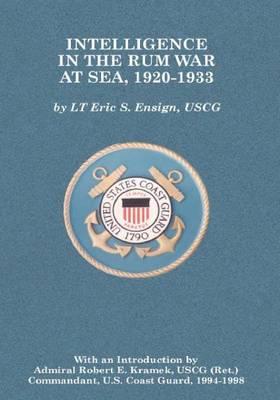
"The ""lessons of history"" are important tools in formulating the strategy, policy and tactics to protect our national interests. The lessons learned from the use of intelligence in the Rum War at Sea are totally applicable to today's War on Drugs. Over ninety-five percent of the drugs that reach our borders originate from source countries that rely on maritime smuggling routes. The value of intelligence as a force multiplier in the Drug War, like that chronicled by the author for the Rum War, cannot be overestimated. Still, these lessons had to be learned anew in the Drug War. In 1988 intelligence was a factor in approximately fifteen percent of drug interdiction. By 1998, it was the essential factor responsible for over eighty-five percent of all interdictions. It is disappointing to know that it took over a decade to convince the Intelligence Community, as we as other responsible agencies, that all source, fused intelligence was the most important element of our maritime strategy, both for illegal drugs as well as illegal migration. All of the elements described by the author-interagency cooperation, all-source intelligence, counterintelligence, operational security, communications security, as well as HUMINT, COMINT and Imagery-have direct parallels to today's maritime interdiction operations. In this respect, the book is a valuable primer for any intelligence strategist. Many of the challenges faced in the use of all-source intelligence for border interdiction operations are not readily apparent. In peacetime, border interdiction is the responsibility of domestic agencies. Involvement in these so-called ""police operations"" is prohibited for the Department of Defense as a manner of policy and Jaw. The provision of intelligence obtained from national sensors to domestic agencies that are ""non-subscribers"" becomes problematic. As a member of the armed forces, the U.S. Coast Guard, with domestic police power, has found itself in a unique position to use all-source intelligence, and to lead interdiction efforts. It is interesting to note that the Drug War represents one hundred percent of the Drug Administration's budget, forty percent of the U.S. Custom's Service budget, ten percent of the Coast Guard's budget, and one quarter of one percent of the Department of Defense budget. The Joint Interagency Task Forces (JlATFs) should really be called Joint Interagency ""Intelligence"" Task Forces that fuse intelligence form all sources, for all users. This intelligence product has become the essential weapon in the protection of our borders and an immense force multiplier saving billions of dollars in the cost of vessel and aircraft operations."
Full Product Details
Author: Uscg Lieutenant Eric S Ensign
Publisher: Createspace Independent Publishing Platform
Imprint: Createspace Independent Publishing Platform
Dimensions:
Width: 17.80cm
, Height: 0.50cm
, Length: 25.40cm
Weight: 0.191kg
ISBN: 9781523465392
ISBN 10: 1523465395
Pages: 102
Publication Date: 18 January 2016
Audience:
General/trade
,
General
Format: Paperback
Publisher's Status: Active
Availability: Available To Order

We have confirmation that this item is in stock with the supplier. It will be ordered in for you and dispatched immediately.