Overview
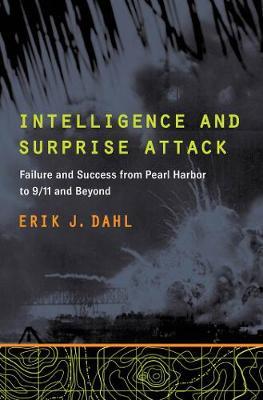
How can the United States avoid a future surprise attack on the scale of 9/11 or Pearl Harbor, in an era when such devastating attacks can come not only from nation states, but also from terrorist groups or cyber enemies? Intelligence and Surprise Attack examines why surprise attacks often succeed even though, in most cases, warnings had been available beforehand. Erik J. Dahl challenges the conventional wisdom about intelligence failure, which holds that attacks succeed because important warnings get lost amid noise or because intelligence officials lack the imagination and collaboration to ""connect the dots"" of available information. Comparing cases of intelligence failure with intelligence success, Dahl finds that the key to success is not more imagination or better analysis, but better acquisition of precise, tactical-level intelligence combined with the presence of decision makers who are willing to listen to and act on the warnings they receive from their intelligence staff. The book offers a new understanding of classic cases of conventional and terrorist attacks such as Pearl Harbor, the Battle of Midway, and the bombings of US embassies in Kenya and Tanzania. The book also presents a comprehensive analysis of the intelligence picture before the 9/11 attacks, making use of new information available since the publication of the 9/11 Commission Report and challenging some of that report's findings.
Full Product Details
Author: Erik J. Dahl
Publisher: Georgetown University Press
Imprint: Georgetown University Press
Dimensions:
Width: 15.20cm
, Height: 2.00cm
, Length: 22.90cm
Weight: 0.431kg
ISBN: 9781589019980
ISBN 10: 1589019989
Pages: 256
Publication Date: 19 July 2013
Audience:
Professional and scholarly
,
Professional & Vocational
Format: Paperback
Publisher's Status: Active
Availability: Manufactured on demand

We will order this item for you from a manufactured on demand supplier.
Reviews
A defining book in understanding intelligence failure. It deserves to be a text studied heavily by students of intelligence, practitioners and policymakers. -- Kristian Gustafson, International Studies Review Where this book breaks new ground is in the examination of warning of terrorist attack, an area where there is comparatively (and surprisingly) little in the way of scholarly research and publication [...] Professor Dahl has produced a well-written and thought provoking book that provides well-researched analysis of what makes warning intelligence work. It is a worthy addition to the scholarly literature on indications and warning and 'Intelligence failure.' -- Proceedings A seminal work of original scholarship and should be a part of every community and academic library Security Studies & Intelligence collection. -- Midwest Book Review It encourages the comparison of cases of intelligence failure and success and thus fills an important gap in existing literature on intelligence failures and paves way for future research. Furthermore, it provides a valuable dataset on unsuccessful terrorist attacks against Americans and American targets for future research [...] It is an important book and in time will find its place among other classic and prominent works on the phenomenon of surprise attacks. -- Intelligence and National Security Too many assume failure is inevitable, but [the author] shows that it isn't and explains how to make intelligence far more reliable to avoid future surprise attacks. -- The Intelligencer
Author Information
Erik J. Dahl is an assistant professor of national security affairs at the Naval Postgraduate School in Monterey, California. He is also a faculty member of the Center for Homeland Defense and Security (CHDS) at the Naval Postgraduate School. Previously, he was a fellow at the Belfer Center for Science and International Affairs at Harvard University, an instructor of joint military operations at the Naval War College, and served as an intelligence officer in the United States Navy.