Overview
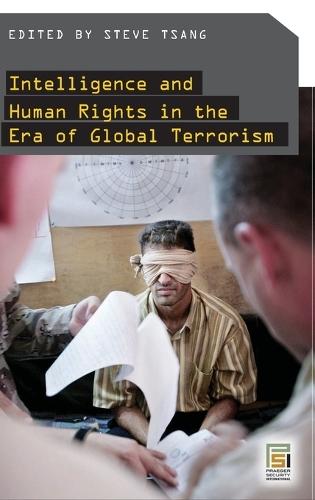
Facing the threats posed by dedicated suicide bombers who have access to modern technology for mass destruction and who intend to cause maximum human suffering and casualties, democratic governments have hard choices to make. On the one hand, they must uphold the basic values of democratic societies based on due process and human rights. On the other, they need to pre-empt the kind of destruction inflicted upon New York, Madrid, London, and Bali. The premise of this book is that for intelligence organizations to be able to face up to the challenges of global terrorism, they must think outside the box and utilize all of their resources effectively and creatively. To overcome the enemy, we must also secure the peace. Winning the hearts and minds of the terrorists' pool of potential recruits will be essential to cutting off the supply of suicide bombers. The support and cooperation of the people in countries where the terrorists strike must be sustained by ensuring they have confidence in the government and intelligence services. If a government and its intelligence services become so focused on pre-empting terrorist attacks that they infringe on the rights of their citizens and encroach on democratic norms, they unwittingly fall into a trap set by Al Qaeda and its kind. These organizations aim to destroy the democratic way of life so cherished in the West, and to incite the Muslim populations in democratic countries and their non-Muslim fellow citizens into a vicious circle of mutual hatred and violence. This book therefore addresses not only the question of how intelligence organizations can improve their efficacy in pre-empting terrorist outrages, but also the wider issue of removing the forces that sustain global terrorism as a scourge of the 21st century. The general public in the target countries and recruiting grounds must also be persuaded that—despite their rhetoric—the terrorists are not engaged in a holy war. Ultimately, the brand of global terrorism promoted by Osama bin Laden and his associates is meant to satisfy their own vanity and aspirations toward semi-divine status; the organization they have formed for this purpose is merely a global syndicate that commits serious crimes of a particularly heinous nature. Intelligence services of various countries need to find convincing evidence to prove this point. But it is up to governments, civil society, and the media in different parts of the world to work together if the evidence unearthed by national intelligence services is to be accepted by the general public. Unless the emotional or quasi-religious appeal of the global terrorists can be removed, the simple arrest of bin Laden and his close associates—or even the destruction of Al Qaeda as an organization—will not be sufficient to prevent others from rising to replace them.
Full Product Details
Author: Steven Tsang
Publisher: Bloomsbury Publishing Plc
Imprint: Praeger Publishers Inc
Dimensions:
Width: 15.60cm
, Height: 2.30cm
, Length: 23.50cm
Weight: 0.510kg
ISBN: 9780275992514
ISBN 10: 0275992519
Pages: 240
Publication Date: 30 November 2006
Recommended Age: From 7 to 17 years
Audience:
General/trade
,
Professional and scholarly
,
College/higher education
,
General
,
Professional & Vocational
Format: Hardback
Publisher's Status: Active
Availability: Manufactured on demand

We will order this item for you from a manufactured on demand supplier.
Reviews
Professor Tsang and his colleagues are to be congratulated for the publication of a work that is exceptionally timely as well as impressively insightful in its treatment of a series of controversial issues taken right off the headlines of today's news. As a member of Congress involved in national security issues on a daily basis I appreciate the importance of experts such as those who contributed to this book to reflect on these topics. Their work is a must read for other experts as well as the general public and it doubtless will inform both audiences. -Curt Weldon Vice Chairman, House Homeland Security Committee Vice Chairman, House Armed Services Committee
The 13 chapters presented by Tsang address a range of issues of how intelligence agencies in western democracies should address the issue of terrorism. After opening chapters examine historical and overarching issues, contributors discuss the evolution of congressional oversight of American intelligence, the extent to which Al Qaeda differs from earlier terrorist organizations, the need to uphold human rights and the law in order to avoid such reputation- undermining situations as the US detention regimes as the Guantanamo camp and Abu Ghraib, the benefits of adding independent research products to the intelligence analysis process, allocation of financial resources by intelligence organizations, and intelligence sharing between Britain and Europe, among other topics. - Reference & Research Book News Tsang's collection provides a wide-ranging review of contemporary intelligence issues. - Human Rights & Human Welfare
Author Information
Steve Tsang is University Reader in Politics and Louis Cha Senior Research Fellow at St. Antony's College, Oxford University, where he is also Director of the Pluscarden Programme for the Study of Global Terrorism and Intelligence.