|
|
|||
|
||||
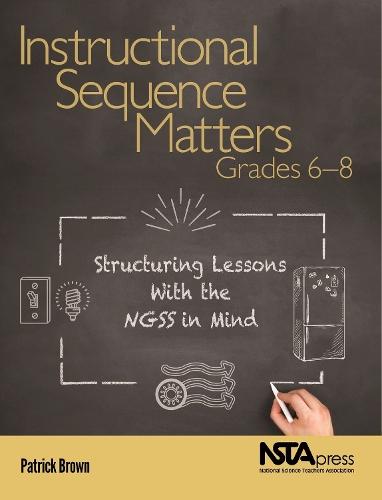
OverviewInstructional Sequence Matters shows how to make simple shifts in the way you arrange and combine activities to improve student learning. It also makes it easy for you to put the NGSS into practice. After explaining why sequencing is so important, author Patrick Brown provides a complete self-guided tour to becoming an “explore-before-explain” teacher. He explains that this teaching mindset helps students construct accurate knowledge firsthand, which is an important component of all science learning. The book focuses on two popular approaches for structuring science lessons: POE (Predict, Observe, and Explain) and 5E (Engage, Explore, Explain, Elaborate, and Evaluate). You get guidance on how to create your own 5Es that translate the NGSS. And you get ready-to-use lessons featuring either a POE or 5E sequence to teach about heat and temperature, magnetism, electric circuits, and force and motion. Throughout, reflection questions spark thinking and help you develop the knowledge to adapt these concepts to your own classroom. Instructional Sequence Matters is a one-stop teaching resource for developing lessons that support both the NGSS and contemporary research on how students learn science best. Full Product DetailsAuthor: Patrick BrownPublisher: National Science Teachers Association Imprint: National Science Teachers Association Weight: 0.368kg ISBN: 9781681405841ISBN 10: 1681405849 Pages: 110 Publication Date: 18 October 2018 Audience: Professional and scholarly , Professional & Vocational Format: Paperback Publisher's Status: Active Availability: Available To Order We have confirmation that this item is in stock with the supplier. It will be ordered in for you and dispatched immediately. Table of ContentsReviewsAuthor InformationPatrick Brown is executive director of STEAM for the Fort Zumwalt School District in O’Fallon, Missouri, and author of the best-selling NSTA book series Instructional Sequence Matters. His science teaching ideas have appeared in Science and Children, Science Scope, The Science Teacher, and Science Activities. In addition, his research in science education has been published in Science Education, the Journal of Science Teacher Education, and the International Journal of Science Education. Tab Content 6Author Website:Countries AvailableAll regions |
||||