Overview
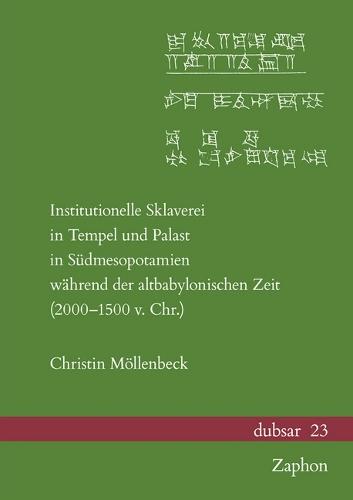
In the present work, slavery in southern Mesopotamia during the Old Babylonian period (ca. 2000-1595 BC) is examined in the institutional realm of the temple and palace. For decades, research on slavery has played an important role in historical science from a social, historical and economic perspective. While slavery is considered a global historical phenomenon that has existed throughout human history, research into slavery in the premodern eras has focused primarily on Graeco-Roman antiquity, although ancient Mesopotamia has numerous sources on slavery dating back to going back to the beginnings of historical records. Although the first treatises on slavery in the Ancient Near East were written at the beginning of the 20th century, these studies - up to the present day - have only rarely been noticed outside of Ancient Near Eastern Studies. The study is based on the relevant texts from 16 sites in southern, central and northern Babylonia, with the following four aspects in focus: The Acquisition of Slaves: Determining the sources of slavery is a fundamental part of the study. A distinction is made here between acquisition through purchase, captivity, dedication and hiring. In the course of acquisition through one of the options mentioned, the origin of the slaves is also examined, which is often noted in the texts at the time of admission to an institution. Tasks and areas of use of the slaves: The tasks and areas of use of the slaves and thus their contribution to the functioning of institutional households are also of particular interest. These are agriculture, handicrafts and the cult area. The supply of the slaves: The supply lists of the political and cultic-religious institutions often represent the only proof of the existence of slaves. They are evaluated primarily with regard to the qualifications and the areas of application of the slaves. Redemption, release, escape and death of slaves: A slave could evade the violence of a political or cultic-religious institution by paying a ransom, fleeing, release or death. It becomes clear that slaves could be used in every economic area of the palace and temple households - agriculture, handicrafts and even in the cult - and thus contributed to the functioning of the palace and temple economy. The work can also show how closely the private sector was able to work with the respective institutions.
Full Product Details
Author: Christin Mollenbeck
Publisher: Zaphon
Imprint: Zaphon
Weight: 3.438kg
ISBN: 9783963271663
ISBN 10: 3963271663
Pages: 450
Publication Date: 01 March 2022
Audience:
General/trade
,
General
Format: Hardback
Publisher's Status: Active
Availability: Available To Order

We have confirmation that this item is in stock with the supplier. It will be ordered in for you and dispatched immediately.
Language: German