Overview
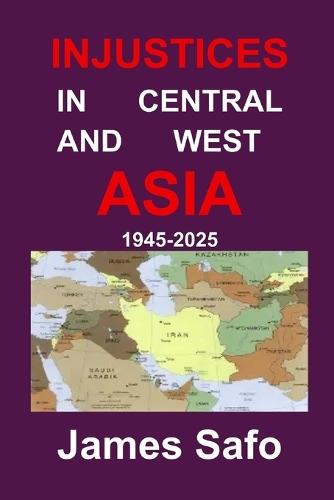
Central Asia comprises five countries: Kazakhstan, Kyrgyzstan, Tajikistan, Turkmenistan, and Uzbekistan. Countries in West Asia: Armenia, Azerbaijan, Bahrain, Cyprus, Georgia, Iran, Iraq, Israel, Jordan, Kuwait, Lebanon, Oman, Palestine, Qatar, Saudi Arabia, Syria, Turkey, the United Arab Emirates, and Yemen, with Egypt's Sinai Peninsula . Between 1945 and 2025, the region witnessed cycles of decolonisation, Cold War interventions, authoritarian consolidation, nationalist movements, and social transformations, each leaving persistent legacies of inequality, repression, and contestation.1945 transitions through the Cold War and post-Soviet transformations, and concludes with contemporary governance, human rights, and social challenges as of 2025. Economic Inequality: The region is experiencing rapid economic growth, but this growth is not being shared equally. Economists estimate that the Central Asian countries are developing faster than many regions of the world, including Europe and Latin America. However, the economic benefits are not reaching all segments of the population, leading to disparities in wealth distribution. Social Injustice: Social justice is a critical issue, with around 22.5 million people suffering from violence, trafficking, and abuse in the region. Efforts are being made to address these injustices through anti-trafficking programs and initiatives that protect vulnerable populations. Human Rights Violations: The region is grappling with the erosion of democratic norms and the rise of authoritarianism. Countries like Afghanistan, Bangladesh, India, Nepal, Pakistan, and Sri Lanka are facing human rights violations and a culture of impunity. The Taliban's return to power in Afghanistan has had a devastating impact on women, girls, journalists, and human rights defenders. At the same time, India has been downgraded from a free democracy to a ""partially free democracy"" by Freedom House. Poverty and Inclusion: Poverty is rising, and inequalities in income and wealth are widening across the region. The United Nations report warns that without stronger social protection systems, millions could be pushed into poverty in the next decade. The report emphasises the need for inclusive and comprehensive social protection systems to address the region's socio-economic and environmental challenges. Conflict and Violence: The region is also affected by ongoing conflicts, including the war in Afghanistan, social and political divisions in Pakistan, and the conflicts in Central Asia. These conflicts are exacerbated by the presence of various armed groups and extremist movements, leading to significant loss of life and loss of life. The region's historical trajectory is indelibly linked to the Soviet legacy, with post-1991 nation-building processes shaped by inherited bureaucratic hierarchies, centralised authority, and sociopolitical stratification. Despite formal commitments to international human rights frameworks, systemic issues, including limitations on freedom of expression, arbitrary detention, corruption, and impunity for abuses, persist, reflecting both institutional inertia and deliberate political design. These points provide a snapshot of the injustices faced by the people in Central and South Asia, highlighting the need for urgent action to address these challenges and promote a more just and equitable society. The preface situates contemporary injustices within a broader historical continuum, highlighting critical inflexion points: independence from imperial domination, Cold War geopolitical arrangements, civil conflicts, post Soviet transitions, and global economic integration. Special attention is given to intersectional dimensions of injustice, encompassing gender based violence, restrictions on labour and minority rights, environmental degradation, and limited access to judicial remedy.
Full Product Details
Author: James Safo
Publisher: Faith Unity Books
Imprint: Faith Unity Books
Dimensions:
Width: 15.20cm
, Height: 3.00cm
, Length: 22.90cm
Weight: 0.780kg
ISBN: 9781917753333
ISBN 10: 1917753330
Pages: 592
Publication Date: 19 January 2026
Audience:
General/trade
,
General
Format: Paperback
Publisher's Status: Active
Availability: Available To Order

We have confirmation that this item is in stock with the supplier. It will be ordered in for you and dispatched immediately.