Overview
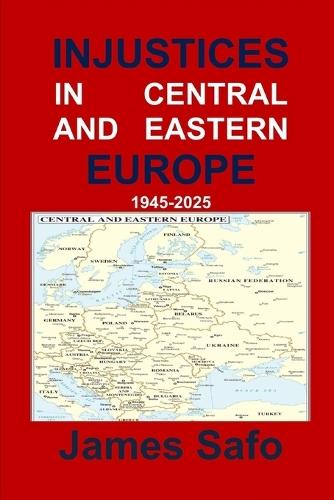
Eastern Europe consists of the following 10 countries: Belarus, Bulgaria, the Czech Republic, Hungary, Moldova, Poland, Romania, Russia, Slovakia, and Ukraine. Central Europe: 9 countries: Austria, the Czech Republic, Germany, Hungary, Liechtenstein, Poland, Slovakia, Slovenia, and Switzerland. Eastern and Central Europe have experienced a complex tapestry of historical and contemporary injustices, encompassing political repression, social discrimination, economic inequality, and human rights violations. inequities in the region-corruption and weak rule of law; human rights violations; authoritarian governance and repression of dissent. Historical Perspective: Many analyses emphasise the long-standing impact of imperial and colonial systems (Austro-Hungarian, Ottoman, and Russian empires) on the organisation of society in Central and Eastern Europe. Diverse ethno-linguistic groups were often subordinated or marginalised under imperial rule. Post-World War II and Soviet-era policies further restructured ethnic and social hierarchies, contributing to continued inequality among minorities, including Roma, Jewish, and other ethnic communities. Environmental and Social Injustice: Highlight the importance of a historical and human-environmental approach. Environmental inequities often intersect with ethnic and social marginalisation, with underprivileged groups experiencing disproportionate exposure to hazards, poor living conditions, and limited access to resources. Contemporary injustices are rooted in historical patterns, including forced displacements, state-driven assimilation policies, and economic disenfranchisement Conceptual Framing: Ethnic minorities and other marginalised groups are often positioned as victims of systemic unjust processes. Scholars reflect on how legal, political, and social definitions of minority status evolved, showing that the category is both historically contingent and morally loaded. In Central and Eastern Europe, minorities are frequently indigenous populations whose minority status emerged only after the formation of modern nation-states, in contrast with post-colonial contexts in Western Europe. Academic Goals of the Preface: The preface serves to set the methodological tone: an insistence on historical depth, multi-disciplinary analysis, and sensitivity to the entanglement of cultural, political, and economic factors in shaping injustice. It identifies the research gap that compels historical reflection, emphasising that policy and scholarly discourses often overlook the long duration and complexity of injustices, particularly toward specific ethnic minorities. Illustrative Cases: The transitional issues after the collapse of socialism, where Nation-states attempted to reconcile ethnic diversity with the prevailing nation-state model, often deepening inequalities implicitly. The injustices in Eastern and Central Europe present a historically grounded and ethically aware framework for understanding persistent social, ethnic, and environmental inequalities. It situates present-day disparities within centuries-long processes of empire, state formation, and political restructuring, and it underscores the need for nuanced multi-disciplinary studies that consider historical structural causes rather than solely contemporary manifestations. While several countries in Eastern Europe and Central Asia demonstrate high levels of injustice, combining low human rights scores, systemic corruption, and authoritarian repression, Turkmenistan emerges as the most extreme case: Turkmenistan is currently the most injustice-afflicted country in Eastern and Central Europe. This conclusion reflects systemic and institutionalised violations, rather than isolated incidents, making it the region's most extreme case of injustice as of 2025-2026.
Full Product Details
Author: James Safo
Publisher: Faith Unity Books
Imprint: Faith Unity Books
Dimensions:
Width: 15.20cm
, Height: 2.10cm
, Length: 22.90cm
Weight: 0.499kg
ISBN: 9781917753357
ISBN 10: 1917753357
Pages: 374
Publication Date: 03 February 2026
Audience:
General/trade
,
General
Format: Paperback
Publisher's Status: Active
Availability: Available To Order

We have confirmation that this item is in stock with the supplier. It will be ordered in for you and dispatched immediately.