Overview
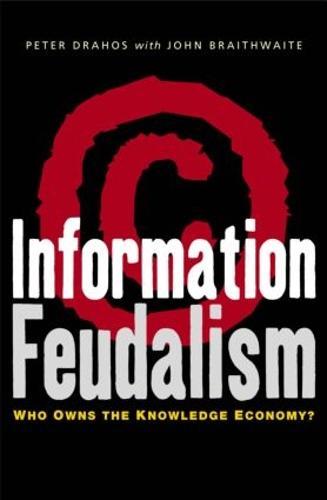
New intellectual property regimes are entrenching new inequalities. Access to information is fundamental to the exercise of human rights and marketplace competition, but patents are being used to lock up vital educational, software, genetic and other information, creating a global property order dominated by a multinational elite. How did intellectual property rules become part of the World Trade Organization's free trade agreements? How have these rules changed the knowledge game for international business? What are the consequences for the ownership of biotechnology and digital technology, and for all those who have to pay for what was once shared information? Based on extensive interviews with key players, this book tells the story of these profound transformations in information ownership. The authors argue that in the globalized information society, the rich have found new ways to rob the poor, and shows how intellectual property rights can be more democratically defined.
Full Product Details
Author: Peter Drahos ,
John Braithwaite
Publisher: Taylor & Francis Ltd
Imprint: Earthscan Ltd
Dimensions:
Width: 15.60cm
, Height: 2.10cm
, Length: 23.40cm
Weight: 0.470kg
ISBN: 9781853839177
ISBN 10: 1853839175
Pages: 272
Publication Date: 01 July 2002
Audience:
Professional and scholarly
,
Professional & Vocational
Format: Paperback
Publisher's Status: Active
Availability: In Print

This item will be ordered in for you from one of our suppliers. Upon receipt, we will promptly dispatch it out to you. For in store availability, please contact us.
Reviews
'A singularly apposite book.' Computer Bulletin 'Well-written, vigorously argued and beautifully clear.' Journal of Public Administration 'A compelling read.' International Journal of Law and Information Technology 'The book provides an overview of how international property rules have been quietly redrawn in the past 20 years. An interesting point for the sector is the call for broader coalitions to be formed to challenge such measures.' Third Sector 'Information Feudalism succeeds where other works with similar goals fail. It presents a factually based analysis of the situation of the existing regime of international protection of ownership that requires serious attention.' International Journal of Law and Information Technology 'A thick, detailed and meticulously-researched narrative on how and why a significant policy change came to be made, including important insights into the perspectives of key actors and bodies. This book is to be warmly welcomed.' Journal of Public Administration
'A singularly apposite book.' Computer Bulletin 'Well-written, vigorously argued and beautifully clear.' Journal of Public Administration 'A compelling read.' International Journal of Law and Information Technology 'The book provides an overview of how international property rules have been quietly redrawn in the past 20 years. An interesting point for the sector is the call for broader coalitions to be formed to challenge such measures.' Third Sector 'Information Feudalism succeeds where other works with similar goals fail. It presents a factually based analysis of the situation of the existing regime of international protection of ownership that requires serious attention.' International Journal of Law and Information Technology 'A thick, detailed and meticulously-researched narrative on how and why a significant policy change came to be made, including important insights into the perspectives of key actors and bodies. This book is to be warmly welcomed.' Journal of Public Administration
Author Information
Peter Drahos and John Braithwaite are both professors in the Australian National University, Canberra, and Co-authors of Global Business Regulation.