Overview
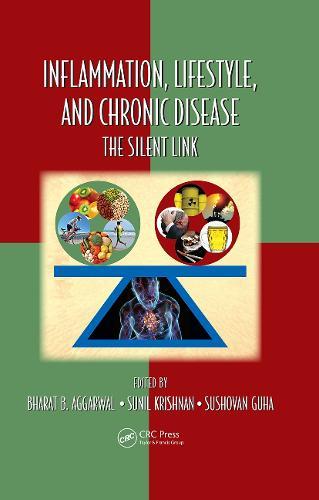
Oxidative stress and inflammation are among the most important factors of disease. Chronic infections, obesity, alcohol and tobacco usage, radiation, environmental pollutants, and high-calorie diets have been recognized as major risk factors for a variety of chronic diseases from cancer to metabolic diseases. All these risk factors are linked to chronic diseases through inflammation. While short-term, acute inflammation generated by the immune system serves a therapeutic role, chronic low-level inflammation that may persist ""silently"" for decades is responsible for chronic diseases. Inflammation, Lifestyle, and Chronic Diseases: The Silent Link describes the role of dysregulated inflammation in persistent and recurring diseases. It investigates links to lifestyle and presents research on how the suppression of proinflammatory pathways may provide opportunities for both prevention and treatment of chronic diseases. The book covers neurodegenerative diseases, pulmonary diseases, asthma, rheumatic and arthritic diseases, skin disease, heart disease, chronic wounds, infectious disease, neuropsychiatric disorders such as depression, gastrointestinal diseases, insulin resistance, and cancer, many of which are also diseases of old age. For each chronic disease, contributors review the clinical and scientific literature and examine current and potential therapies, including conventional pharmacotherapies as well as natural products. Noting that the long-term use of steroids and nonsteroidal anti-inflammatory drugs (NSAIDs) can cause adverse side effects, many of the chapters address the role of dietary agents such as fruits, vegetables, legumes, pulses, nuts, and spices as ideal anti-inflammatory agents that can be consumed regularly. The book also suggests directions for further research. Clinical and science researchers, students, and health professionals interested in the link between inflammation, lifestyle, and chronic diseases will find this an informative resource.
Full Product Details
Author: Bharat B. Aggarwal (The University of Texas, Houston, USA) ,
Sunil Krishnan (University of Texas MD Anderson Cancer Center, Houston, USA) ,
Sushovan Guha (University of Texas, MD Anderson Cancer Center, Houston, USA)
Publisher: Taylor & Francis Inc
Imprint: CRC Press Inc
Volume: 29
Dimensions:
Width: 15.60cm
, Height: 3.00cm
, Length: 23.40cm
Weight: 1.110kg
ISBN: 9781439839898
ISBN 10: 1439839891
Pages: 520
Publication Date: 27 July 2011
Audience:
College/higher education
,
Postgraduate, Research & Scholarly
Format: Hardback
Publisher's Status: Active
Availability: In Print

This item will be ordered in for you from one of our suppliers. Upon receipt, we will promptly dispatch it out to you. For in store availability, please contact us.
Author Information
Dr. Bharat Bhushan Aggarwal is the Ransom Home, Jr., Distinguished Professor of Cancer Research at the University of Texas MD Anderson Cancer Center Division of Cancer Medicine's Department of Experimental Therapeutics, and chief of the Cytokine Research Laboratory, in Houston, Texas. He earned a PhD in biochemistry at the University of California in Berkeley, then underwent postdoctoral training at the University of California Medical Center in San Francisco. He worked for ten years at Genentech, Inc., where he isolated and determined the structure of TNF-I and TNF-I , before returning to a university-based academic position. Dr. Sunil Krishnan is director of Gastrointestinal Translational Research and associate professor of radiation oncology at the University of Texas MD Anderson Cancer Center in Houston, Texas. He received his MD degree at the Christian Medical College in Vellore, India, and then completed an internal medicine residency at Penn State Geisinger Medical Center in Danville, Pennsylvania, and a radiation oncology residency at Mayo Clinic College of Medicine in Rochester, Minnesota, before joining the University of Texas MD Anderson Cancer Center. Dr. Sushovan Guha is the site director of the Gastroenterology Fellowship Program and assistant professor of gastroenterology, hepatology, and nutrition at the University of Texas MD Anderson Cancer Center in Houston. He earned his MD degree from Jawaharlal Institute of Post-Graduate Medical Education and Research (JIPMER), Pondicherry, India, and graduated with an MA/MPhil in microbiology and immunology from Columbia University, New York. He completed his internship and residency in internal medicine at the Albert Einstein College of Medicine in the Bronx, New York. Dr. Guha then joined the prestigious Specialty Training and Advanced Research (STAR) Fellowship in Gastroenterology and Hepatology at the David Geffen School of Medicine at UCLA, Los Angeles, where he also received his PhD from the Molecular Biology Institute (MBI) under the astute tutelage of Professor Enrique Rozengurt.