Overview
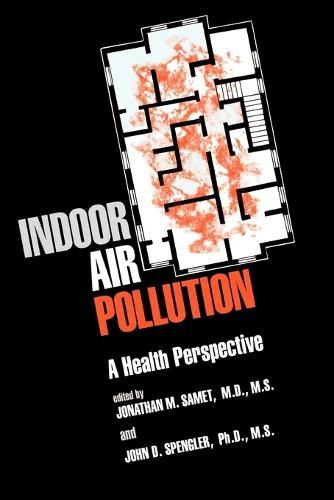
During the last two decades, outdoor air pollution has decreased in the United States and in many other industrial nations. But many hazardous pollutants have been found in offices, cars, homes, and hospitals. Outbreaks of illness related to the noninjdustrial work environment have been reported with increasing frequency. And ""sick-building,"" or ""tight-building,"" syndrome has been recognized as a new and serious threat to public health. Indoor Air Pollution: A Health Perspective outlines current research on the subject and examines effotrs to regulate the quality of indoor air. Contributors—including epidemiologists, clinicians, risk assessorsm experts in air monitoring, microbiologies, and engineers—discuss methodologies used in measuring exposures to pollution, strategies for imporving indoor air quality, and other issues. They also assess the health effects of specific pollutants: tobacco smoke, carbon monoxide, wood smoke, nitrogen dioxide, biological agents, formaldehyde, and radon.
Full Product Details
Author: Jonathan M. Samet (Dean and Professor, Colorado School of Public Health) ,
John D. Spengler (Spengler Environ Cons, Inc.)
Publisher: Johns Hopkins University Press
Imprint: Johns Hopkins University Press
Dimensions:
Width: 15.90cm
, Height: 2.30cm
, Length: 23.50cm
Weight: 0.709kg
ISBN: 9780801841255
ISBN 10: 0801841259
Pages: 424
Publication Date: 27 July 1991
Recommended Age: From 17
Audience:
College/higher education
,
Professional and scholarly
,
Undergraduate
,
Postgraduate, Research & Scholarly
Format: Paperback
Publisher's Status: Active
Availability: Manufactured on demand

We will order this item for you from a manufactured on demand supplier.
Reviews
Harmful of toxic substances enter the body through the air we breathe, through food or water ingested, or through the skin. This book by two prominent epidemiologists explores the relationship between air pollution and health. The book is well documented and well illustrated and provides a wealth of useful information including epidemiologic results and standards or requirements that influence air quality--both indoor and out. the 17 edited contributions are divided into discussions of (1) sources, (2) health effects, and (3) control and legal aspects. Each chapter is a detailed but readable review, of excellent quality and reliability. Particularly strong are the chapters on indoor air pollution, nitrogen dioxide, wood smoke, formaldehyde, and radon. Worldwide in coverage, this volume successfully provides a review for policy makers, engineers, lawyers, and health professionals, and for students in these disciplines, undergraduate and graduate. --'M.Gochfeld, Robert Wood Johnson Medical School'
Harmful of toxic substances enter the body through the air we breathe, through food or water ingested, or through the skin. This book by two prominent epidemiologists explores the relationship between air pollution and health. The book is well documented and well illustrated and provides a wealth of useful information including epidemiologic results and standards or requirements that influence air quality-both indoor and out. the 17 edited contributions are divided into discussions of (1) sources, (2) health effects, and (3) control and legal aspects. Each chapter is a detailed but readable review, of excellent quality and reliability. Particularly strong are the chapters on indoor air pollution, nitrogen dioxide, wood smoke, formaldehyde, and radon. Worldwide in coverage, this volume successfully provides a review for policy makers, engineers, lawyers, and health professionals, and for students in these disciplines, undergraduate and graduate. M.Gochfeld, Robert Wood Johnson Medical School
Author Information
Jonathan M. Samet, M.D., is professor of medicine at the University of New Mexico. John D. Spengler, Ph.D., M.S., is professor of environmental health at the Harvard University School ofPublic Health.