Overview
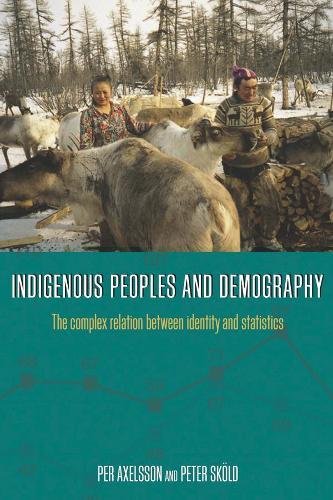
When researchers want to study indigenous populations they are dependent upon the highly variable way in which states or territories enumerate, categorise and differentiate indigenous people. In this volume, anthropologists, historians, demographers and sociologists have come together for the first time to examine the historical and contemporary construct of indigenous people in a number of fascinating geographical contexts around the world, including Canada, the United States, Colombia, Russia, Scandinavia, the Balkans and Australia. Using historical and demographical evidence, the contributors explore the creation and validity of categories for enumerating indigenous populations, the use and misuse of ethnic markers, micro-demographic investigations, and demographic databases, and thereby show how the situation varies substantially between countries.
Full Product Details
Author: Per Axelsson ,
Peter Sköld
Publisher: Berghahn Books
Imprint: Berghahn Books
Weight: 0.626kg
ISBN: 9780857450005
ISBN 10: 085745000
Pages: 354
Publication Date: 01 August 2011
Audience:
Professional and scholarly
,
Professional & Vocational
Format: Hardback
Publisher's Status: Active
Availability: In Print

This item will be ordered in for you from one of our suppliers. Upon receipt, we will promptly dispatch it out to you. For in store availability, please contact us.
Reviews
<em>This interesting collection looks at changes in population studies and examines indigeneity in contexts as different as Australia and Norway. It is particularly valuable with respect to two broad geographic categories: countries originally settled by British colonists, and states in northern Europe... the study of categorization and enumeration offers valuable insights on how ethnic boundaries are established, and how--inevitably--they are challenged and contested</em>. <strong>- Choice</strong></p> <em> Using historical and demographical evidence, the contributors explore the creation and validity of categories for enumerating indigenous populations, the use and misuse of ethnic markers, micro-demographic investigations, and demographic databases, and thereby show how the situation varies substantially between countries. </em> <strong> - International Journal of Anthropology</strong></p> <em>Taken as a whole, [this volume] offers a truly remarkable contribution to the field of indigenous demography. From the content point of view, this is an outstanding example of a dialog between demography, history, and anthropology in the amount of statistical data and analytical synthesis offered... Given the diversity of geographical approach, this volume will be of great interest to specialists in virtually any field of social sciences, politics, and economics.</em> <strong>- </strong> <strong>Sibirica</strong></p> <em>As a fascinating set of accounts of the construction of ethnicity and indigeneity among (largely) historical census-takers in (largely) northern populations, it is a compelling read.</em> <strong>- </strong> <strong>Journal of the Royal Anthropological Institute</strong></p>
This interesting collection looks at changes in population studies and examines indigeneity in contexts as different as Australia and Norway. It is particularly valuable with respect to two broad geographic categories: countries originally settled by British colonists, and states in northern Europe... the study of categorization and enumeration offers valuable insights on how ethnic boundaries are established, and how--inevitably--they are challenged and contested.. Choice Using historical and demographical evidence, the contributors explore the creation and validity of categories for enumerating indigenous populations, the use and misuse of ethnic markers, micro-demographic investigations, and demographic databases, and thereby show how the situation varies substantially between countries.. International Journal of Anthropology Taken as a whole, [this volume] offers a truly remarkable contribution to the field of indigenous demography. From the content point of view, this is an outstanding example of a dialog between demography, history, and anthropology in the amount of statistical data and analytical synthesis offered... Given the diversity of geographical approach, this volume will be of great interest to specialists in virtually any field of social sciences, politics, and economics. . Sibirica As a fascinating set of accounts of the construction of ethnicity and indigeneity among (largely) historical census-takers in (largely) northern populations, it is a compelling read. . Journal of the Royal Anthropological Institute
Author Information
Per Axelsson is a Senior Researcher of the Centre for Sami Research at Umeå University, Sweden and a Wallenberg Academy Fellow. His current research focus on a longitudinal study of colonization, state and the health of Indigenous Peoples in Sweden, Australia and New Zealand, 1850-2000. Recent publications include Global Environmental Change, Global Health Action and Dynamis. He co-chairs the network of Family/Demography within the European Social Science History Association.