Overview
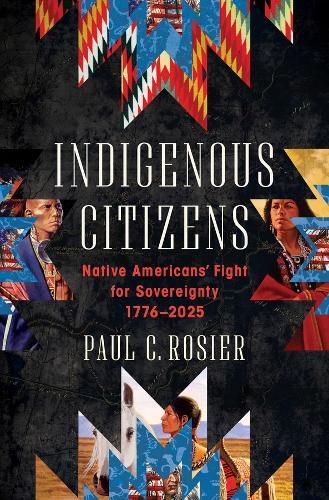
Only Native Americans have held the political identity of being citizens of nations within a nation. After the American Revolution, they had to decide whether gaining United States citizenship would help to preserve their rights and property or be used to take them away-and they found out that either decision could end in loss. To understand the profound consequences of their choices, historian Paul C. Rosier creates a sweeping portrait of the broad history of Indigenous Americans. Indigenous Citizens is unique in its breadth, its focus on the evolution of Native Americans' dual citizenship, and its coverage of Indigenous issues from the founding of the United States through the twenty-first century. This masterful work highlights Native people's efforts to preserve their tribal sovereignty and to secure the civil rights afforded to other Americans. In it, Rosier chronicles Native Americans' extraordinary resistance to colonialism, forced removals from ancestral homelands, and coercion into Indian Boarding Schools, even as the United States government broke treaty after treaty. He explores how Native people defended their right to be both Native and American. Native Americans differ religiously, culturally, and politically. But, as Rosier weaves together their experiences negotiating tribal, state, and national status, he reveals their vision for a country that could live up to the ideals of its Constitution. Through military service, activism, and political writings, Native people have long championed their belief in a United States of civil liberties and called on it to honor its legal obligations. In Indigenous Citizens, Rosier demonstrates how their campaigns for justice have helped to expand, redefine, and strengthen democratic freedoms for all American citizens, even as the rights of their citizenship continue to be contested.
Full Product Details
Author: Paul C. Rosier (Villanova University)
Publisher: WW Norton & Co
Imprint: WW Norton & Co
Dimensions:
Width: 16.00cm
, Height: 3.30cm
, Length: 23.90cm
Weight: 0.627kg
ISBN: 9781324105879
ISBN 10: 1324105879
Pages: 368
Publication Date: 10 March 2026
Audience:
College/higher education
,
Professional and scholarly
,
Tertiary & Higher Education
,
Professional & Vocational
Format: Hardback
Publisher's Status: Active
Availability: Awaiting stock

The supplier is currently out of stock of this item. It will be ordered for you and placed on backorder. Once it does come back in stock, we will ship it out for you.
Reviews
In current controversies over the Fourteenth Amendment, the topic of Indigenous citizenship has been taken up by people who know little about it. Paul C. Rosier, on the other hand, knows a lot about it. He gives a timely, fascinating, and nuanced history of the dual citizenship of Native peoples. He reveals how citizenship has been a two-edged sword in both national and tribal politics.--Richard White, author of Who Killed Jane Stanford In Paul Rosier's sweeping, brilliant analysis, the ideal of citizenship--contested, refused, demanded, and rejected--helps untangle much of the knotted-up history of the United States and the Native nations of this continent. Indigenous Citizens reveals that the multiple citizenships found in Indian Country offer a crucial pathway to a more pluralistic American democracy--and to a thriving sovereign future for Native peoples. An illuminating work of synthesis, it speaks to the present moment with both urgency and power.--Philip J. Deloria, author of Becoming Mary Sully: Toward an American Indian Abstract
In current controversies over the Fourteenth Amendment, the topic of Indigenous citizenship has been taken up by people who know little about it. Paul C. Rosier, on the other hand, knows a lot about it. He gives a timely, fascinating, and nuanced history of the dual citizenship of Native peoples. He reveals how citizenship has been a two-edged sword in both national and tribal politics.--Richard White, author of Who Killed Jane Stanford In Paul Rosier's sweeping, brilliant analysis, the ideal of citizenship--contested, refused, demanded, and rejected--helps untangle much of the knotted-up history of the United States and the Native nations of this continent.?Indigenous Citizens?reveals that the multiple citizenships found in Indian Country offer a crucial pathway to a more pluralistic American democracy--and to a thriving sovereign future for Native peoples.? An illuminating work of synthesis, it speaks to the present moment with both urgency and power.--Philip J. Deloria, author of Becoming Mary Sully: Toward an American Indian Abstract
Author Information
Paul C. Rosier is professor of history and director of the Lepage Center for History in the Public Interest at Villanova University. Author of Serving Their Country: American Indian Politics in the Twentieth Century, he is a recipient of the American Indian National Book Award. He lives in Doylestown, Pennsylvania.