Overview
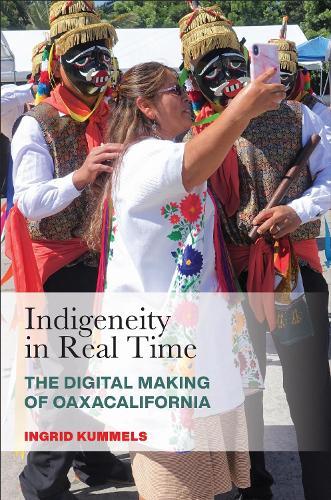
Long before the COVID-19 crisis, Mexican Indigenous peoples were faced with organizing their lives from afar, between villages in the Oaxacan Sierra Norte and the urban districts of Los Angeles, as a result of unauthorized migration and the restrictive border between Mexico and the United States. By launching cutting-edge Internet radio stations and multimedia platforms and engaging as community influencers, Zapotec and Ayuujk peoples paved their own paths to a transnational lifeway during the Trump era. This meant adapting digital technology to their needs, setting up their own infrastructure, and designing new digital formats for re-organizing community life in all its facets-including illness, death and mourning, collective celebrations, sport tournaments, and political meetings-across vast distances. Author Ingrid Kummels shows how mediamakers and users in the Sierra Norte villages and in Los Angeles created a transborder media space and aligned time regimes. By networking from multiple places, they put into practice a communal way of life called Comunalidad and an indigenized American Dream-in real time.
Full Product Details
Author: Ingrid Kummels
Publisher: Rutgers University Press
Imprint: Rutgers University Press
Dimensions:
Width: 15.60cm
, Height: 1.80cm
, Length: 23.50cm
Weight: 0.050kg
ISBN: 9781978834781
ISBN 10: 1978834780
Pages: 232
Publication Date: 17 March 2023
Recommended Age: From 18 to 99 years
Audience:
College/higher education
,
College/higher education
,
Professional and scholarly
,
Tertiary & Higher Education
,
Tertiary & Higher Education
Format: Paperback
Publisher's Status: Active
Availability: In Print

This item will be ordered in for you from one of our suppliers. Upon receipt, we will promptly dispatch it out to you. For in store availability, please contact us.
Reviews
"""In Indigeneity in Real Time: The Digital Making of Oaxacalifornia noted scholar Ingrid Kummels brings to life what it means to be Indigenous in a globalized and constantly changing world. For Zapotec and Ayuujk peoples living in Los Angeles, Oaxacalifornia is a transnationalized space through which people, ideas, money and media message travel constantly reenforcing and changing the sense of identity and belonging for the thousands of Indigenous migrants leading a transnational existence. This is riveting reading.'' -- Gaspar Rivera-Salgado * director, UCLA Center for Mexican Studies, coauthor of Indigenous Mexican Migrants in the United Sta * ""This is a fascinating ethnography about Zapotec and Ayuujk mediamakers and their use of synchronic communicative spaces to cross national borders between the US and Mexico, trespassing uneven media structures, economic disparities, and also ethnoracial and gender hierarchies. Beautifully written, Kummels’s ethnography is about migration, displacement, and lively Indigenous-tech communities across borders who dream of better futures to come for them and their offspring."" -- María Eugenia Ulfe * professor, Department of Social Sciences, Pontificia Universidad Católica del Perú * ""Without losing sight of troubling transborder geographies, this ethnography richly illustrates how Indigenous migrant communities associated with Oaxaca mobilize communication technologies, in particular social media, to foster collective place-based cultural identities."" -- Laurel C. Smith * associate professor and associate chair, Department of Geography and Environmental Sustainability, U *"
This is a fascinating ethnography about Zapotec and Ayuujk mediamakers and their use of synchronic communicative spaces to cross national borders between the US and Mexico, trespassing uneven media structures, economic disparities, and also ethno-racial and gender hierarchies. Beautifully written, Kummels's ethnography is about migration, displacement, and lively indigenous-tech communities across borders who dream of better futures to come for them and their offspring. --Maria Eugenia Ulfe Professor, Department of Social Sciences, Pontificia Universidad Catolica del Peru (8/11/2022 12:00:00 AM) Without losing sight of troubling transborder geographies, this ethnography richly illustrates how Indigenous migrant communities associated with Oaxaca mobilize communication technologies, in particular social media, to foster collective place-based cultural identities. --Laurel C. Smith associate professor and associate chair, Department of Geography and Environmental Sustainability, U (9/22/2022 12:00:00 AM) In Indigeneity in Real Time: The Digital Making of Oaxacalifornia noted scholar Ingrid Kummels brings to life what it means to be Indigenous in a globalized and constantly changing world. For Zapotec and Ayuujk peoples living in Los Angeles, Oaxacalifornia is a transnationalized space through which people, ideas, money and media message travel constantly reenforcing and changing the sense of identity and belonging for the thousands of Indigenous migrants leading a transnational existence. This is riveting reading.''--Gaspar Rivera-Salgado director, UCLA Center for Mexican Studies, coauthor of Indigenous Mexican Migrants in the United Sta (9/19/2022 12:00:00 AM)
This is a fascinating ethnography about Zapotec and Ayuujk mediamakers and their use of synchronic communicative spaces to cross national borders between the US and Mexico, trespassing uneven media structures, economic disparities, and also ethno-racial and gender hierarchies. Beautifully written, Kummels's ethnography is about migration, displacement, and lively indigenous-tech communities across borders who dream of better futures to come for them and their offspring. --Maria Eugenia Ulfe Professor, Department of Social Sciences, Pontificia Universidad Catolica del Peru (8/11/2022 12:00:00 AM) Without losing sight of troubling transborder geographies, this ethnography richly illustrates how Indigenous migrant communities associated with Oaxaca mobilize communication technologies, in particular social media, to foster collective place-based cultural identities. --Laurel C. Smith Associate Professor & Associate Chair, Department of Geography & Environmental Sustainability, Unive (9/22/2022 12:00:00 AM) In Indigeneity in Real Time: The Digital Making of Oaxacalifornia noted scholar Ingrid Kummels brings to life what it means to be Indigenous in a globalized and constantly changing world. For Zapotec and Ayuujk peoples living in Los Angeles, Oaxacalifornia is a transnationalized space through which people, ideas, money and media message travel constantly reenforcing and changing the sense of identity and belonging for the thousands of Indigenous migrants leading a transnational existence. This is riveting reading.''--Gaspar Rivera-Salgado Director, UCLA Center for Mexican Studies, co-author of Indigenous Mexican Migrants in the United St (9/19/2022 12:00:00 AM)
"""This is a fascinating ethnography about Zapotec and Ayuujk mediamakers and their use of synchronic communicative spaces to cross national borders between the US and Mexico, trespassing uneven media structures, economic disparities, and also ethnoracial and gender hierarchies. Beautifully written, Kummels's ethnography is about migration, displacement, and lively Indigenous-tech communities across borders who dream of better futures to come for them and their offspring.""--María Eugenia Ulfe ""professor, Department of Social Sciences, Pontificia Universidad Católica del Perú"" (8/11/2022 12:00:00 AM) ""Without losing sight of troubling transborder geographies, this ethnography richly illustrates how Indigenous migrant communities associated with Oaxaca mobilize communication technologies, in particular social media, to foster collective place-based cultural identities.""--Laurel C. Smith ""associate professor and associate chair, Department of Geography and Environmental Sustainability, U"" (9/22/2022 12:00:00 AM) ""In Indigeneity in Real Time: The Digital Making of Oaxacalifornia noted scholar Ingrid Kummels brings to life what it means to be Indigenous in a globalized and constantly changing world. For Zapotec and Ayuujk peoples living in Los Angeles, Oaxacalifornia is a transnationalized space through which people, ideas, money and media message travel constantly reenforcing and changing the sense of identity and belonging for the thousands of Indigenous migrants leading a transnational existence. This is riveting reading.''--Gaspar Rivera-Salgado ""director, UCLA Center for Mexican Studies, coauthor of Indigenous Mexican Migrants in the United Sta"" (9/19/2022 12:00:00 AM)"
Author Information
INGRID KUMMELS is a professor of cultural and social anthropology at the Institute for Latin American Studies of the Freie Universität Berlin. She is the author of Transborder Media Spaces: Ayuujk Videomaking between Mexico and the US.