Overview
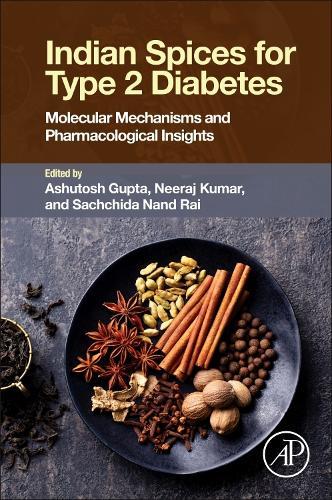
Indian Spices for Type 2 Diabetes: Molecular Mechanisms and Pharmacological Insights explores the relationship between traditional Indian spices and their potential role in the management of Type II diabetes. The book discusses the bioactive compounds found in well-known spices such as turmeric, ginseng, cloves, cardamom, fenugreek, black pepper, and tulsi, among others. Each chapter provides in-depth analysis of molecular and pharmacological mechanisms, highlighting how these spices can potentially benefit glucose metabolism and insulin sensitivity. By integrating scientific findings, this book serves as an invaluable resource for researchers and clinicians seeking to understand how these natural ingredients can be harnessed in diabetes care. In addition to examining the therapeutic potential of these spices, the book addresses critical considerations such as the impact of dietary spices on the gut microbiome, potential toxicity, and drug interactions that may arise in clinical practice. Regulatory and safety aspects of incorporating herbal remedies into diabetes management are thoroughly discussed, making this a vital reference for nutritionists, clinicians, dietitians, and pharmaceutical professionals.
Full Product Details
Author: Ashutosh Gupta, PhD (National Institute of Child Health and Development Research, New Delhi, India) ,
Neeraj Kumar, PhD (ICMR-National Institute of Child Health and Development Research, New Delhi, India) ,
Sachchida Nand Rai, PhD (Assistant Professor)
Publisher: Elsevier Science Publishing Co Inc
Imprint: Academic Press Inc
Weight: 0.450kg
ISBN: 9780443445460
ISBN 10: 044344546
Pages: 370
Publication Date: 01 June 2026
Audience:
Professional and scholarly
,
Professional & Vocational
Format: Paperback
Publisher's Status: Forthcoming
Availability: Not yet available

This item is yet to be released. You can pre-order this item and we will dispatch it to you upon its release.
Author Information
Dr. Gupta completed his Ph.D. in Biochemistry from the University of Allahabad in 2020, focusing on the effect of phytochemicals on xenobiotic-induced oxidative stress. Professionally, they have worked as Research Associate-I at ICMR-NICHD Research, New Delhi (since June 27, 2022), and at Dayanand Medical College and Hospital, Ludhiana (February 8, 2021 – April 30, 2022), and as a Research Trainee at Dabur Research Foundation, Ghaziabad (October 10, 2013 – January 10, 2014). Their research interests span natural products, redox biology, oxidative stress, diabetes, and pharmacology, with expertise in laboratory techniques such as animal handling, spectrophotometry, PCR, ELISA, nano-drop analysis, chromatography, microtomy, and electrophoresis. Their academic contributions more than 20 articles published in high-impact journals such as Critical Reviews in Food Science and Nutrition, Pharmacological Research, Phytomedicine, and Advances in Nutrition, with widely cited reviews on neuroprotective compounds, therapeutic natural products, and oxidative stress mitigation. Additionally, they have authored 11 book chapters on topics like apoptotic signaling pathways in cancer, phytochemicals as oxidative stress mitigators, and the role of nanoparticles in oxidative stress modulation, and presented research at prominent national and international conferences, including the 88th Annual Session of the National Academy of Sciences, India. In addition, he has reviewer in various reputed journals of Elsevier, Springer, Wiley, etc. like Pharmacology Research, Journal of Ayurveda and Integrative Medicine, Journal of Herbal Medicine, Naunyn-Schmiedeberg's Archives of Pharmacology, and more. Dr. Neeraj Kumar is a Scientist-E at the ICMR-National Institute of Child Health and Development Research, New Delhi. He completed his Ph.D. in immunology at All India Institute of Medical Sciences (AIIMS). He has extensive expertise in immunogenetics and autoimmune diseases, focusing on Type 1 diabetes and preeclampsia. Over the last five years, Dr. Kumar has published significant research in high-impact journals such as Journal of Diabetes and Annals of the New York Academy of Sciences, with studies exploring HLA associations, genomic evaluations, and immune-mediated mechanisms in Type 1 diabetes. His work includes innovative projects like identifying peptide epitopes contributing to autoimmune responses and integrative transcriptome analyses for psoriasis therapeutic targets. Additionally, his research extends to predictive modelling for early detection of intrauterine growth restriction (IUGR) and drug repurposing strategies for psoriasis using in silico approaches. With access to advanced facilities including flow cytometry, transcriptomics, and molecular biology labs, Dr. Kumar's projects have consistently advanced understanding in autoimmune disorders and their clinical applications. Dr. Sachchida Nand Rai is an Assistant Professor at University Centre for Research & Development (UCRD), Chandigarh University, Punjab, India. He obtained his MSc in Biochemistry from Purvanchal University, India, and his PhD in Biochemistry from Banaras Hindu University, India. Dr. Rai researches the anti-oxidative and anti-neuroinflammatory properties of phytochemicals for the treatment of neurodegenerative diseases. He is a lifetime member of the Indian Academy of Neuroscience.