Overview
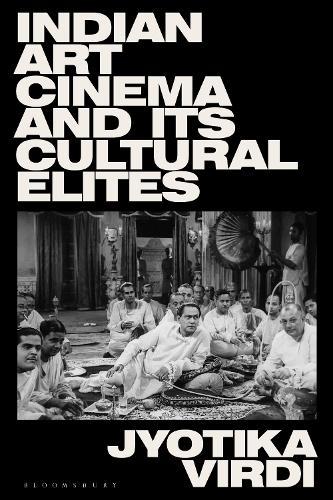
Repositioning Indian art cinema as a genre that articulated an elite, middle-class social imaginary, Indian Art Cinema and its Cultural Elites examines the form’s contentious position within Indian society, at once exclusionary in its outlook and yet instrumental in bringing Indian film into global prominence in the latter half of the twentieth century. Drawing on Bourdieu’s theory of cultural production, Jyotika Virdi looks at how a closed producer-critic-consumer circuit reinforced class distinction through a presumption of superior taste. She traces the trajectory of art cinema in India from the 1950s, when new institutions under Nehru’s socialist ideals catalysed its emergence, through the New Wave movement of the 1970s and 1980s, and finally to its gradual decline in the 1990s as economic liberalization once again transformed the social landscape. By examining films like The Apu Trilogy (1955-1959) and Godam (Warehouse) (1973), she showcases the complex contradictions of the middle class, who were both the creative producers and consumers of alternative cinema, especially during the political turbulence of the late 1960s and 1970s. Combining a meticulous examination of key auteurs such as Satyajit Ray, Mrinal Sen, Mani Kaul, and Ritwik Ghatak, with a broader study of cultural shifts and institutional frameworks, this book reevaluates the intricate relationship between art films, the state that sustains them, and the ruling cultural elite whose influence far exceeds its size.
Full Product Details
Author: Jyotika Virdi (University of Windsor, Canada)
Publisher: Bloomsbury Publishing PLC
Imprint: Bloomsbury Academic
Dimensions:
Width: 16.20cm
, Height: 1.80cm
, Length: 23.60cm
Weight: 0.580kg
ISBN: 9781350452961
ISBN 10: 1350452963
Pages: 280
Publication Date: 19 February 2026
Audience:
College/higher education
,
Tertiary & Higher Education
Format: Hardback
Publisher's Status: Active
Availability: To order

Stock availability from the supplier is unknown. We will order it for you and ship this item to you once it is received by us.
Reviews
Anchored firmly in the sociology of film, Virdi re-examines the Indian art cinema of the second half of the twentieth century, astutely decoding and contextualizing its stories of middle-class belonging and anxiety. You will never see the same way again Pather Panchali or dozens of other festival “masterpieces” that followed. -- Thomas Waugh, Professor Emeritus of Film Studies, Concordia University, Canada
Author Information
Jyotika Virdi is Associate Professor in Communication, Media, and Film Studies at the University of Windsor, Canada. She is author of The Cinematic ImagiNation: Indian Popular Films as Social History (2003). Her essays have appeared in Jump Cut, Screen, South Asian Popular Culture, and Visual Anthropology. She serves on the board of Jump Cut: Review of Contemporary Media and Studies in South Asian Film and Media.