Overview
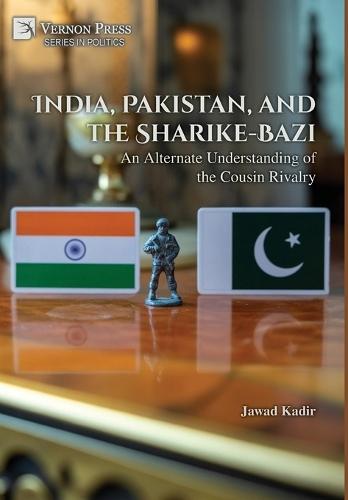
Despite using the metaphors of kin-states and blood-brothers for the India-Pakistan conflict, there is limited work exploring this phenomenon. India-Pakistan relations have mostly been theorized by situating them along with a bipolar ethnic and religious framework. This book presents a fresh conflict model to theorize their rivalry by positioning them as warring family branches with common ancient and cultural history. Therefore, this book not only competes with the existing literature but also claims to break new theoretical ground in the subject. This book will be of interest to researchers looking to theorize intergroup conflicts, academicians, students, social activists, politicians, practitioners, track-2 diplomats and above all, the policy makers in both countries. This book has theorized the tensions and dynamics of the India-Pakistan conflict as a process akin to a typical large South Asian family dispute after dividing its tangible assets. Categorizing and depicting India and Pakistan as two segments of such a large family, quarreling over gaining more prestige against the other after dividing ancestral land, this study does not remain unaware of other, larger pushes and pulls experienced in this intractable conflict, interfering in significant ways in the relationship between the partitioning members of the extended family. Arguing for the centrality of the concept of family relations in this context made increasing sense also as an explanation for the intensity of local emotions visible in this complex conflict. The core argument here is that the intractability, intensity, and intimacy associated with various dimensions of the India-Pakistan conflict can be better explained by analyzing it as a dispute between two warring branches of a huge joint family with an enormously rich and diverse ancient history.
Full Product Details
Author: Jawar Kadir
Publisher: Vernon Press
Imprint: Vernon Press
Dimensions:
Width: 15.20cm
, Height: 1.40cm
, Length: 22.90cm
Weight: 0.494kg
ISBN: 9798881903015
Pages: 242
Publication Date: 08 December 2025
Audience:
General/trade
,
General
Format: Hardback
Publisher's Status: Active
Availability: In Print

This item will be ordered in for you from one of our suppliers. Upon receipt, we will promptly dispatch it out to you. For in store availability, please contact us.
Author Information
Jawad Kadir, born and brought up in Pakistan, is a teacher by profession and a researcher by passion. He began his career as a public servant in Pakistan's Human Resource & Labour Department before moving to the UK in 2016, where he now works with the Research & Enterprises Department at Lancaster University. His hypothesis on the importance of family relations to develop a conflict theory was strengthened through extensive fieldworks in Pakistan.Working primarily as a conflict theorist with a strong commitment to interdisciplinarity, he draws on psychocultural theory, anthropology, psychology, sociology, and cognitive neuroscience to examine aspects of South Asian politics often overlooked by mainstream scholarship. His interests include Conflict Studies, the Social Theory of International Relations, and Societal Psychology. He combines political theory with everyday culture and realities to impact consciousness-making and decision-making processes.Kadir has written extensively on the psychocultural dimensions of India-Pakistan relations, developing an indigenous conflict model that explains the psycho-dynamics behind both states' persistent drive to outmaneuver each other-a dynamic that threatens regional security. Combining political theory with everyday cultural realities, his work addresses conceptual issues in conflict analysis while engaging public audiences. He regularly writes for print and electronic media, with contributions appearing in 'The Conversation, ' 'The Globe Post, ' 'Asia Times, ' 'The Northern Review UK, ' and 'Pakistan International Affairs.'