Overview
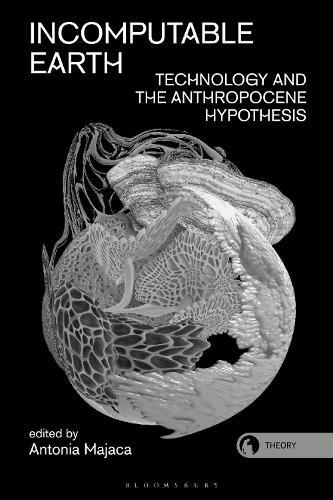
Incomputable Earth: Technology and the Anthropocene Hypothesis challenges the dominant narrative that positions technological solutions as the primary response to ecological crisis. This open access collection argues that climate breakdown represents an irreducibly incomputable problem that cannot be resolved through algorithmic optimization or cybernetic planetary management. Radically interrogating the political epistemology underlying the Anthropocene hypothesis against the backdrop of new regimes of algorithmic classification and prediction, this volume addresses the crucial need to rethink the meaning and inter-relationality of “human,” “nature,” and “technology.” Drawing on feminist science studies, decolonial epistemologies, and historical materialist analysis, the contributors examine how computational frameworks transform Earth’s complex relationships into extractable data, perpetuating the very logics that created planetary crisis. Examining new forms of subjectivity and resistance, this timely volume provides both rigorous critique of technoscientific planetary governance and speculative horizons for collective response to climate breakdown—offering a blueprint for reclaiming abstraction from computational capture while centering radically transformed ways of knowing and being human. This book is available open access through the Bloomsbury Open Access programme and is available on www.bloomsburycollections.com It is funded by The Austrian Science Fund (FWF).
Full Product Details
Author: Antonia Majaca (Institute for Contemporary Art, Graz University of Technology, Austria)
Publisher: Bloomsbury Publishing PLC
Imprint: Bloomsbury Academic
ISBN: 9781350264977
ISBN 10: 1350264970
Pages: 512
Publication Date: 19 February 2026
Audience:
Professional and scholarly
,
Professional & Vocational
Format: Hardback
Publisher's Status: Forthcoming
Availability: Manufactured on demand

Reviews
A blazing intervention into the Anthropocene’s mono-epistemic trap. This electrifying collection dismantles the cybernetic fantasies of planetary control, exposing their roots in capital’s real abstractions that reduce life to computable units. * Jason W. Moore, author of Capitalism in the Web of Life (2015) * By unearthing the entangled histories of computation, colonialism, and ecological crisis, this volume opens space for plural, radical imaginaries beyond extractivism. This is a necessary call for action related to ecological and epistemic justice: Decolonise digital futures! * Federico Demaria, co-editor of Degrowth (2014) and Pluriverse (2019) Lecturer in Economics, Universitat de Barcelona, Spain * What is the shape of of the Anthropocene? As authors in this compelling collection argue, it is nothing like a grid, nothing like a material motherboard, but is rather something like shape-shifting incompleteness theorem, with materiality overrunning attempts at full epistemological capture. * Stefan Helmreich, Professor of Cultural Anthopology, MIT, USA * A powerful mix of indignant perspectives unite in a profound critique of the transformation of the world into an abstract machine. There are many gems of undisciplined brilliance. * - Alf Hornborg, author of The Magic Technology: The Machine as a Transformation of Slavery (2022) * A crucial set of essays for further theorization of the colonial Anthropocene as an extractive and digital project that produces epistemological and material violence as planetary. This is a vital intervention towards undoing and unthinking how territory can be sustained, returned and regenerated through technological solutions that only push us deeper into the abyss of capitalism’s destructive capacities. * Macarena Gómez-Barris, Timothy C. Forbes and Anne S. Harrison University Professor Chair, Modern Culture and Media Faculty, Brown Arts Institute *
A blazing intervention into the Anthropocene’s mono-epistemic trap. This electrifying collection dismantles the cybernetic fantasies of planetary control, exposing their roots in capital’s real abstractions that reduce life to computable units. * Jason W. Moore, author of Capitalism in the Web of Life (2015) * By unearthing the entangled histories of computation, colonialism, and ecological crisis, this volume opens space for plural, radical imaginaries beyond extractivism. This is a necessary call for action related to ecological and epistemic justice: Decolonise digital futures! * Federico Demaria, co-editor of Degrowth (2014) and Pluriverse (2019) Lecturer in Economics, Universitat de Barcelona, Spain * What is the shape of of the Anthropocene? As authors in this compelling collection argue, it is nothing like a grid, nothing like a material motherboard, but is rather something like shape-shifting incompleteness theorem, with materiality overrunning attempts at full epistemological capture. * Stefan Helmreich, Professor of Cultural Anthopology, MIT, USA * A powerful mix of indignant perspectives unite in a profound critique of the transformation of the world into an abstract machine. There are many gems of undisciplined brilliance. * - Alf Hornborg, author of The Magic Technology: The Machine as a Transformation of Slavery (2022) *
Incomputable Earth is a vital and timely intervention that powerfully challenges the dominant narratives of techno-solutionism and Anthropocenic inevitability. By unearthing the entangled histories of computation, colonialism, and ecological crisis, this volume opens space for plural, radical imaginaries beyond extractivism -digital or otherwise. It resonates deeply with post-development and degrowth perspectives that reject the depoliticisation of climate and technology discourse. In assembling an inspiring constellation of critical thinkers and artists, the book becomes itself an act of resistance and collective reimagination. This is a necessary call for action related to ecological and epistemic justice: Decolonise digital futures! * Federico Demaria, School of Economics, Universitat de Barcelona; co-editor of Pluriverse and Degrowth * Incomputable Earth is a blazing intervention into the Anthropocene’s mono-epistemic trap. This electrifying collection dismantles the cybernetic fantasies of planetary control, exposing their roots in capital’s real abstractions that reduce life to computable units. From feminist critiques to decolonial cosmologies, these essays weave a world-ecology of resistance, rejecting the sterile globe of technocratic governance for a democratic Earth of reciprocal relations. Here, the incomputable—epistemological excess, political remainders, generative potentials—ignites a counterhegemonic praxis that honors the messy, mindful and miraculous web of life. A vital call to reclaim abstraction from capital’s grip, this book is a manifesto for a revolutionary ecology that dares to imagine millions of incomputable Earths. * Jason W. Moore, author of Capitalism in the Web of Life * In Incomputable Earth, the diverse contributions of artists, art theorists, scholars, and activists challenge the ideological distortions and exploitative practices of global capitalism. A powerful mix of indignant perspectives ranging from political economy to posthumanism unite in a profound critique of the Anthropocene transformation of the world into an abstract machine. There are many gems of undisciplined brilliance. What unites these imaginative efforts to confront extractive capitalism is their identification of the aspirations for technological control as a pivotal site of analytical innovation. * Alf Hornborg, Professor Emeritus of Human Ecology, Lund University, and author of The Magic of Technology: The Machine as a Transformation of Slavery * What is the shape of of the Anthropocene? As authors in this compelling collection argue, it is nothing like a grid, nothing like a material motherboard, but is rather something like shape-shifting incompleteness theorem, with materiality overrunning attempts at full epistemological capture. A salutary contribution to today’s discussions of planetarity, well worth replacing Buckminster Fuller’s Operating Manual for Spaceship Earth. * Stefan Helmreich, Professor of Anthropology, Michigan Institute of Technology, USA *
Incomputable Earth is a vital and timely intervention that powerfully challenges the dominant narratives of techno-solutionism and Anthropocenic inevitability. By unearthing the entangled histories of computation, colonialism, and ecological crisis, this volume opens space for plural, radical imaginaries beyond extractivism -digital or otherwise. It resonates deeply with post-development and degrowth perspectives that reject the depoliticisation of climate and technology discourse. In assembling an inspiring constellation of critical thinkers and artists, the book becomes itself an act of resistance and collective reimagination. This is a necessary call for action related to ecological and epistemic justice: Decolonise digital futures! * Federico Demaria, School of Economics, Universitat de Barcelona; co-editor of Pluriverse and Degrowth *
Author Information
Antonia Majaca is a research fellow in the Department of Philosophy at the University of Ca’ Foscari in Venice. She was principal investigator for the research project “Incomputable” (2015–2021) at the IZK – Institute for Contemporary Art, Graz University of Technology.