Overview
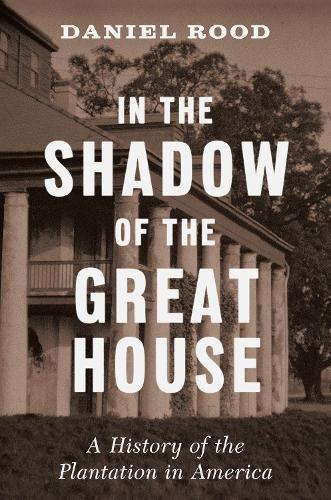
We imagine the plantation–the big house, the slave quarters, the vast cotton fields–as situated firmly in the American past. Yet as historian Daniel Rood shows, the plantation is still very much with us. Opening with the origins of the plantation on the tiny sugar-producing island of São Tomé in the 1500s, Rood then brings us to North America, and traces the establishment of tobacco plantations in Virginia, rice plantations in the Carolina Low Country and cotton plantations in the Deep South. He rewrites our understanding of these phenomena, showing precisely how enslaved people built the American landscape even as they suffered under a brutal labour regime. He then moves to the post-slavery era, demonstrating that the plantation evolved into agribusiness and other developments usually associated with modern capitalism. Drawing surprising connections between past and present, Rood argues that the plantation was, and remains, the engine of American “progress.”
Full Product Details
Author: Daniel Rood (University of Georgia)
Publisher: WW Norton & Co
Imprint: Liveright Publishing Corporation
Dimensions:
Width: 16.00cm
, Height: 4.30cm
, Length: 23.60cm
Weight: 0.739kg
ISBN: 9781631498374
ISBN 10: 1631498371
Pages: 528
Publication Date: 17 March 2026
Audience:
General/trade
,
General
Format: Hardback
Publisher's Status: Active
Availability: Available To Order

We have confirmation that this item is in stock with the supplier. It will be ordered in for you and dispatched immediately.
Reviews
In this brilliant and wide-ranging book, Daniel Rood provides us with an ecological, architectural, cultural, and, above all, economic history of one of the primary emblems and engines of American history: the plantation. As much as that of its cognates--the factory and the prison--the history of the plantation demands our attention and has now found its perfect chronicler.--Walter Johnson, author of River of Dark Dreams: Slavery and Empire in the Cotton Kingdom No leisurely anachronism, the plantation still casts a deep shadow over American life. In this transatlantic history covering five centuries and four continents, Daniel Rood deftly explores the volatile power of plantations to reshape environments, disseminate miseries, concentrate wealth, and generate rebellions.?By creating new forms of exploitation, plantations endure even where slavery has receded.--Alan Taylor, author of American Civil Wars: A Continental History, 1850-1873 In the Shadow of the Great House is at once a powerfully instructive synthesis of a vast literature and archive and a brilliant reframing of the history of the plantation. Skillfully argued, eloquently rendered, and humane, this history . . . provides a much-needed antidote to the continued romanticization of the plantation and the duplicity and pain that continue as its travel companion. . . . This is a work of distinction in the best tradition of historical scholarship. A stunning achievement.--Thavolia Glymph, author of The Women's Fight: The Civil War's Battles for Home, Freedom, and Nation
Author Information
Daniel Rood is an associate professor of history at the University of Georgia specializing in the history of Atlantic slavery. He authored The Reinvention of Atlantic Slavery: Technology, Labor, Race, and Capitalism in the Greater Caribbean. He lives in Athens, Georgia.