Awards
- Winner of Winner of the 2013 Robert K. Martin Prize for Best Book, sponsored by the Canadian Association for American Studies 2021
- Winner of Winner of the 2013 Robert K. Martin Prize for Best Book, sponsored by the Canadian Association for American Studies.
Overview
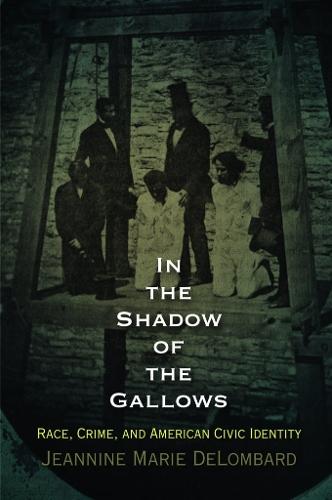
From Puritan Execution Day rituals to gangsta rap, the black criminal has been an enduring presence in American culture. To understand why, Jeannine Marie DeLombard insists, we must set aside the lenses of pathology and persecution and instead view the African American felon from the far more revealing perspectives of publicity and personhood. When the Supreme Court declared in Dred Scott that African Americans have ""no rights which the white man was bound to respect,"" it overlooked the right to due process, which ensured that black offenders-even slaves-appeared as persons in the eyes of the law. In the familiar account of African Americans' historical shift ""from plantation to prison,"" we have forgotten how, for a century before the Civil War, state punishment affirmed black political membership in the breach, while a thriving popular crime literature provided early America's best-known models of individual black selfhood. Before there was the slave narrative, there was the criminal confession. Placing the black condemned at the forefront of the African American canon allows us to see how a later generation of enslaved activists-most notably, Frederick Douglass-could marshal the public presence and civic authority necessary to fashion themselves as eligible citizens. At the same time, in an era when abolitionists were charging Americans with the national crime of ""manstealing,"" a racialized sense of culpability became equally central to white civic identity. What, for African Americans, is the legacy of a citizenship grounded in culpable personhood? For white Americans, must membership in a nation built on race slavery always betoken guilt? In the Shadow of the Gallows reads classics by J. Hector St. John de Crevecoeur, Edgar Allan Poe, Frederick Douglass, Herman Melville, George Lippard, and Edward Everett Hale alongside execution sermons, criminal confessions, trial transcripts, philosophical treatises, and political polemics to address fundamental questions about race, responsibility, and American civic belonging.
Full Product Details
Author: Jeannine Marie DeLombard
Publisher: University of Pennsylvania Press
Imprint: University of Pennsylvania Press
Dimensions:
Width: 15.20cm
, Height: 2.80cm
, Length: 22.90cm
Weight: 0.735kg
ISBN: 9780812223170
ISBN 10: 0812223179
Pages: 456
Publication Date: 15 August 2014
Audience:
College/higher education
,
Professional and scholarly
,
Tertiary & Higher Education
,
Professional & Vocational
Format: Paperback
Publisher's Status: Active
Availability: In Print

This item will be ordered in for you from one of our suppliers. Upon receipt, we will promptly dispatch it out to you. For in store availability, please contact us.
Reviews
This is a powerful book filled with important, paradigm-shifting ideas about the presentation of African Americans in print and the media. Though not suited to the casual reader, its contents are thought provoking and address contemporary race issues in ways that scholarship on the history of print and readership rarely does. -Journal of American History In this impressively researched and provocative study, Jeannine Marie DeLombard argues for an alternative literary and legal history of early black writing and, more broadly, nineteenth-century cultural formations of racial subjectivity. -New England Quarterly DeLombard's expertly researched book stands as a model of interdisciplinary scholarship, and her arguments on the foundational nexus of race, criminality, and citizenship offer scholars of English and history much to consider. In the Shadow of the Gallows, with DeLombard's deft analysis of early American literature, persuasively pushes back the plantation-to-prison narrative to the very founding of the nation, and demonstrates the importance of criminality in the development of early black subjectivity. -Law and History Review DeLombard ingeniously shows from deep research how much the creation of an African American 'voice' stemmed from ancient assumptions about race, criminality, and guilt. Her reading of Frederick Douglass's arrest and jailing as a young slave rebel is alone worth the price of this book, but she demands that we see race, literature, and citizenship in the age of the Civil War as a national crucible played out in courts, on gallows, in jails, and ultimately on the printed page. -David W. Blight, author of American Oracle: The Civil War in the Civil Rights Era In her exquisitely written In the Shadow of the Gallows, Jeannine DeLombard reads early American criminal law in conjunction with the idea of social contract to illustrate the intricacies of political belonging from the early Republic through the antebellum period. Through the double helix of print and legal history, she chronicles the metamorphic role of authorship in African Americans' bids for enfranchisement against the backdrop of a nation entangled in contradictory definitions of personhood and property and of criminality and civility. Exemplary of humanities scholarship at its best, the book establishes the connections between American literature and the African American struggle for civic inclusion. -Priscilla Wald, Duke University I have long thought that DeLombard is at the absolute top of the scholars working on law and literature in North America, and In the Shadow of the Gallows confirms her status. -Alfred Brophy, University of North Carolina, Chapel Hill The significance of DeLombard's project can be measured by the centrality of its claims to a wide variety of fields. The issues that DeLombard takes up here strike at the heart of the current disciplinary configurations defining not only American and African American literary studies but also American and African American history and critical race studies. -Lloyd Pratt, University of Oxford
The significance of DeLombard's project can be measured by the centrality of its claims to a wide variety of fields. The issues that DeLombard takes up here strike at the heart of the current disciplinary configurations defining not only American and African American literary studies but also American and African American history and critical race studies. -Lloyd Pratt, University of Oxford This is a powerful book filled with important, paradigm-shifting ideas about the presentation of African Americans in print and the media. Though not suited to the casual reader, its contents are thought provoking and address contemporary race issues in ways that scholarship on the history of print and readership rarely does. -Journal of American History DeLombard ingeniously shows from deep research how much the creation of an African American 'voice' stemmed from ancient assumptions about race, criminality, and guilt. Her reading of Frederick Douglass's arrest and jailing as a young slave rebel is alone worth the price of this book, but she demands that we see race, literature, and citizenship in the age of the Civil War as a national crucible played out in courts, on gallows, in jails, and ultimately on the printed page. -David W. Blight, author of American Oracle: The Civil War in the Civil Rights Era I have long thought that DeLombard is at the absolute top of the scholars working on law and literature in North America, and In the Shadow of the Gallows confirms her status. -Alfred Brophy, University of North Carolina, Chapel Hill In this impressively researched and provocative study, Jeannine Marie DeLombard argues for an alternative literary and legal history of early black writing and, more broadly, nineteenth-century cultural formations of racial subjectivity. -New England Quarterly In her exquisitely written In the Shadow of the Gallows, Jeannine DeLombard reads early American criminal law in conjunction with the idea of social contract to illustrate the intricacies of political belonging from the early Republic through the antebellum period. Through the double helix of print and legal history, she chronicles the metamorphic role of authorship in African Americans' bids for enfranchisement against the backdrop of a nation entangled in contradictory definitions of personhood and property and of criminality and civility. Exemplary of humanities scholarship at its best, the book establishes the connections between American literature and the African American struggle for civic inclusion. -Priscilla Wald, Duke University DeLombard's expertly researched book stands as a model of interdisciplinary scholarship, and her arguments on the foundational nexus of race, criminality, and citizenship offer scholars of English and history much to consider. In the Shadow of the Gallows, with DeLombard's deft analysis of early American literature, persuasively pushes back the plantation-to-prison narrative to the very founding of the nation, and demonstrates the importance of criminality in the development of early black subjectivity. -Law and History Review
"""This is a powerful book filled with important, paradigm-shifting ideas about the presentation of African Americans in print and the media. Though not suited to the casual reader, its contents are thought provoking and address contemporary race issues in ways that scholarship on the history of print and readership rarely does.""—Journal of American History ""In this impressively researched and provocative study, Jeannine Marie DeLombard argues for an alternative literary and legal history of early black writing and, more broadly, nineteenth-century cultural formations of racial subjectivity.""—New England Quarterly ""DeLombard's expertly researched book stands as a model of interdisciplinary scholarship, and her arguments on the foundational nexus of race, criminality, and citizenship offer scholars of English and history much to consider. In the Shadow of the Gallows, with DeLombard's deft analysis of early American literature, persuasively pushes back the plantation-to-prison narrative to the very founding of the nation, and demonstrates the importance of criminality in the development of early black subjectivity.""—Law and History Review ""DeLombard ingeniously shows from deep research how much the creation of an African American 'voice' stemmed from ancient assumptions about race, criminality, and guilt. Her reading of Frederick Douglass's arrest and jailing as a young slave rebel is alone worth the price of this book, but she demands that we see race, literature, and citizenship in the age of the Civil War as a national crucible played out in courts, on gallows, in jails, and ultimately on the printed page.""—David W. Blight, author of American Oracle: The Civil War in the Civil Rights Era ""In her exquisitely written In the Shadow of the Gallows, Jeannine DeLombard reads early American criminal law in conjunction with the idea of social contract to illustrate the intricacies of political belonging from the early Republic through the antebellum period. Through the double helix of print and legal history, she chronicles the metamorphic role of authorship in African Americans' bids for enfranchisement against the backdrop of a nation entangled in contradictory definitions of personhood and property and of criminality and civility. Exemplary of humanities scholarship at its best, the book establishes the connections between American literature and the African American struggle for civic inclusion.""—Priscilla Wald, Duke University ""I have long thought that DeLombard is at the absolute top of the scholars working on law and literature in North America, and In the Shadow of the Gallows confirms her status.""—Alfred Brophy, University of North Carolina, Chapel Hill ""The significance of DeLombard's project can be measured by the centrality of its claims to a wide variety of fields. The issues that DeLombard takes up here strike at the heart of the current disciplinary configurations defining not only American and African American literary studies but also American and African American history and critical race studies.""—Lloyd Pratt, University of Oxford"
Author Information
Jeannine Marie DeLombard is Associate Professor of English at the University of California, Santa Barbara, and author of Slavery on Trial: Law, Print, and Abolitionism.