Overview
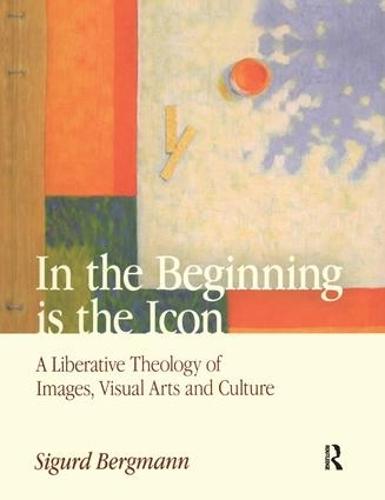
Icons provide depictions of God or encounters with the divine that enable reflection and prayer. 'In the Beginning is the Icon' explores the value of these images for a theology of liberation. Iconology, art theory, philosophical aesthetics, art history and anthropology are integrated with rigorous theological reflection to argue that the creation and observation of pictures can have a liberating effect on humanity. In presenting art from across the world, 'In the Beginning is the Icon' reflects the ethnocentricity of both art and religious studies and offers a new cross-cultural approach to the theology of art.
Full Product Details
Author: Sigurd Bergmann
Publisher: Taylor & Francis Ltd
Imprint: Routledge
Weight: 0.360kg
ISBN: 9781138661059
ISBN 10: 1138661058
Pages: 200
Publication Date: 21 January 2016
Audience:
College/higher education
,
General/trade
,
Tertiary & Higher Education
,
General
Format: Paperback
Publisher's Status: Active
Availability: In Print

This item will be ordered in for you from one of our suppliers. Upon receipt, we will promptly dispatch it out to you. For in store availability, please contact us.
Reviews
...Bergmann lays out a fascinating and reflective outline of scholarship so far within the broader field of art theology or theological aesthetics. Jonathan Koestle-Cate, ACE Trust Sigurd Bergmann's book In the beginning is the icon, with the subtitle A liberative theology of images, visual arts and culture, presents an alternate perspective in the approach to visual arts in relation to religious belief. Marina Vicelja, IKON
...Bergmann lays out a fascinating and reflective outline of scholarship so far within the broader field of art theology or theological aesthetics. Jonathan Koestle-Cate, ACE Trust Sigurd Bergmann's book In the beginning is the icon, with the subtitle A liberative theology of images, visual arts and culture, presents an alternate perspective in the approach to visual arts in relation to religious belief. Marina Vicelja, IKON Insights are gleaned from liberation theology and apophatic theology to generate an apophatic, contextual art theology. The theological picture analysis is grounded in classical Trinitarian pneumatology while holding to an interpretation that incorporates the time and context of the image. This translation provides a systematic literature review for a wider English reading audience and will appeal to readers from many academic disciplines. Edmund Betts, University of Chester Sigurd Bergmann's In the Beginning is the Icon provokes the reader's theological perceptions and musings about art through a series of simple and profound questions. Each chapter invites reflection about what is an image, what is art, what are some of the contemporary and historical theological views of art, what comprises the world of art, and how does a contextual theology of art prompt liberation? The field of theological aesthetics is no stranger to these questions. Yet, the field's gaze is often fixed on horizons considered lofty and ideal, rather than on the visceral, lived experience of art, which is, in part, the subject of this volume. Careful consideration of art produced in contexts close to the ground of experience might be one way of summarizing this text. Bergmann's book is intent on opening readers to global contextual theology through a range of fields of study and encounters with art, with a hope toward liberating theological imagination. Paul O. Myhre, Dialog It seems to me that Wolterstorff's assessment is, on the whole, accurate. Bergmann does actually bring a great deal of originality to the conversation between theology and the arts, and he also widens the scope of the conversation considerably by drawing on voices from philosophy and anthropology rarely heard in a work likethis. Furthermore, Bergmann draws our attention to interesting works of art that would not beconsidered as part of the normal canon of high western art. Jim Watkins, Transposition For those interested in asking how ecological systems and nonhuman nature might pertain to other facets of material culture-such as religious architecture and art-these two books offer a valuable contribution and lead to provocative questions. Richard R Bohannon II, St. John's University This is an ambitious work that gently crosses established disciplinary boundaries. Through critical engagement with theories of the image, theologies of the icon and the aesthetic, and various theological, sociological, and anthropological accounts of the arts, Sigurd Bergmann seeks to forge a contextual art theology that grants to the visual arts a relatively independent place vis- ` a-vis traditional Christian theology. Tanner Capps, Duke University Divinity School
...Bergmann lays out a fascinating and reflective outline of scholarship so far within the broader field of art theology or theological aesthetics. Jonathan Koestle-Cate, ACE Trust Sigurd Bergmann's book In the beginning is the icon, with the subtitle A liberative theology of images, visual arts and culture, presents an alternate perspective in the approach to visual arts in relation to religious belief. Marina Vicelja, IKON
Author Information
Sigurd Bergmann, Norwegian University of Science and Technology, Trondheim.