|
|
|||
|
||||
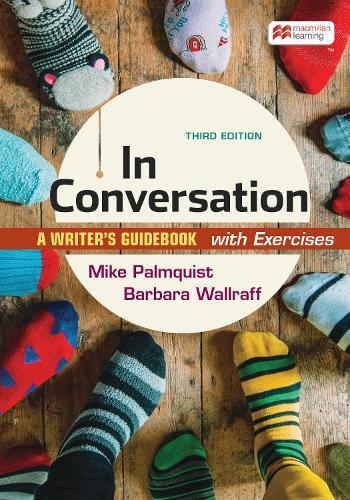
OverviewThis rhetorically-driven, genre-based handbook prepares college writers to write in different ways for different courses, professional contexts, and civic and everyday scenarios. Using a framework of writing as conversation, In Conversation grounds writers in a deep understanding of their purpose, audience, and context. It gives novice writers the versatility and confidence to succeed and helps them to enter conversations, plan documents, cite sources, check facts, and understand language conventions. Paired with Achieve, an engaging and powerful digital platform (see Related Titles for more details), In Conversation is a practical tool for shaping and sharpening a writers’ instincts. Full Product DetailsAuthor: Mike Palmquist , Wallraff BarbaraPublisher: Macmillan Learning Imprint: Bedford/Saint Martin's Edition: Third Edition Dimensions: Width: 15.40cm , Height: 2.50cm , Length: 19.70cm Weight: 0.531kg ISBN: 9781319412456ISBN 10: 1319412459 Pages: 608 Publication Date: 15 March 2023 Audience: College/higher education , Tertiary & Higher Education Format: Spiral bound Publisher's Status: Active Availability: In Print This item will be ordered in for you from one of our suppliers. Upon receipt, we will promptly dispatch it out to you. For in store availability, please contact us. Table of ContentsPART 1. JOIN THE CONVERSATION 1. Understand Yourself as a Writer 2. Explore Conversations 3. Read Critically and Actively PART 2. WORK WITH GENRE AND DESIGN 4. Write a Reflective Essay 5. Write an Argument 6. Write an Informative Article 7. Write a Proposal 8. Write a Rhetorical Analysis 9. Write a Review 10. Create an Annotated Bibliography 11. Summarize and Respond to a Source 12. Write a Literature Review 13. Create a Multimedia Presentation 14. Create a Podcast 15. Design Your Document Genre Design Gallery G1. Academic Essays G2. Articles G3. Annotated Bibliographies G4. Photo Essays G5. Multimodal Essays G6. Multimedia Presentations G7. Websites G8. Blog Posts G9. Videos G10. Infographics G11. Posters G12. Professional Pages PART 3. CONDUCT RESEARCH 16. Collect Information 17. Assess and Evaluate Your Sources 18. Manage Your Sources 19. Use Sources Effectively 20. Understand and Avoid Plagiarism PART 4. DRAFT YOUR DOCUMENT 21. Define Your Thesis Statement 22. Support Your Main Point 23. Organize Your Ideas 24. Write Your First Draft 25. Use Sources to Accomplish Your Purpose 26. Write Effective Introductions 27. Write Effective Conclusions PART 5. REVISE AND EDIT 28. Revise Your Document 29. Edit Your Document 30. Understand the Parts of a Sentence 31. Choose Sentence Structures Thoughtfully 32. Write in Complete Sentences 33. Write Clear, Logical Sentences 34. Choose Engaging Language 35. Use Verbs Skillfully 36. Use Pronouns to Be Clear and Inclusive 37. Use Adjectives, Adverbs, and Articles Expertly 38. Use Punctuation to Help Readers 39. Use Sentence Mechanics to Orient Readers PART 6. DOCUMENT YOUR SOURCES 40. Use MLA Style 41. Use APA Style 42. Use Chicago Style 43. Use CSE Style Glossary of Terms Frequently Confused, Misused, and Abused WordsReviewsAuthor InformationTab Content 6Author Website:Countries AvailableAll regions |
||||