Overview
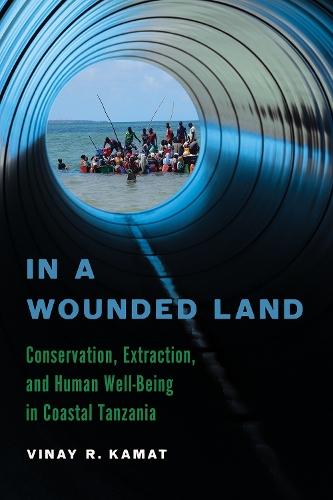
Global efforts to conserve nature and prevent biodiversity loss have intensified in response to planetary-scale challenges—nowhere more so than in coastal regions. Accordingly, international conservation organizations have increased their efforts to promote marine protected areas as one of the interventions to prevent biodiversity loss in global hotspots. Focusing on the human element of marine conservation and the extractive industry in Tanzania, this volume illuminates what happens when impoverished people living in underdeveloped regions of Africa are suddenly subjected to state-directed conservation and natural resource extraction projects, implemented in their landscapes of subsistence. In a Wounded Land draws on ethnographically rich case studies and vignettes collected over a ten-year period in several coastal villages on Tanzania’s southeastern border with Mozambique. In seven chapters, the book demonstrates how state power, processes of displacement and dispossession, forms of local resistance and acquiescence, environmental and social justice, and human well-being become interconnected. Written in lucid, accessible language, this is the first book that reveals the social implications of the co-presence of a marine park and a gas project at a time when internationally funded conservation initiatives and extraction projects among rural African populations are engendering rapid social transformation.
Full Product Details
Author: Vinay R. Kamat
Publisher: University of Arizona Press
Imprint: University of Arizona Press
Weight: 0.454kg
ISBN: 9780816556656
ISBN 10: 0816556652
Pages: 372
Publication Date: 31 October 2025
Audience:
Professional and scholarly
,
Professional & Vocational
Format: Paperback
Publisher's Status: Active
Availability: In Print

This item will be ordered in for you from one of our suppliers. Upon receipt, we will promptly dispatch it out to you. For in store availability, please contact us.
Reviews
""Vinay Kamat's exploration of the Mnazi Bay-Ruvuma Estuary Marine Park in Tanzania offers a multifaceted analysis of the social, cultural, and economic complexities surrounding the intersection of conservation and resource extraction, shedding light on the tensions between environmental justice and social justice.""--Anat Rosenthal, author of Health on Delivery: The Rollout of Antiretroviral Therapy in Malawi ""In the far southeast of Tanzania, global, national, and community interests in conservation, development, and local livelihoods collide. Drawing on careful, long term ethnographic research, Vinay Kamat provides an often gripping, richly paced account of the complex politics of natural gas extraction in a marine park, and the effects of competing agendas on those for whom this is home.""--Lenore Manderson, University of the Witwatersrand, co-editor of Water's Edge: Writing on Water ""The book provides an extensively researched social science perspective on the intersection of conservation (marine preserve), extractive uses (natural gas), and local engagement and perspectives (social, cultural, and economic). This ethnographic account documents the history of this conservation conflict. Recommended.""--C. L. Johnson, CHOICE Connect
“Vinay Kamat’s exploration of the Mnazi Bay-Ruvuma Estuary Marine Park in Tanzania offers a multifaceted analysis of the social, cultural, and economic complexities surrounding the intersection of conservation and resource extraction, shedding light on the tensions between environmental justice and social justice.”—Anat Rosenthal, author of Health on Delivery: The Rollout of Antiretroviral Therapy in Malawi “In the far southeast of Tanzania, global, national, and community interests in conservation, development, and local livelihoods collide. Drawing on careful, long term ethnographic research, Vinay Kamat provides an often gripping, richly paced account of the complex politics of natural gas extraction in a marine park, and the effects of competing agendas on those for whom this is home.”—Lenore Manderson, University of the Witwatersrand, co-editor of Water's Edge: Writing on Water “The book provides an extensively researched social science perspective on the intersection of conservation (marine preserve), extractive uses (natural gas), and local engagement and perspectives (social, cultural, and economic). This ethnographic account documents the history of this conservation conflict. Recommended.”—C. L. Johnson, CHOICE Connect
Author Information
Vinay R. Kamat is a professor of anthropology at the University of British Columbia. He has conducted extensive fieldwork in Tanzania and is the author of Silent Violence.