Overview
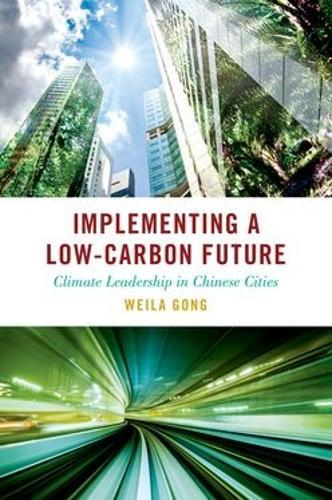
In an era of intensified geopolitics and of national-level political gridlock, subnational governments can potentially play an essential role in combating global climate change. Can subnational governments introduce and sustain climate policy actions through changes in political leadership? Why do some local areas continue to deliver on their climate goals while others struggle to do so? Despite being the world's largest carbon emitter, China has pledged to attain peak carbon before 2030 and carbon neutrality before 2060. Since the early 2010s, Beijing has selected more than one hundred local low-carbon pilots at the township, municipal, and provincial levels to engage in policy experimentation. Their aim is policy solutions to decouple local economic growth from the increased use of fossil fuels. In Implementing a Low-Carbon Future, Weila Gong examines four cases of such policy experimentation and finds that local implementation outcomes were mixed. Notably, Gong finds variation in levels of low-carbon policy institutionalization across the case studies. This includes varying successes of the standards, regulations, and laws put into place through these policy experiments. Based on original research including expert interviews, comparative case studies, and process tracing of the low-carbon policy experimentation in these pilot cities, Gong opens the black box of the subnational climate policy process in China's centralized political system and identifies mid-level local bureaucrats as playing an essential ""bridge leader"" role in successful implementation.
Full Product Details
Author: Weila Gong (non-resident scholar, non-resident scholar, UC San Diego School of Global Policy and Strategy's 21st Century China Center)
Publisher: Oxford University Press Inc
Imprint: Oxford University Press Inc
Dimensions:
Width: 16.70cm
, Height: 1.60cm
, Length: 23.70cm
Weight: 0.390kg
ISBN: 9780197757420
ISBN 10: 0197757421
Pages: 160
Publication Date: 17 January 2026
Audience:
College/higher education
,
Postgraduate, Research & Scholarly
Format: Hardback
Publisher's Status: Forthcoming
Availability: To order

Reviews
“China is the world's largest emitter of warming gases and is now doing a lot to learn how to cut its pollution. In this thoughtful book, Weila Gong shows that much of innovation is coming from big cities led by entrepreneurial bureaucrats who see the future in clean industry. She shows why some cities are doing a lot more than others and why this leadership is politically sustainable. It's a book that adds not just hope but also deeper understanding of how subnational policy actually works.""-David G. Victor, University of California-San Diego “Weila Gong offers a deep dive into how local government leadership has shaped low-carbon policy experiments in China. With four case studies of regions in southeast China, Gong shows how local leadership's implementation capacity is dependent on the ability to mobilize trained personnel and establish action alliances. This book is an important addition to the literature on central-local relations, local leadership, and climate policy making.”- Miranda A. Schreurs, Technical University of Munich “This fascinating book examines how China's low-carbon policy experimentation is being institutionalized by mid-level bureaucratic entrepreneurs who mobilize the necessary political authority and implementation resources to translate proposed policy ideas into actions. Moving from experimentation to sustainable implementation is a notoriously challenging process, and Gong's unique focus on subnational climate leadership introduces a new actor missing from the existing policy innovation literature to help states adopt sustainable low-carbon solutions.”-Jessica C. Teets, Middlebury College “Weila Gong's excellent book focuses our attention on the role of bridge leaders, essential mid-level bureaucrats who can make or break policy experimentation at the local level in China. Her fine-grained look at how local agency and capacity shape and sustain subnational low-carbon initiatives gives us a conceptual framework for evaluating the role of diverse localities in China's quest for carbon neutrality.”- Alex L. Wang, UCLA School of Law
China is the world's largest emitter of warming gases and is now doing a lot to learn how to cut its pollution. In this thoughtful book, Weila Gong shows that much of innovation is coming from big cities led by entrepreneurial bureaucrats who see the future in clean industry. She shows why some cities are doing a lot more than others and why this leadership is politically sustainable. It's a book that adds not just hope but also deeper understanding of how subnational policy actually works. * David G. Victor, University of California-San Diego * Weila Gong offers a deep dive into how local government leadership has shaped low-carbon policy experiments in China. With four case studies of regions in southeast China, Gong shows how local leadership's implementation capacity is dependent on the ability to mobilize trained personnel and establish action alliances. This book is an important addition to the literature on central-local relations, local leadership, and climate policy making. * Miranda A. Schreurs, Technical University of Munich * This fascinating book examines how China's low-carbon policy experimentation is being institutionalized by mid-level bureaucratic entrepreneurs who mobilize the necessary political authority and implementation resources to translate proposed policy ideas into actions. Moving from experimentation to sustainable implementation is a notoriously challenging process, and Gong's unique focus on subnational climate leadership introduces a new actor missing from the existing policy innovation literature to help states adopt sustainable low-carbon solutions. * Jessica C. Teets, Middlebury College * Weila Gong's excellent book focuses our attention on the role of bridge leaders, essential mid-level bureaucrats who can make or break policy experimentation at the local level in China. Her fine-grained look at how local agency and capacity shape and sustain subnational low-carbon initiatives gives us a conceptual framework for evaluating the role of diverse localities in China's quest for carbon neutrality. * Alex L. Wang, UCLA School of Law *
Author Information
Weila Gong is a non-resident scholar with the UC San Diego School of Global Policy and Strategy's 21st Century China Center. She has over ten years of experience working on climate and environmental politics and policy with a focus on China. She received her PhD in Political Science from the Technical University of Munich's School of Governance and has held postdoctoral fellowships at Georgetown University's School of Foreign Service and Harvard Kennedy School's Belfer Center for Science and International Affairs. She was recently a climate policy fellow at the University of California, Berkeley School of Law.