Overview
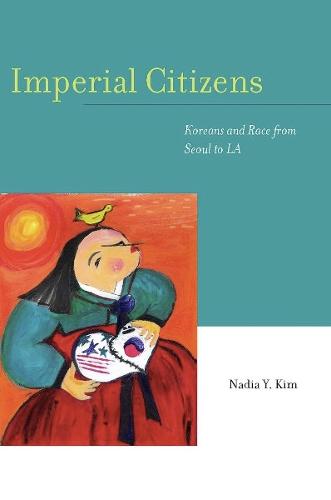
Asians and Latinos comprise the vast majority of contemporary immigrants to the United States, and their growing presence has complicated America's prevailing White-Black race hierarchy. Imperial Citizens uses a global framework to investigate how Asians from U.S.-dominated homelands learn and understand their place along U.S. color lines. With interviews and ethnographic observations of Koreans, the book does what others rarely do: venture to the immigrants' home country and analyze racism there in relation to racial hierarchies in the United States. Attentive to history, the book considers the origins, nature, and extent of racial ideas about Koreans/Asians in relation to White and Black Americans, investigating how immigrants engage these ideas before they depart for the United States, as well as after they arrive. The author shows that contemporary globalization involves not just the flow of capital, but also culture. Ideas about American color lines and citizenship lines have crossed oceans alongside U.S. commodities.
Full Product Details
Author: Nadia Y. Kim
Publisher: Stanford University Press
Imprint: Stanford University Press
Edition: New edition
Dimensions:
Width: 15.20cm
, Height: 2.50cm
, Length: 22.90cm
Weight: 0.544kg
ISBN: 9780804758864
ISBN 10: 0804758867
Pages: 328
Publication Date: 11 June 2008
Audience:
College/higher education
,
Professional and scholarly
,
Undergraduate
,
Postgraduate, Research & Scholarly
Format: Hardback
Publisher's Status: Active
Availability: In Print

This item will be ordered in for you from one of our suppliers. Upon receipt, we will promptly dispatch it out to you. For in store availability, please contact us.
Reviews
I cannot overstate the many contributions of this book and its elegant treatment of nuanced arguments at the cutting edge of debates in the study of race, immigration, and globalization ... In sum, Imperial Citizens is a sophisticated yet accessible book and would be excellent material for undergraduate and graduate courses in studies of immigration, race and ethnicity, and globalization. It is fluidly written, meticulously researched, and convincingly argued. -- Miliann Kang In a compelling analysis of the varied ways that racial categories and racial meanings are formed in both South Korea and the United States, Nadia Kim expands ourunderstanding of how race 'travels.' She demonstrates the global, hegemonic reach of U.S. racial ideology and captures the ways Korean American immigrants position themselves in distinctive racial contexts. Attentive to class, gender, and generational differences, Kim shows us how Korean Americans come to learn, and to resist, dominant patterns of racialization. -- Michael Omi, University of California Berkeley Nadia Kim writes cogently and compellingly about Korean and Korean American attitudes, beliefs, and concerns about race, gender, and much more. In providing a transnational and historical perspective, Imperial Citizens is a model of enlightened and engaged scholarship. -- John Lie, University of California A masterful demonstration of the globalization of white racism! Nadia Kim's interviews with Korean immigrants and their children reveal integral links between U.S. global hegemony and immigration. This book depicts the human tragedy of Korean American hyper-conformity in a nation that perpetuates white supremacy: preference for white beauty leading to plastic surgery; women preferring white men who exoticize or abuse them; and Korean internalization of white-racist attitudes toward Americans of color. -- Joe R. Feagin Texas A&M University In the process of analyzing Korean and American racial ideologies, Kim uses a well-developed theoretical framework... Kim's research and analysis offers a fresh perspective within the field and provide a strong reminder of the power that keeps 'racial concepts' firmly tied to the structures of superiority justification. -- Jeong Duk Asian Anthropology
Nadia Kim writes cogently and compellingly about Korean and Korean American attitudes, beliefs, and concerns about race, gender, and much more. In providing a transnational and historical perspective Imperial Citizens is a model of enlightened and engaged scholarship. - John Lie, University of California, Berkeley
In the process of analyzing Korean and American racial ideologies, Kim uses a well-developed theoretical framework... Kim's research and analysis offers a fresh perspective within the field and provide a strong reminder of the power that keeps 'racial concepts' firmly tied to the structures of superiority justification. -Jeong Duk, Asian Anthropology I cannot overstate the many contributions of this book and its elegant treatment of nuanced arguments at the cutting edge of debates in the study of race, immigration, and globalization ... In sum, Imperial Citizens is a sophisticated yet accessible book and would be excellent material for undergraduate and graduate courses in studies of immigration, race and ethnicity, and globalization. It is fluidly written, meticulously researched, and convincingly argued. -Miliann Kang, Journal of International Migration and Integration Nadia Kim writes cogently and compellingly about Korean and Korean American attitudes, beliefs, and concerns about race, gender, and much more. In providing a transnational and historical perspective, Imperial Citizens is a model of enlightened and engaged scholarship. -John Lie, University of California, Berkeley In a compelling analysis of the varied ways that racial categories and racial meanings are formed in both South Korea and the United States, Nadia Kim expands ourunderstanding of how race 'travels.' She demonstrates the global, hegemonic reach of U.S. racial ideology and captures the ways Korean American immigrants position themselves in distinctive racial contexts. Attentive to class, gender, and generational differences, Kim shows us how Korean Americans come to learn, and to resist, dominant patterns of racialization. -Michael Omi, University of California, Berkeley A masterful demonstration of the globalization of white racism! Nadia Kim's interviews with Korean immigrants and their children reveal integral links between U.S. global hegemony and immigration. This book depicts the human tragedy of Korean American hyper-conformity in a nation that perpetuates white supremacy: preference for white beauty leading to plastic surgery; women preferring white men who exoticize or abuse them; and Korean internalization of white-racist attitudes toward Americans of color. -Joe R. Feagin, Texas A&M University
Author Information
Nadia Y. Kim is Assistant Professor of Sociology at Loyola Marymount University.