Overview
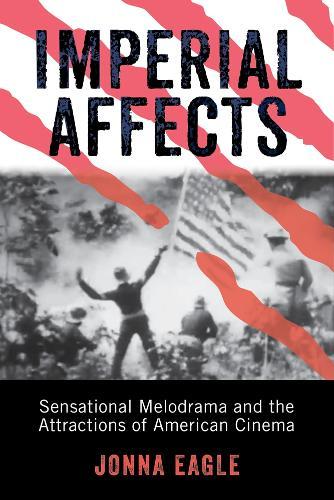
Imperial Affects is the first sustained account of American action-based cinema as melodrama. From the earliest war films through the Hollywood Western and the late-century action cinema, imperialist violence and mobility have been produced as sites of both visceral pleasure and moral virtue. Suffering and omnipotence operate as twinned affects in this context, inviting identification with an American national subject constituted as both victimized and invincible-a powerful and persistent conjunction traced here across a century of cinema.
Full Product Details
Author: Jonna Eagle
Publisher: Rutgers University Press
Imprint: Rutgers University Press
Dimensions:
Width: 15.20cm
, Height: 1.80cm
, Length: 22.90cm
Weight: 0.440kg
ISBN: 9780813583020
ISBN 10: 0813583020
Pages: 286
Publication Date: 21 July 2017
Recommended Age: From 18 to 99 years
Audience:
General/trade
,
College/higher education
,
Professional and scholarly
,
General
,
Tertiary & Higher Education
Format: Paperback
Publisher's Status: Active
Availability: In Print

This item will be ordered in for you from one of our suppliers. Upon receipt, we will promptly dispatch it out to you. For in store availability, please contact us.
Reviews
Eagle skillfully juggles debates around the meaning and cultural relevance of melodrama, the relationship between sensationalism and modernity, and the cultural work done by the Western. This is a first-rate book that makes important contributions to film studies, American studies, and cultural studies more broadly. --Sarah Hagelin author of Reel Vulnerability Rich in historical and critical insights, Eagle vividly demonstrates why the intimate connection between melodrama and action/violence matters so profoundly for our thinking about the cinema, gender, race and nationalism. --Yvonne Tasker author of Spectacular Bodies: Gender, Genre and the Action Cinema
Eagle skillfully juggles debates around the meaning and cultural relevance of melodrama, the relationship between sensationalism and modernity, and the cultural work done by the Western. This is a first-rate book that makes important contributions to film studies, American studies, and cultural studies more broadly. --Sarah Hagelin author of Reel Vulnerability
Eagle skillfully juggles debates around the meaning and culturalrelevance of melodrama, the relationship between sensationalism andmodernity, and the cultural work done by the Western. This is afirst-rate book that makes important contributions to film studies, American studies, and cultural studies more broadly. --Sarah Hagelin author of Reel Vulnerability
Eagle skillfully juggles debates around the meaning and cultural relevance of melodrama, the relationship between sensationalism and modernity, and the cultural work done by the Western. This is a first-rate book that makes important contributions to film studies, American studies, and cultural studies more broadly. --Sarah Hagelin author of Reel Vulnerability Rich in historical and critical insights, Eagle vividly demonstrates why the intimate connection between melodrama and action/violence matters so profoundly for our thinking about the cinema, gender, race and nationalism. --Yvonne Tasker author of Spectacular Bodies: Gender, Genre and the Action Cinema -Eagle skillfully juggles debates around the meaning and cultural relevance of melodrama, the relationship between sensationalism and modernity, and the cultural work done by the Western. This is a first-rate book that makes important contributions to film studies, American studies, and cultural studies more broadly.---Sarah Hagelin -author of Reel Vulnerability - -Rich in historical and critical insights, Eagle vividly demonstrates why the intimate connection between melodrama and action/violence matters so profoundly for our thinking about the cinema, gender, race and nationalism.---Yvonne Tasker -author of Spectacular Bodies: Gender, Genre and the Action Cinema - Imperial Affectsis in line with some of the best current work on the topics of film spectatorship and early 20th century American culture. This is an exciting and insightful re-imagining of war-film spectatorship. --Sarah Hagelin author of Reel Vulnerability: Power, Pain, and Gender in Contemporary American Film and Television
Author Information
JONNA EAGLE is an assistant professor of American studies at the University of Hawai’i at Mānoa.