Overview
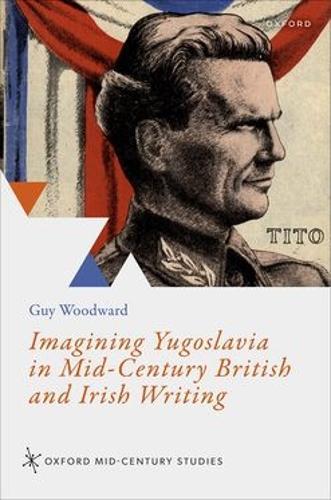
During the Second World War, Britain was both strategically and imaginatively invested in Yugoslavia. The Balkan state was celebrated and idealized in home front propaganda as a site of resistance, a locus of spirituality, and then as a brave communist experiment containing the promise of utopia. After the war, many hailed Tito's Yugoslavia as an exceptional socialist society steering a course between the extremes of western free-market capitalism and Soviet repression, while others cursed the regime as totalitarian, or mourned the loss of a picturesque Ruritanian kingdom to a communist regime. From the BBC to Ealing Studios, from special operations memoirs to Cold War travelogues, this book explores and interrogates a peculiar fascination with Yugoslavia in mid-twentieth-century British and Irish literature and culture. Exploring representations of Yugoslavia in print, over the airwaves and on screen, it examines how and why many of the key British and Irish writers of the era became drawn into military and political debates around the fate of the country. The cast of characters is extensive and colourful, and includes Rebecca West, author of the colossal modernist travelogue Black Lamb and Grey Falcon (1941), the broadcaster and dramatist Denis Johnston, the poet and radio dramatist Louis MacNeice, novelists Lawrence Durrell and Anthony Powell, the historian E. P. Thompson, essayist Hubert Butler, special operations agent turned Conservative MP Fitzroy Maclean, and the Labour politicians Nye Bevan and Barbara Castle. Projections of other countries reveal much about culture and politics closer to home: by tracing the various roles played by this now-extinct Balkan state in the cultural imaginations of the declining imperial metropole and its former colony, this new cultural history illuminates forgotten lines of transmission between north-west and south-east Europe. Drawing on extensive archival research, Imagining Yugoslavia in Mid-Century British and Irish Writing is the first dedicated study of British and Irish cultural engagement with Yugoslavia in this period and makes a serious contribution to the cultural and intellectual history of the Second World War and Cold War.
Full Product Details
Author: Guy Woodward (Research Associate in the Department of English Studies, Research Associate in the Department of English Studies, Durham University)
Publisher: Oxford University Press
Imprint: Oxford University Press
ISBN: 9780198973423
ISBN 10: 019897342
Pages: 320
Publication Date: 09 January 2026
Audience:
College/higher education
,
Postgraduate, Research & Scholarly
Format: Hardback
Publisher's Status: Forthcoming
Availability: To order

Author Information
Guy Woodward is a Research Associate in the Department of English Studies, Durham University. He received his PhD from Trinity College Dublin in 2012 and has held fellowships and teaching posts at universities and research institutes in Ireland, Mexico, and Romania. He is the author of Culture, Northern Ireland, and the Second World War (OUP, 2015) and has contributed articles to the Irish University Review, Literature and History, Modern Fiction Studies, Modernism/Modernity, and the Review of English Studies.